


The Data Architecture Behind a Connected Fleet: From Vehicle Sensor to Operations Dashboard
Modern fleet operations generate data at a scale that would have been unimaginable a decade ago. A single commercial vehicle today carries dozens of sensors — monitoring engine temperature, fuel pressure, brake wear, tire inflation, driver behavior, and GPS position — transmitting signals continuously across thousands of kilometers.
Multiply that by a fleet of hundreds or thousands of vehicles, and the data volume becomes staggering.
For CXOs leading fleet-dependent businesses, the strategic question is no longer whether to collect this data — most organizations already do.
The question is whether the underlying data architecture is capable of turning that torrent of raw telemetry into decisions that reduce downtime, extend asset life, and improve operational efficiency. That capability lives or dies in the architecture layer.
The Journey from Sensor to Decision
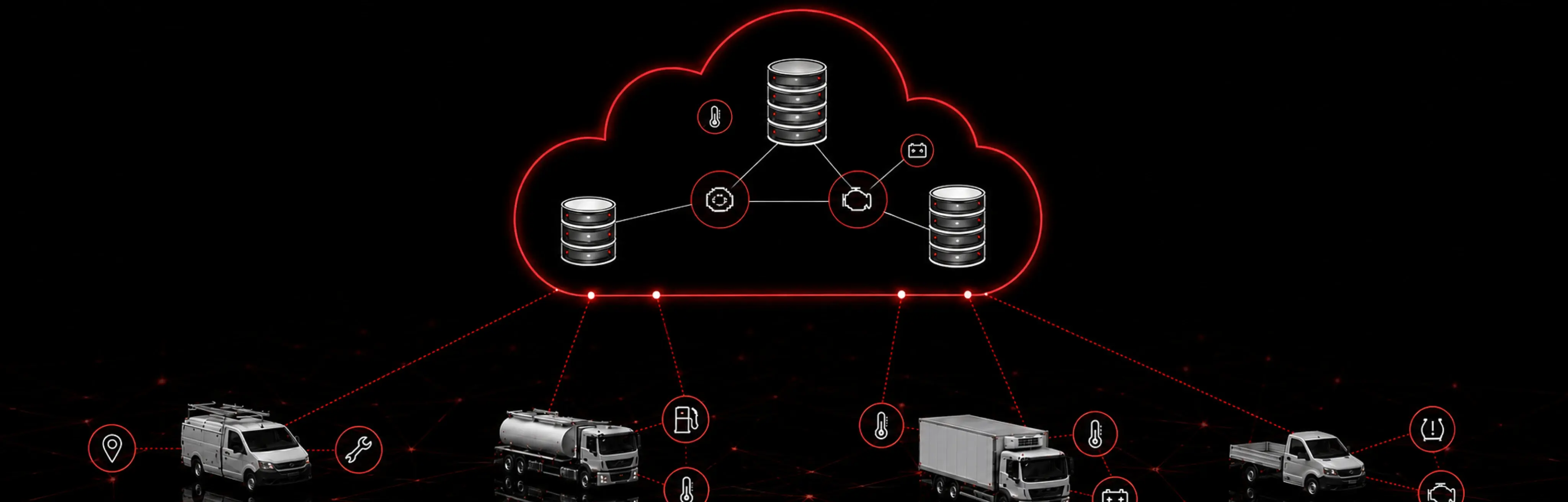
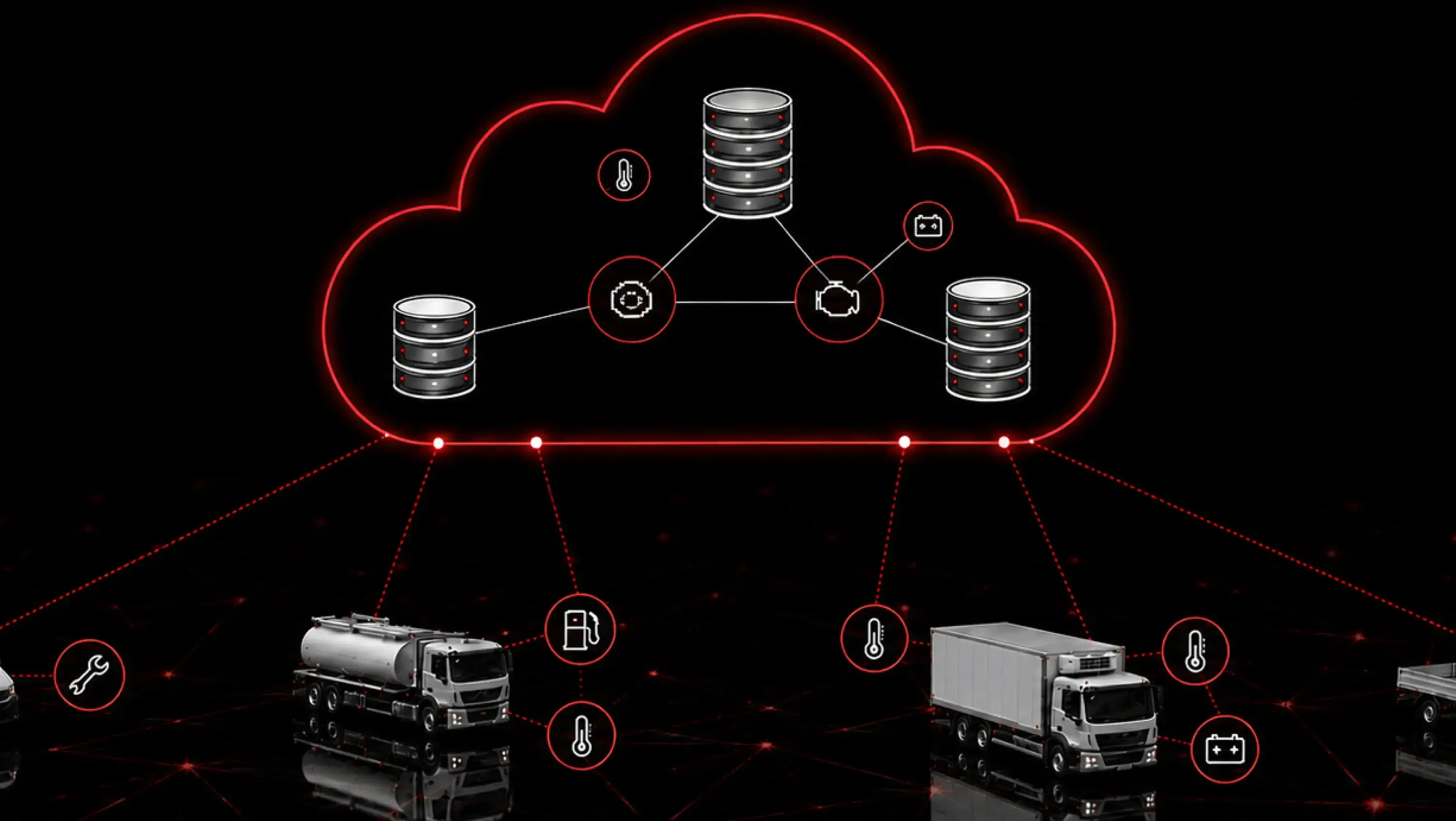
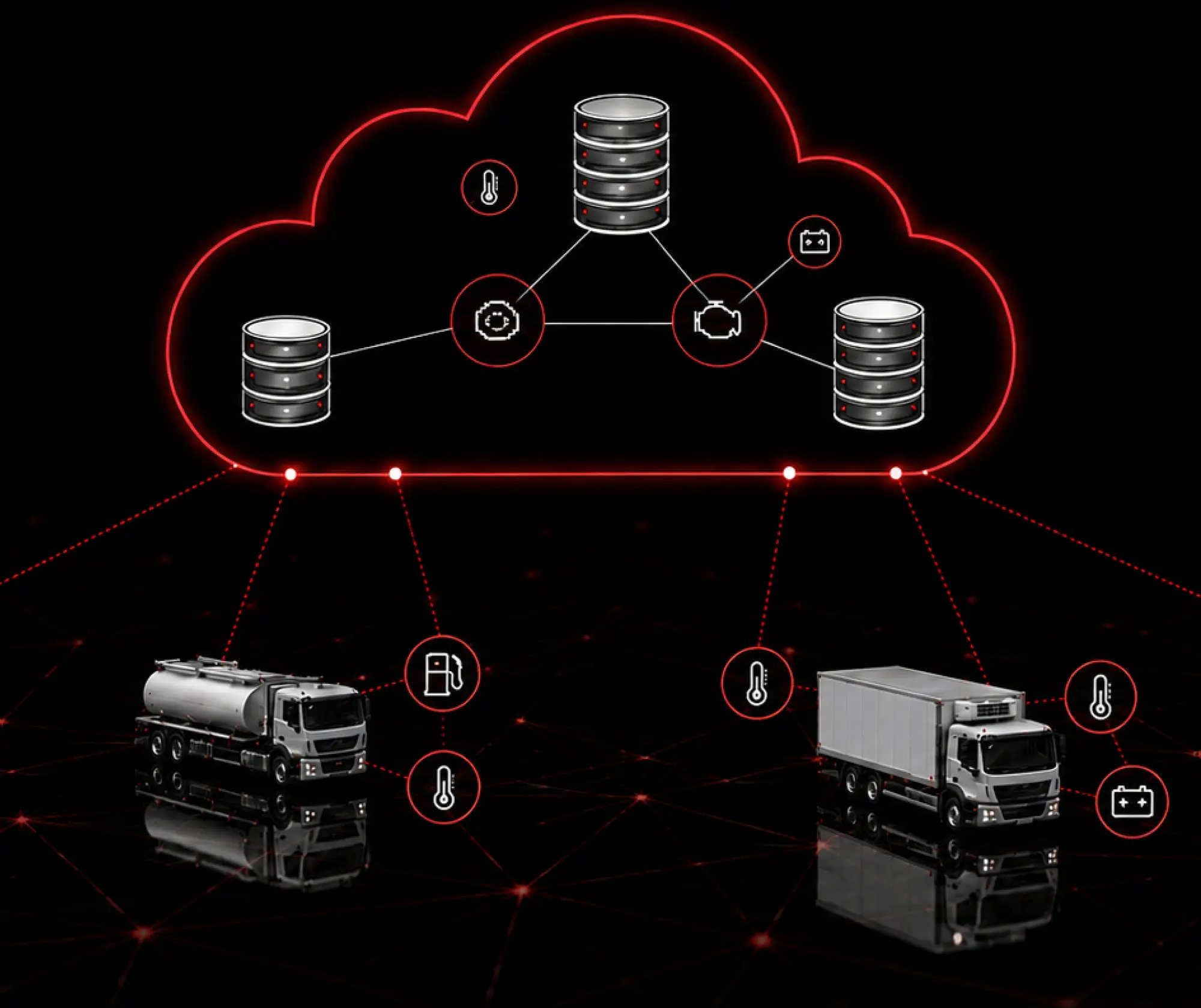
Understanding how data flows through a connected fleet system begins at the vehicle itself. Automotive Ethernet and in-vehicle communication protocols carry signals from individual sensors to an onboard telematics control unit (TCU), which aggregates, compresses, and transmits data to the cloud at defined intervals — or continuously, for safety-critical signals.
This edge layer is more consequential than it appears. Decisions made here — what to send, how often, at what resolution — determine the downstream value of everything built on top.
Organizations that transmit raw, unfiltered sensor dumps often discover too late that their cloud infrastructure is overwhelmed by volume while remaining starved of insight. A mature data architecture framework treats edge processing as a first-class design concern, applying initial filtering, anomaly flagging, and event detection at the vehicle level before data ever leaves the fleet.
Modern Data Architectures for Fleet Intelligence
Once data arrives at the cloud ingestion layer, the architectural choices multiply rapidly. This is where modern data architectures diverge in their ability to support fleet intelligence at scale.
The foundational layer is the data lake — a centralized repository capable of storing raw, semi-structured, and structured data at enterprise scale without enforcing a schema upfront. For connected fleet platforms, the data lake holds the unprocessed history of every sensor signal, diagnostic event, and service record. Its value is not immediate; it is longitudinal.
The ability to run retrospective analysis — identifying patterns that predicted a failure months before it manifested — depends on having that raw history intact.
Above the data lake sits the data warehousing architecture layer, where structured, query-optimized datasets are built for operational use.
This is where raw telemetry is transformed into the clean, aggregated tables that power dashboards, maintenance schedulers, and fleet performance reports. The architectural discipline required here — defining clear data contracts, managing schema evolution, and maintaining data lineage — is among the most underestimated challenges in connected vehicle platform builds.
Cloud computing architecture provides the elastic infrastructure backbone for both layers. For fleet data, elasticity is not optional — data volumes spike during peak operating hours, during incident investigations, and during regulatory reporting cycles. A well-designed cloud architecture handles these spikes without degrading query performance or forcing organizations to over-provision for average-case loads.
Data Architecture Concepts That Define Scalability
Several specific data architecture concepts separate platforms that scale gracefully from those that become bottlenecks as fleet sizes grow.
Column-oriented storage
It is essential for telematics workloads. Fleet analytics queries — “what is the average brake wear rate across all vehicles of Model X operating in high-altitude regions over the last 90 days?” — aggregate across millions of rows but touch only a handful of columns.
Column-oriented databases perform these aggregations at a fraction of the cost of row-oriented alternatives, and the performance difference becomes decisive at enterprise scale
Data partitioning strategy
This directly determines query latency. Partitioning fleet data by vehicle identifier, event type, and time window allows the query engine to eliminate irrelevant data at the storage level, rather than scanning entire datasets.
This is not an optimization — it is a prerequisite for sub-second dashboard refresh rates across large fleets.
Data architecture modeling
It is the formal process of defining entities, relationships, and data flows before building — is where many fleet data programs stumble. The pressure to ship quickly often leads teams to skip this step, resulting in data models that are rigid, sparse, and expensive to evolve. A well-executed modeling exercise distinguishes between core entities (the vehicle, the event, the component, the service record) and derived constructs (the feature, the risk score, the maintenance prediction), preserving the ability to reuse and enrich data across use cases without re-engineering the foundation.
From Architecture to the Operations Dashboard
The final layer — the operations dashboard — is where architectural decisions become visible to the humans who act on fleet data. A dashboard that reflects poor underlying architecture announces itself immediately: slow to load, inconsistent between refreshes, incapable of supporting drill-down queries, and unable to serve different operational roles with the right level of detail.
A well-architected fleet intelligence platform supports role-differentiated views from a single unified data layer. Fleet directors see aggregate utilization and availability metrics. Maintenance supervisors see vehicle-specific health scores and upcoming service predictions.
Workshop technicians see component-level diagnostic data and historical repair context. Each view draws from the same underlying data architecture artifacts — the same validated, governed datasets — ensuring consistency and eliminating the data reconciliation debates that plague organizations running siloed reporting tools.
The most advanced platforms now embed AI enrichment directly into this pipeline: anomaly detection models that flag unusual sensor patterns before they generate fault codes; predictive failure models that estimate component life remaining based on actual operating conditions rather than mileage thresholds; and natural language query interfaces that allow operations managers to interrogate fleet data without SQL expertise.
NeoSOFT: Building the Architecture That Connects It All
Fleet data platforms fail not because of ambition, but because of architectural shortcuts taken early that compound into systems incapable of scaling, adapting, or delivering the analytics value the business requires.
What distinguishes NeoSOFT is its integrated delivery model: data architecture strategy and software engineering are treated as a unified discipline, not sequential handoffs between separate teams. This produces fleet data platforms that are not only functional at launch, but governed, documented, and genuinely scalable — capable of supporting the next generation of fleet intelligence use cases without requiring a foundational rebuild.
For organizations ready to move from data collection to operational intelligence, NeoSOFT is the engineering partner that makes the architecture work.