


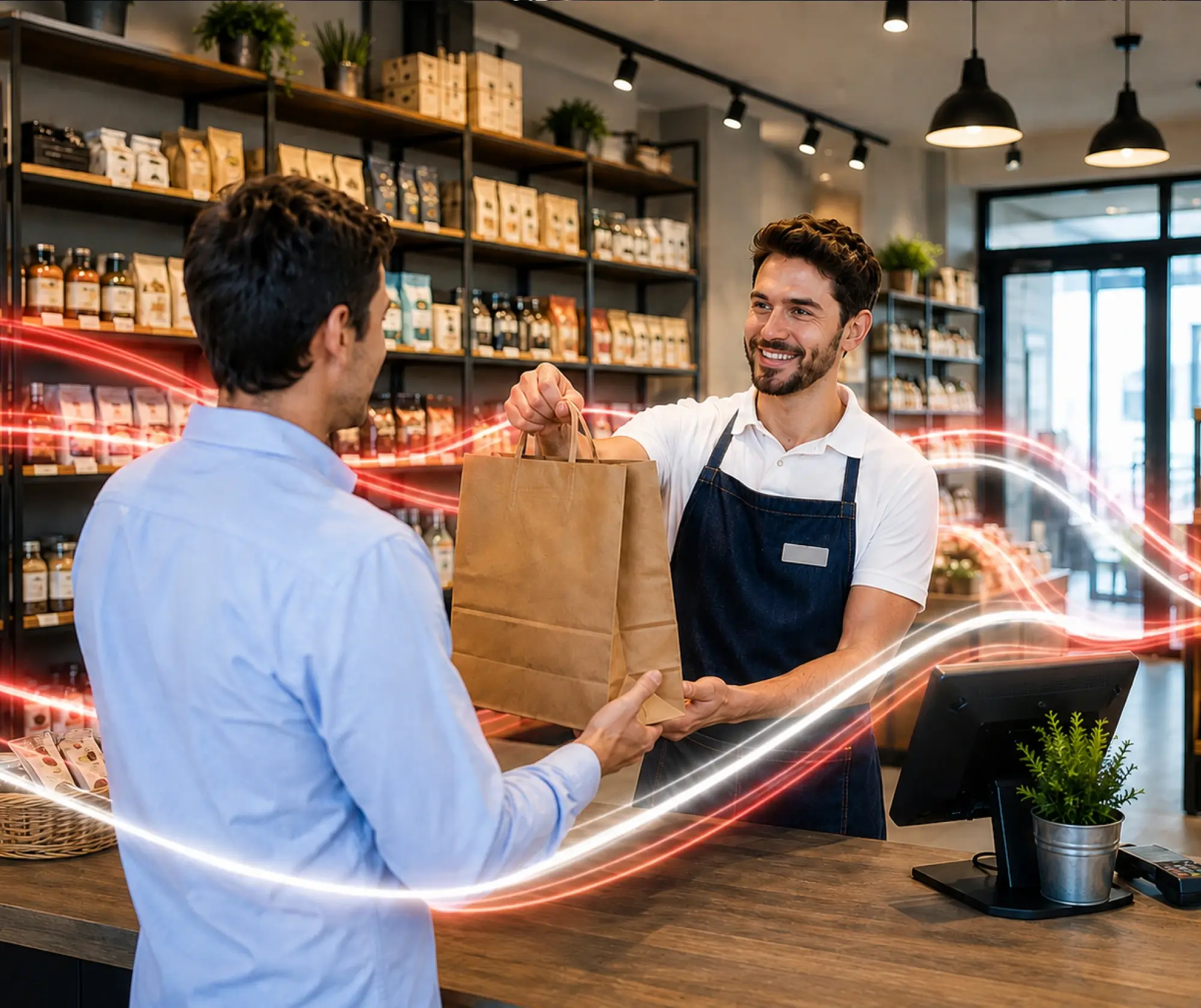
Interrogating the Unified Commerce Myth: Why 90% of Retailers Fail the Click and Collect Test
Unified Commerce in the high-stakes retailing world of 2026 is the security blanket of choice for companies. Applications that support Click and Collect functions are used to showcase the enterprise ecosystem. Yet, a shocking fact persists: despite most big companies providing the function, a 2026 benchmark found that only 7% had mastered leadership, leaving 93% unable to even execute the concept properly.
However, the Click and Collect Test is not passed at the checkout screen; it is passed at the store floor level. If a customer comes in only to find that his order, which is supposed to be completed, is missing one item or, even worse, cancelled three hours after his confirmation email, the whole concept of unified commerce fails miserably. The year 2026 presents the biggest challenge: failing to deliver on promises.
1. The Phantom Inventory Epidemic: Why 99.9% is the New Minimum
The main problem retailers face when implementing Click and Collect is a breakdown in inventory integrity. Retailers continue to rely on an outdated system in which web applications and POS systems are synchronised via a batch process rather than in real time, at sub-second intervals.
The 95% Accuracy Trap
In brick-and-mortar stores, 95% inventory-tracking accuracy was considered best-in-class. In the realm of unified commerce, 95% accuracy equates to a strategic blunder. If there are 100 units of a popular product in stock and 5 units are ghosts (lost or stolen products), it is mathematically certain that a Click and Collect customer will be offered an imaginary product at some point in time.
- The Financial Fallout: Global logistics and fulfilment costs have risen by over 20% in the last three years. Every cancelled order isn’t just a lost sale; it’s a sunk cost of labour and customer acquisition.
- Cancellation notifications are a critical threat: research indicates 60% of shoppers will defect from a brand after a single Click and Collect failure.
- Key Takeaway: Real-time inventory visibility and dynamic allocation are now essential for retailers to execute Click and Collect successfully and remain competitive in 2026.
2. The Labour Friction: The Store as a Dark Warehouse
The second reason for failure is an operational mismatch. The vast majority of brick-and-mortar stores are built for browsing rather than picking. If Click and Collect is implemented without changes to the labour force structure, store personnel face the choice between serving customers at the counter and picking customer orders in their cars.
The Staging Logistics Crisis
Even if the inventory is accurate, the staging process is often a mess. Orders are often tucked behind service desks or in cramped break rooms.
- Friction Point: Customer waits for more than 4 minutes for Instant pickup erodes the perceived convenience benefit.
- The 2026 Solution: High-performing retailers are implementing Micro-Fulfilment Zones within the store dedicated speed lanes and automated lockers that bypass the service desk entirely. The key takeaway: separating Discovery Space from Logistics Space streamlines store operations and improves customer experience.
3. The Appearance Gap: The $850 Billion Returns Problem
Data from 2026 reveals a secret flaw within Click & Collect: The Physics of Representation. A considerable number of Collect transactions are denied at the checkout counter when the actual item does not match its visual representation on the screen.
The Reject at Counter Phenomenon
Visual mismatch is something retailers do not take into account when standardising digital content. The moment someone from Dubai buys a luxurious silk scarf that appears to be of a different shade due to poor lighting, then the entire deal becomes void.
- The Insight: With retail returns reaching nearly $850 billion annually, a Click and Collect order rejected at the counter is the most expensive type of return because it consumes store labour twice once for the pick and once for the restock.
- Key Takeaway: Accurate digital representation of products and alignment with in-store experiences through advanced technologies are crucial to avoiding expensive Click and Collect returns.
4. The Retail Media Miss: The Unmonetized Foot Traffic
It is quite ironic that retailers are failing to capitalise on the revenue stream. Click and Collect is not only about saving on delivery costs but also about bringing the consumer into the ecosystem where they are likely to be impacted by In-Store Retail Media.
The Last-Yard Monetisation Gap
At the point of order pickup, customer purchase intent peaks. However, 90% of retailers fail to capitalize on this pivotal opportunity with context-driven upsells, missing out on tangible incremental sales.
- The Miss: A customer picks up a new smartphone but isn’t served a digital At-Shelf offer for a screen protector via their app.
- Agentic Personalisation: If the retailer’s system is truly unified, the pickup notification should trigger a personalised, limited-time offer visible only while the customer is within the store’s geofenced radius. This N=1 strategy is proven to unlock billions in value globally by turning a functional pickup into a discovery session.
5. Regional Nuances: India vs GCC Execution
The Click and Collect failure looks different depending on the geography:
- In India, this problem is termed Last-Mile Hybridisation. The reason for most failures is congestion gap, which means that although the store can be reached, the collection point cannot. The success stories have been achieved through WhatsApp-driven curbside coordination.
- In the GCC, however, the problem arises at luxury service levels, where Click & Collect from an expensive mall should be considered VIP treatment. A lack of dedicated, luxurious lounges for digital collections lowers service levels for wealthy people.
Conclusion: The Era of Precise Execution
It is not enough to imagine Unified Commerce as a technical concept; it must be implemented to be realised. Retailers that will rule 2026 and 2027 are those who understand that when you click Buy, you are making a promise to deliver results. Unless you can deliver the goods in-store, pack them in a bag, and drop them in a locker, you are not unified; you are omnichannel.
We at NeoSOFT create Unified Data Foundations that enable real-time ERP integrations and AI-powered workforce optimisation. This approach turns the Click and Collect fallacy into a profitable reality by seamlessly blending the digital and physical worlds.