A Deepfake Just Passed Your Video KYC. 4 Layers That Would Have Stopped It
October 19, 2026
A customer completes video KYC. Facial recognition confirms a match. Liveness verification returns a positive result. The identity document clears validation, and the onboarding engine approves the application.
Every individual control reports success.
Yet the applicant is an impersonator operating through an AI-generated video stream.
This hypothetical failure illustrates an increasingly relevant weakness in digital identity infrastructure: multiple successful verification checks do not necessarily establish trustworthy identity assurance when those checks depend on the same compromised input.
Deepfake-enabled fraud is no longer exclusively a biometric detection problem. It is a broader attack on capture integrity, evidence provenance, identity orchestration, and risk-based decisioning.
It requires redesigning how identity trust is established.
Deepfake Video KYC Attacks Exploit the Trust Boundary
Traditional video KYC architectures assume that media arriving from a customer endpoint represents legitimate camera input.
That assumption creates an exploitable trust boundary.
Attackers can use digitally manipulated video, synthetic identities, or virtual camera mechanisms to interfere with the media delivered to verification services.
Unlike conventional presentation attacks involving photographs or recorded videos displayed to a camera, injection attacks target the digital media pipeline itself.
Consequently, biometric systems may evaluate fabricated media without recognizing that the original capture environment has been compromised.
NIST SP 800-63A-4 explicitly addresses digital injection and forged-media threats in remote identity proofing, including attacks targeting biometric comparison and attended video verification.
The central architectural weakness is correlated control failure: facial matching, liveness assessment, and visual inspection may all consume the same manipulated video stream.
Adding more checks against that same untrusted input does not automatically create independent assurance.
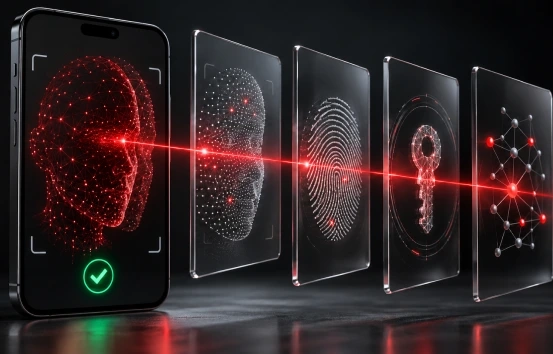
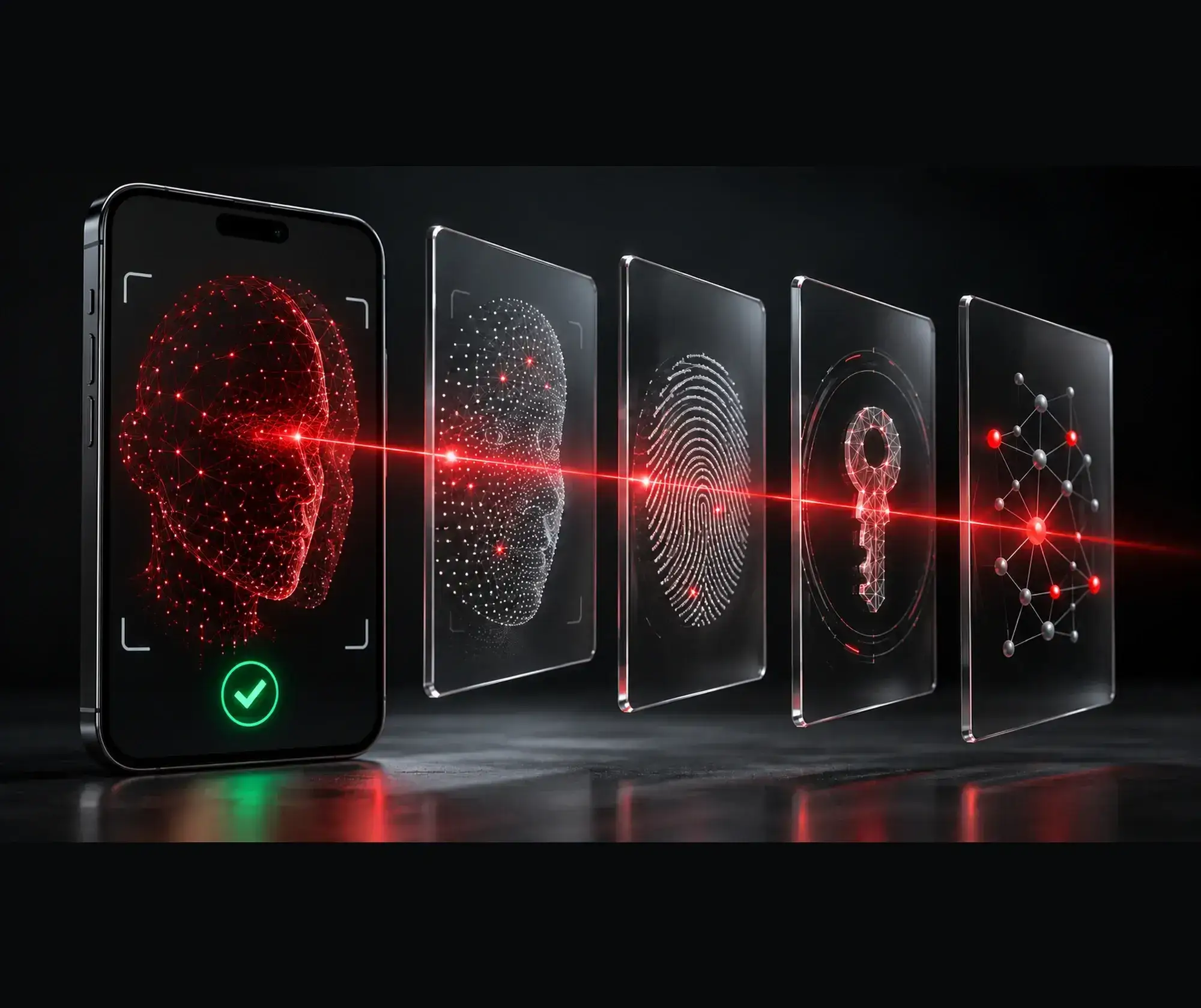
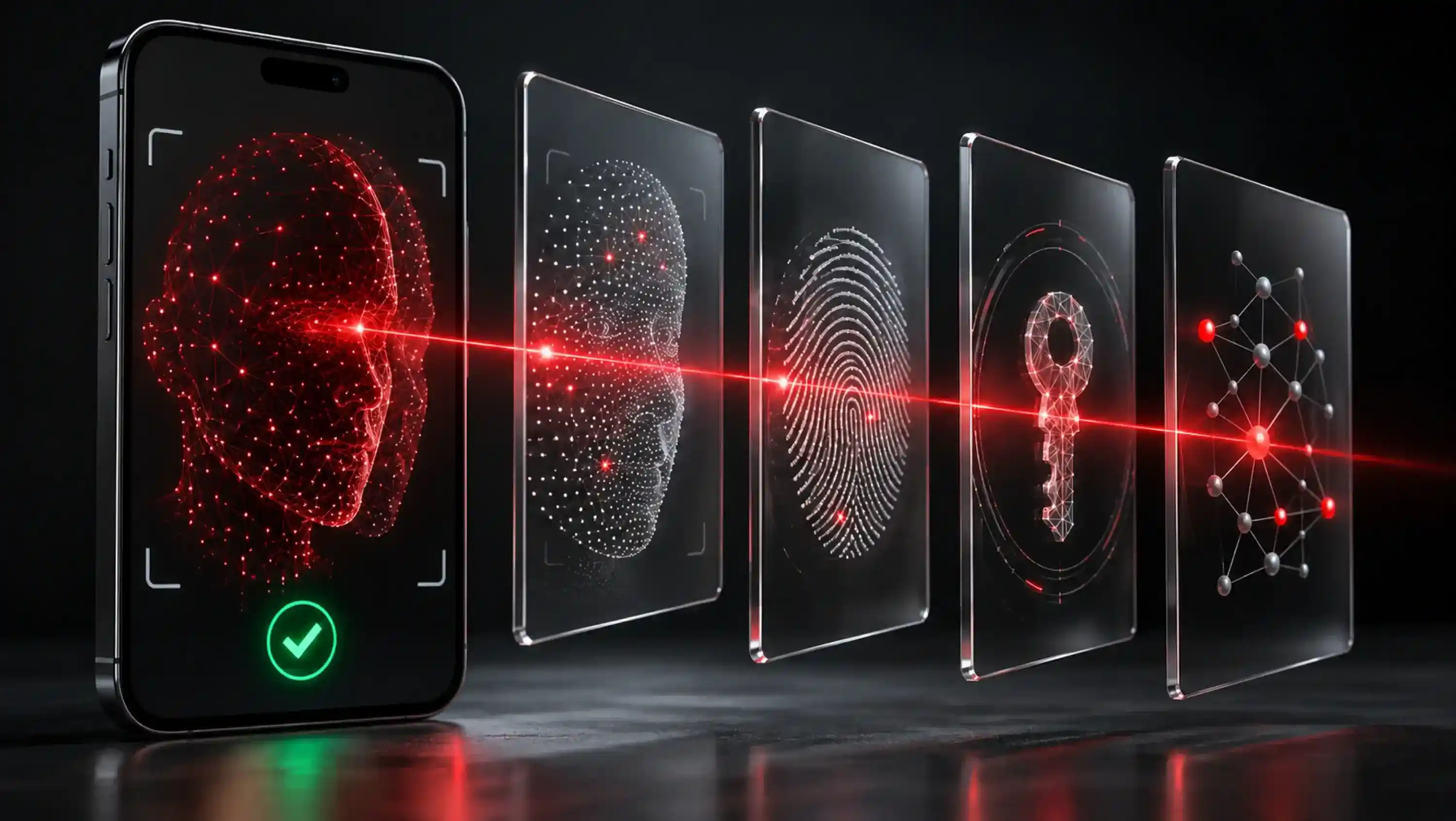
A defensible video KYC architecture must establish trust across four separate security layers.
Layer 1: Establish Capture Integrity and Media Provenance
The first control objective is to establish whether the verification system is receiving authentic media from an expected capture environment.
Traditional encryption protects transmitted information but does not prove that the original camera feed was genuine.
An attacker-controlled endpoint can submit manipulated media over an otherwise secure connection.
Engineering the Capture Trust Boundary
Financial institutions should evaluate device attestation, application integrity verification, virtual-camera detection, and secure capture mechanisms.
Where technically supported, hardware-backed integrity signals can increase confidence in the device and application state.
Session-bound attestations can also help prevent security evidence from being reused across unrelated verification attempts.
However, an important distinction remains: device attestation does not automatically establish camera sensor authenticity.
Security architecture must evaluate what each attestation actually proves and whether the capture pipeline remains vulnerable to substitution.
The objective is to detect manipulation before the media becomes trusted biometric evidence.
Layer 2: Engineer Biometric Verification for Adversarial Conditions
Facial recognition and liveness detection serve different security purposes.
Facial matching assesses biometric similarity. Presentation attack detection evaluates whether a submitted biometric sample may represent a spoofing attempt.
Neither independently guarantees protection against injected synthetic media.
Advanced video KYC should combine presentation attack detection (PAD), media manipulation analysis, and session-specific challenge mechanisms.
Evaluate Detection Performance Against Real Attack Classes
Deepfake detection models should be tested against representative attack datasets, including face swaps, synthetic facial reenactments, replay attacks, and digitally injected media.
Performance assessment must extend beyond overall model accuracy.
Security teams should examine attack presentation classification error rate (APCER), bona fide presentation classification error rate (BPCER), and false acceptance behaviour under defined attack conditions.
These metrics need to be interpreted within their applicable testing methodology; presentation attack testing alone does not establish injection attack resistance.
Institutions should also evaluate model degradation caused by compression, network latency, camera variability, and emerging generation techniques.
Randomized challenges can increase attacker difficulty, but sophisticated real-time manipulation may still respond successfully.
The stronger architecture combines complementary detection mechanisms with independently established capture integrity.
Layer 3: Separate Identity Evidence From Biometric Confidence
A successful facial comparison does not establish that the identity being claimed is legitimate.
This distinction becomes critical when attackers combine stolen identity records with synthetic biometric representations.
If both the reference image and the live video are compromised, facial similarity may reinforce a fraudulent identity claim rather than expose it.
Introduce Independent Evidence Assurance
Banks should validate identity attributes against authorized, authoritative sources and assess document authenticity independently of the facial comparison.
High-risk applications may require additional verification through previously established trusted channels, subject to regulatory and privacy requirements.
Identity orchestration platforms should maintain separate assurance signals for document validity, biometric comparison, capture integrity, and identity-record consistency.
These signals should not collapse into a single opaque confidence score without clear decision rules.
For institutions strengthening their Identity and Access Management (IAM) capabilities, reliable identity proofing provides the foundation for subsequent authentication and access decisions.
Authentication can verify control of a credential. It cannot retrospectively repair an identity that was fraudulently established during onboarding.
Layer 4: Connect Identity Verification With Enterprise Fraud Intelligence
The final defensive layer extends beyond the video session.
A synthetic applicant may satisfy individual biometric checks while displaying suspicious patterns across applications, devices, networks, or previously submitted identities.
These relationships become visible only when identity verification is connected with enterprise fraud intelligence.
Correlate Signals Across the Customer Lifecycle
Fraud platforms should evaluate onboarding velocity, device reuse, identity inconsistencies, suspicious application relationships, and relevant behavioral anomalies.
Entity resolution and graph-based analysis can help identify coordinated activity across apparently unrelated onboarding attempts.
Decision engines should combine these signals with defined risk thresholds to determine whether an application is approved, challenged, deferred, or escalated.
Where automated systems identify conflicting evidence, high-risk decisions should trigger appropriately trained human review.
Institutions can strengthen this model through integrated cybersecurity and threat detection capabilities spanning application security, identity controls, monitoring, and incident response.
Crucially, fraud intelligence should continue after onboarding.
Transaction monitoring, sensitive-account-change controls, and risk-based re-verification provide additional opportunities to identify identities that passed initial checks fraudulently.
The Enterprise Priority: Measure Assurance, Not Check Completion
Many onboarding platforms report verification success rates, average processing times, and customer abandonment.
These operational indicators matter, but they provide limited visibility into resistance against sophisticated impersonation.
Security leaders need additional measurements: attack success rates by technique, injection detection coverage, biometric false acceptance under adversarial conditions, escalation effectiveness, and time to identify fraudulent onboarding.
Testing should include controlled red-team exercises against the complete verification workflow, not only individual vendor components.
An effective assessment must examine how independently controls operate, whether failures propagate across layers, and what happens when evidence conflicts.
This approach also supports stronger vendor accountability through documented test results, identifiable control limitations, and continuous reassessment.
Conclusion: Identity Assurance Must Be Engineered Across Systems
Deepfake-enabled impersonation exposes a structural weakness in remote onboarding: institutions can verify the consistency of digital evidence without adequately establishing its authenticity.
Capture integrity, adversarial biometric testing, independent identity evidence, and connected fraud intelligence address different components of that risk.
The objective is not to eliminate every possible fraudulent attempt through one perfect detection model.
It is to create an architecture where compromising one security mechanism does not automatically compromise the entire onboarding decision.
Frequently Asked Questions
1. Can deepfake video KYC attacks bypass liveness detection?
Yes. Sophisticated injection attacks may bypass systems that rely on compromised video inputs. Liveness detection should operate alongside capture integrity and independent verification controls.
2. What is the biggest architectural risk in video KYC?
Correlated control failure, where facial recognition, liveness detection, and visual inspection all rely on the same manipulated media source.
3. How should banks measure deepfake detection effectiveness?
Banks should assess false acceptance, attack success rates, injection resistance, testing coverage, and performance under representative adversarial conditions.
4. Does device attestation prevent deepfake injection?
Not independently. Device attestation can provide integrity signals, but its effectiveness depends on the attested components and the security of the capture pipeline.
5. How can financial institutions strengthen video KYC security?
By combining trusted capture mechanisms, adversarial biometric testing, independent identity evidence validation, and cross-channel fraud intelligence with continuous security assessments.