


Top Retail Media Trends for 2026: AI & Agentic Commerce
August 14, 2026
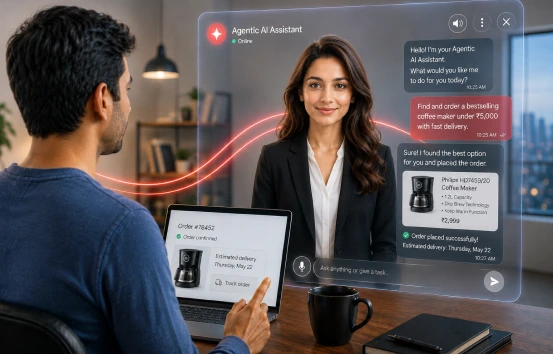
In the high-stakes digital boardrooms of 2026, a fundamental shift has occurred. The customer is no longer just the human scrolling through a mobile feed; it is increasingly a high-speed AI agent. We have officially moved beyond the era of automated marketing into Agentic Commerce, a world where autonomous systems mediate the journey from discovery to checkout.
For retail and e-commerce leaders, 2026 is the year of Sovereignty. As Retail Media Networks (RMNs) evolve into the operating systems of commerce, the brands that win are those that prioritise machine-legibility as much as human appeal.
The Rise of the Machine Buyer: Understanding Agentic Commerce
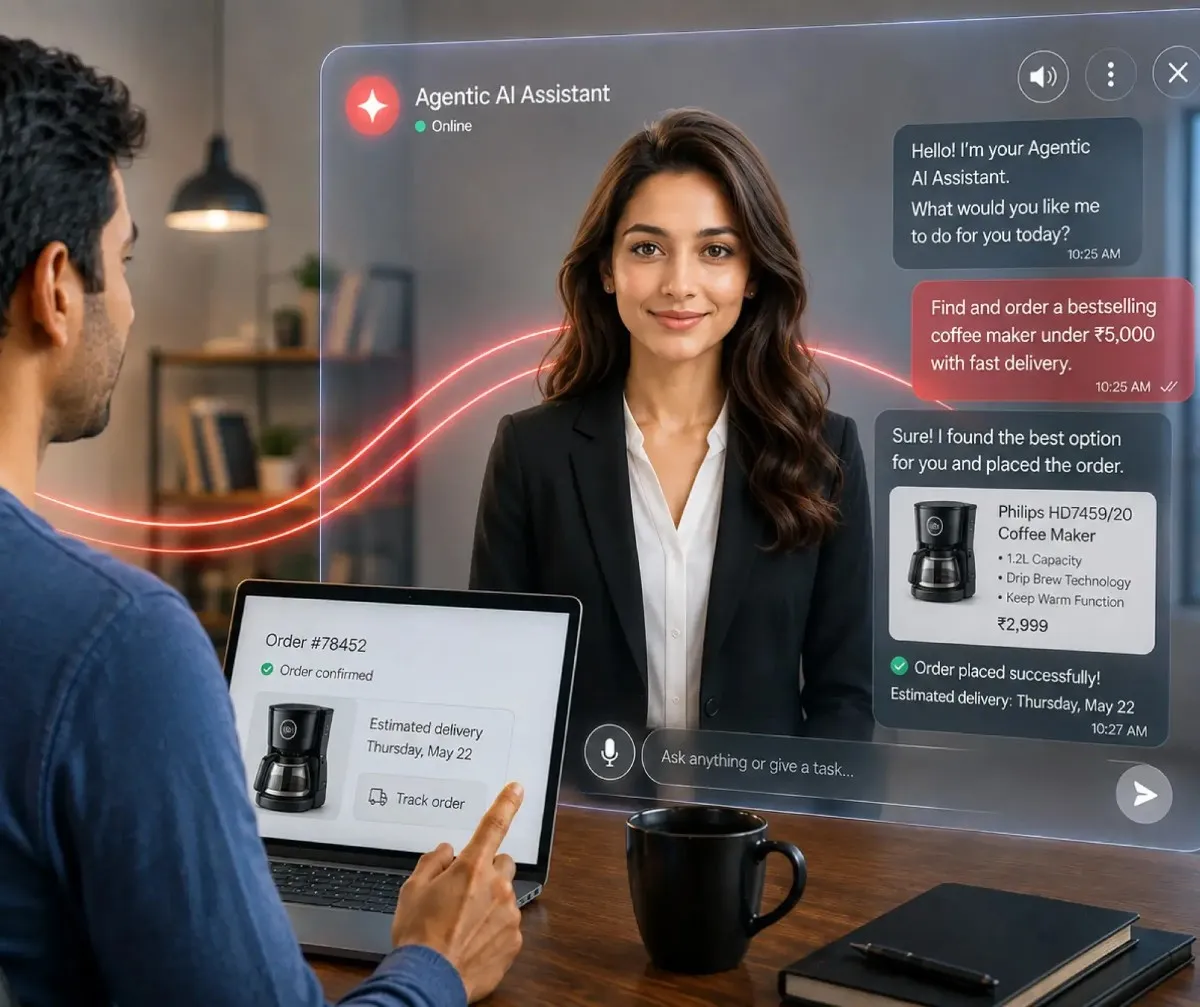
The most disruptive trend of 2026 is the emergence of Delegated Shopping. Consumers now set high-level intent Find a durable, eco-friendly coffee maker under $200 for my office and their personal AI agent handles the research, price comparison, and execution.
According to recent NRF 2026 analysis of agentic commerce trends, retailers are shifting from if to how in implementing agentic strategies. At NRF 2026, nearly 75% of attendees reported they were either currently implementing or actively planning agentic initiatives.
The Challenge: Traditional search ads and persuasive copy are secondary to an AI agent. These systems optimize for clarity, delivery certainty, and structured data. If your product information is ambiguous or your delivery terms are not machine-readable, you are invisible to the agent.
Trend 1: Agent Legibility and Universal Protocols
In 2026, the new SEO is Agent Legibility. Retailers are shifting toward standardised frameworks such as the Universal Commerce Protocol (UCP) to ensure their back-end data is accessible to independent buyers.
- Structured Metadata: High-fidelity data on real-time inventory, shipping cut-offs, and return eligibility is now a mandatory ad asset.
- API-First Commerce: To be selectable, your retail media stack must expose real-time signals to AI agents. Bidding is no longer just about keywords; it’s about providing a Verified Consent pathway for agents to complete purchases securely.
By 2026, nearly 60% of enterprise applications will be powered by agentic AI. Brands that fail to modernise their data foundations are effectively paying a legacy tax as agents default to competitors with cleaner, more structured data.
Trend 2: Zero-Click Shopping and Ambient Discovery
The interface is disappearing. We have entered the era of Zero-Click Shopping, where the Search-and-Browse model is replaced by Contextual Triggers.
- Invisible UX: Through IoT and ambient smart-home sensors, retail media has moved into the background. A smart appliance detects a need and initiates a purchase request via a retail media trigger, requiring only a simple biometric confirmation from the user.
- Mission-Based Ads: Instead of showing a product, retail media now offers a Mission Resolution. If a user tells their wearable, I’m going on a mountain hike tomorrow, the retail media engine assembles a curated Hike Pack from sponsored brands, ready for same-day delivery.
This shift toward zero-click buying in 2026 means people can purchase products without ever clicking a buy button or leaving their primary app interface.
Trend 3: From ROAS to iROAS (Incremental ROI)
The industry has finally exposed the ROAS Lie. In 2026, sophisticated CMOs have pivoted to Incremental Return on Ad Spend (iROAS).
The Shift: Traditional ROAS often took credit for lazy sales loyalists who were already going to buy organically. Performance Marketing 2.0 uses Predictive ROI Simulation to measure true incrementality.
- Margin-Aware Bidding: AI now automatically throttles spend on low-margin SKUs or regions with high shipping friction.
- Predictive Optimisation: Instead of analysing trailing data, brands run Monte Carlo simulations to forecast campaign success before a single dollar is spent.
Trend 4: Unified Phygital Ecosystems
The store is no longer just a physical location; it is a High-Intent Sensor. In the Middle East and India markets, Unified Commerce is the baseline.
- Store-Mode Experiences: Retailer apps now switch to Store Mode the moment a customer walks in, using AR-enabled navigation and real-time mobile triggers to bridge the online and offline experience.
- In-Store Media Auctions: Digital signage and smart end-caps are now part of the programmatic retail media auction, allowing brands to bid for a customer’s attention at the exact moment they reach for a shelf.
As outlined in the US Tech Forecast 2026 for Retail, retailers are increasing tech budgets to $113 billion, with a significant portion dedicated to AI-enabled systems that improve in-store technology and self-service experiences.
The NeoSOFT Edge: Engineering the Race of the Progressive
The transition to an agentic, zero-click economy is not a simple software update it is a total architectural overhaul. At NeoSOFT, we act as the architects of this evolution.
We help global brands build the Digital Transformation Frameworks required to thrive in the 2026 landscape. From implementing Universal Commerce Protocols to deploying Predictive ROI Engines, we ensure your retail media infrastructure is built for scaled intelligence. Whether it’s neutralising logistics friction or automating Agentic Commerce journeys, NeoSOFT is the partner for leaders who demand more than just automation. We don’t just help you follow the trends; we help you set the pace of progress.
The agentic commerce era is here is your retail infrastructure ready? Explore how NeoSOFT is helping global brands build for zero-click shopping, predictive ROI, and AI-native commerce. Explore more insightful blogs here.
FAQs
1. How does Agentic Commerce change my retail media bidding?
It shifts the focus from human attention to System Selection. You are bidding to have your structured data prioritised by an AI agent’s selection algorithm.
2. What is Zero-Click shopping?
A frictionless model where AI agents initiate purchases based on contextual triggers (like IoT sensors), requiring minimal human interaction.
3. Why is iROAS becoming the standard metric?
It measures True Incrementality, filtering out organic sales that would have happened anyway to show the actual value of ad spend.
4. Can small retailers compete in an Agentic era?
Yes. By adopting standardized protocols, even mid-market brands can make their data agent-ready, enabling them to compete on clarity and execution speed.
5. How does NeoSOFT solve Retail Media fragmentation?
We build Unified Intelligence Layers that consolidate disparate RMN data into a single source of truth for cross-platform optimisation.



Recommended