
Cloud-Based ERP: The Digital Backbone of Manufacturing
January 22, 2026
Introduction
The manufacturing industry is changing at a pace never seen before. The need to operate globally, increasing costs, changing market demands, and the requirement for real-time visibility of business processes have, in fact, been the reasons why organizations have decided to go beyond the limitations of legacy systems.
As manufacturers increase, differentiate, and penetrate new markets, traditional on-premises ERP systems fall behind and can’t keep up with their ever-changing needs.
Cloud ERP solutions, therefore, appear as a revolutionary agent to next-gen manufacturing companies—helping them digitally transform their business operations.
Thanks to AI/ML and continuous system updates, cloud ERP systems are essentially reshaping the ways in which businesses of today can streamline operations, make them more efficient, and get insights from various functions.
This blog discusses the cloud-based ERP system, its components, the working model, the benefits, the criteria for choosing, and the success factors for manufacturing, presenting a complete picture of why cloud-based ERP is preferred. This blog is intended for manufacturing leaders, CIOs, IT decision-makers, operations heads, and digital transformation teams.
Understanding the Concept of Cloud-Based ERP
Enterprise Resource Planning (ERP) software ties all organisation’s core business processes together – from putting in orders and handling the books to getting products from suppliers and overseeing projects.
Traditionally, companies would choose an on-site ERP system, installed at their own offices and looked after by their own IT staff. But it required extra IT personnel, constant upkeep, investing in new hardware, and getting the latest software versions, all of which take major time, are expensive, and inflexible as the business grows.
On the other hand, cloud-based ERP systems – or cloud ERP software – run on remote servers, replacing in-house hardware. It saves costs, and once a business chooses a subscription-based model, it will adapt as business needs change.
Cloud-based ERP systems provide:
- Real-time visibility across core processes
- System updates without operational disruption
- Easy scalability (add users, locations, and functionalities)
- Accessible data across multiple locations
- Better integration with other systems
- Lower costs compared to maintaining on-premises infrastructure
Shifting from traditional enterprise resource planning to cloud-based ERP is a strategic decision rather than technological. Manufacturers use ERP systems to manage day-to-day operations, but also for driving innovation, aligning compliance requirements with long-term business goals.
This shift from traditional enterprise resource planning ERP models to cloud-based solutions is not merely technological—it’s strategic.
How Does Cloud ERP Work?
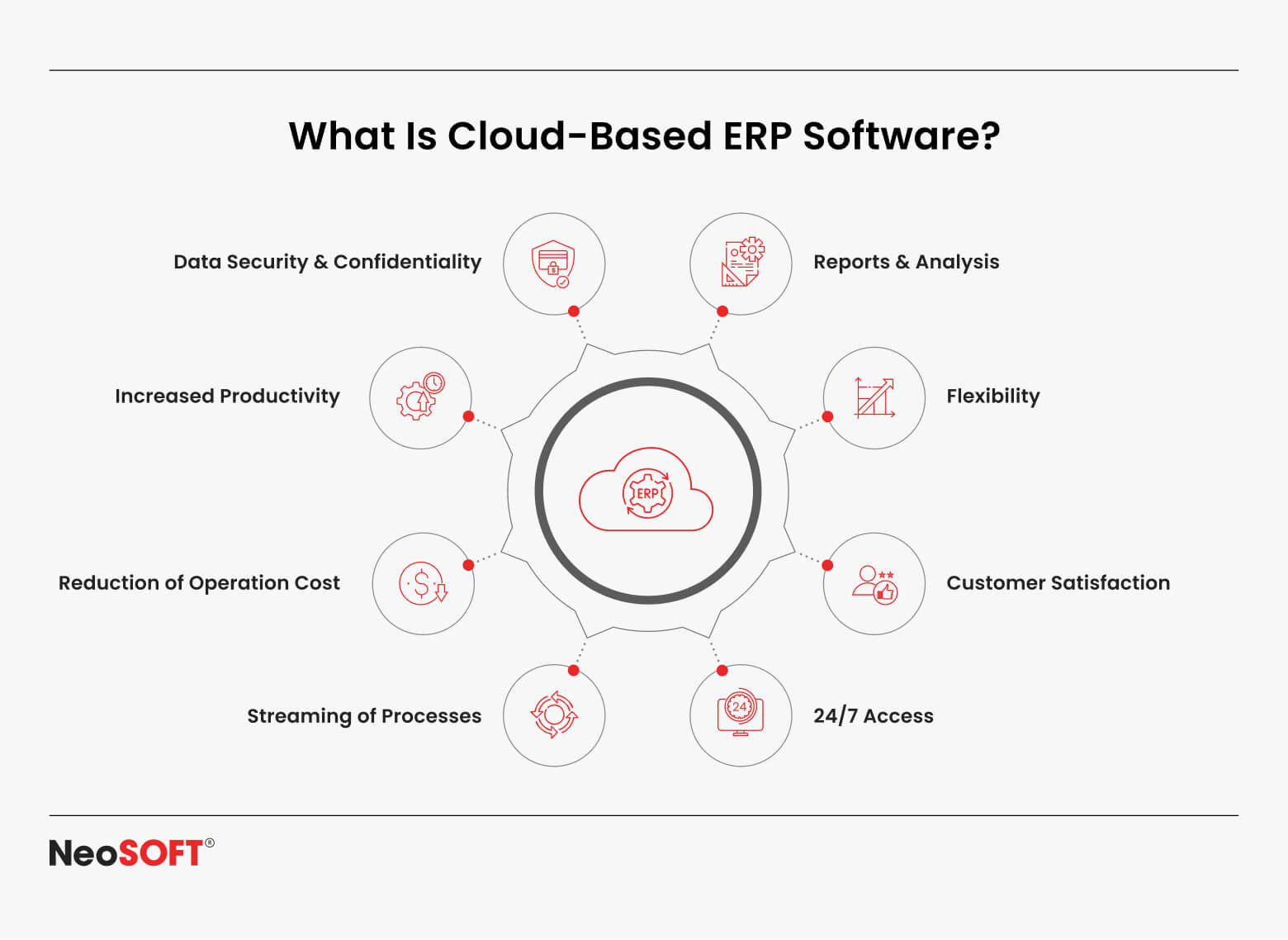
A cloud ERP system ensures business operations are easy and simple to manage using a centralized platform hosted on remote cloud servers. Its functioning can be understood through several operational pillars:
1. Remote Hosting and Delivery
The cloud-based ERP system operated on a private cloud or a public cloud infrastructure managed by a vendor. If users want access to the ERP software, they can use it with an internet connection, regardless of location.
2. Subscription-Based Access
Instead of an upfront cost or a heavy investment, companies can get a subscription-based model. This will include hosting, system updates, maintenance, and new functionalities. and security management.
3. Continuous System Updates
The vendors can deploy updates automatically and are equipped with the latest capabilities. This will eliminate manual intervention and reduce dependency on the IT department.
4. Integration With Other Systems
Cloud-based ERP systems easily connect with other systems—manufacturing execution systems (MES), CRM tools, analytics platforms, or order fulfillment engines—creating a connected ecosystem for various aspects of the business.
5. Built-In Intelligence
Modern cloud ERP solutions leverage:
- Machine learning
- Predictive analytics
- Built-in AI
They help gain companies’ insights, automate tasks, and remove processes that take time.
Key Components of Cloud ERP Solutions
Manufacturers often deal with complex, interdependent operations. A robust cloud ERP system includes components that manage these interlinked business functions effectively:
1. Financial Management
Cloud ERP software ensures greater control and tracking of real-time financial performance. It tracks cash flow, predicts profitability, and manages accounts.
2. Supply Chain Management
Supply chain management ensures there is visibility across all the processes, helps collaborating, and faster decision making to improve fulfillment.
3. Production and Inventory Control
Businesses can avoid stockouts, delays, and excess materials if they automate scheduling, production cycles, and optimize inventory.
4. Project Management
Project management makes resource allocation, planning, tracking, and keeping teams up to speed easy.
5. Human Resource Management
Human Resources management can support employee performance and payroll tracking, planning, and processing in all locations.
6. Customer Relationship Management (CRM)
CRM clubs sales, customer services, and marketing together. This makes sure that you are engaged and responding to customer needs.
7. Business Intelligence and Analytics
Another component is the use of advanced learning methods in Business Intelligence and Analytics to analyze setbacks and new opportunities.
What Criteria Should Be Used to Select an ERP Software Vendor?
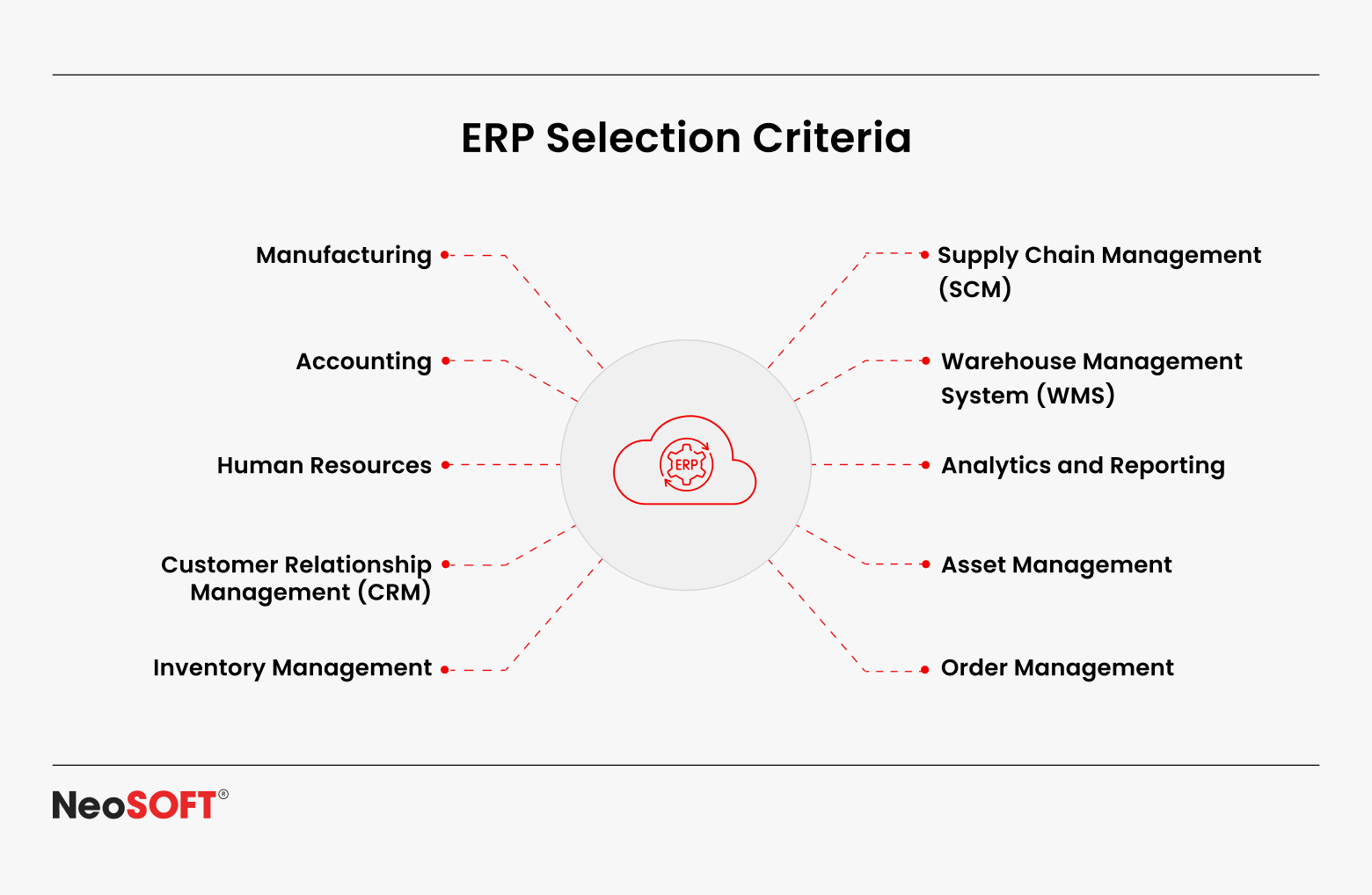
Businesses must choose the right ERP software vendor. Here are the following criteria of how it should meet the business needs with technology:
1. Deployment Flexibility
Vendors must have Cloud ERP solutions, along with hybrid models and private cloud options, depending on the security and compliance needs of the business.
2. Industry-Specific Capabilities
ERP systems need to have modules designed specifically for production, supply chain management, order management, and resource planning, tailored to the needs of that industry.
3. Integration Capabilities
The ERP systems must work with old systems, CRM tools, financial software, and other business apps.
4. Customization Options
A scalable ERP solution should be able to support different needs and allow for customisation if the business has unique processes.
5. User Experience
An easy-to-use user interface is crucial. It enables speed, reducing training time and embracing quick adoption.
6. Cost Structure
You should also look at the fine print – subscription costs, implementation costs, any potential ongoing cost savings, and lower costs compared to a traditional on-premise system.
7. Vendor Reputation and Support
Choose a vendor with experience, offering reliable support, robust SLAs that get new updates out fairly quickly. People like Microsoft Dynamics and others in the ERP business are some examples in the industry.
8. Security and Compliance
Cloud ERP vendors need to be compliant with security updates, and they also need to provide relevant data protection measures.
When is the Right Time to Switch to Cloud ERP?
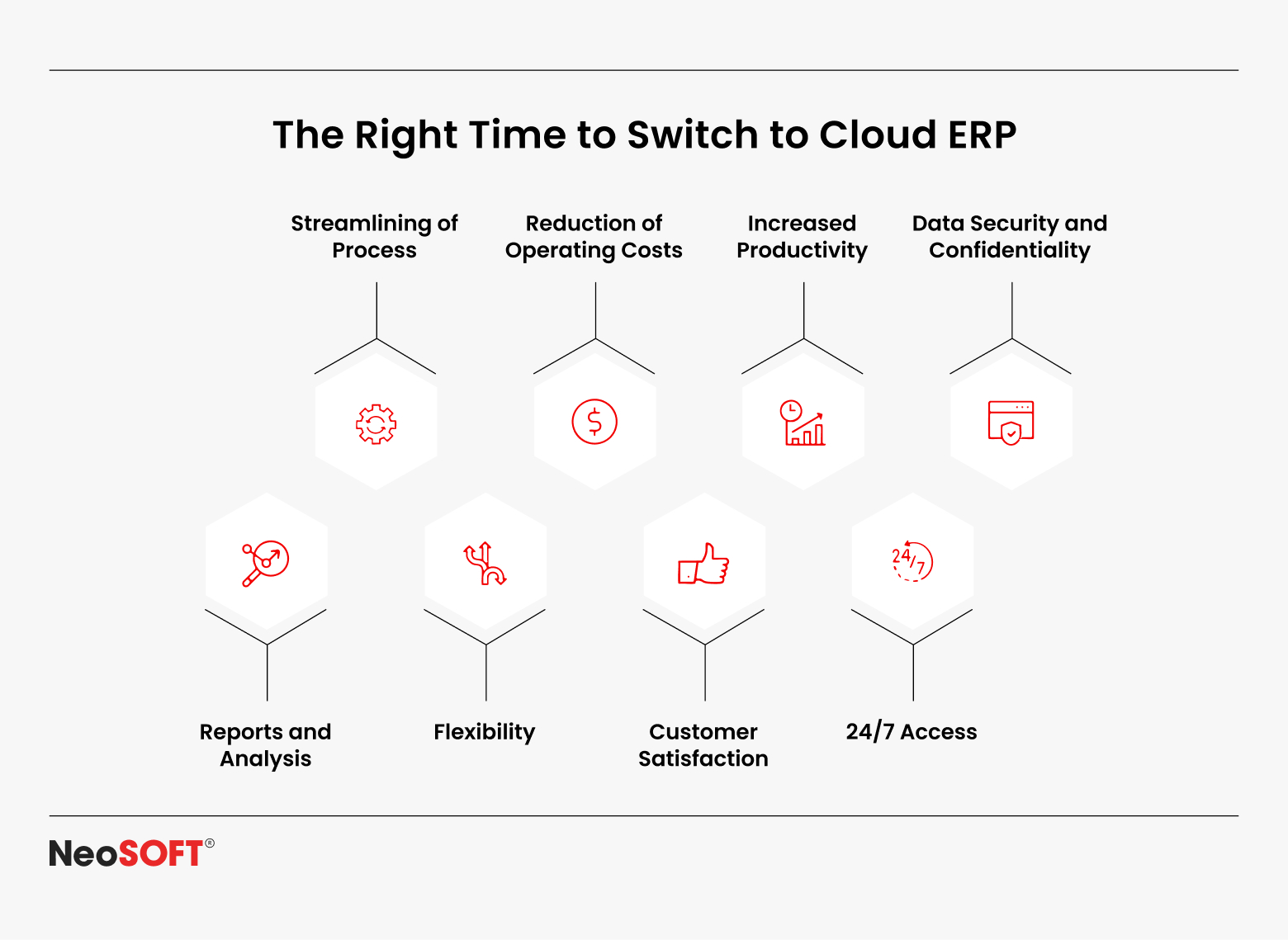
To switch to a cloud-based ERP software, the right time to switch to a cloud-based ERP software is before the current systems face any issues that cannot be resolved. Choosing the right cloud ERP can help avoid losses and unnecessary expenses.
Here are some of the factors when considering a cloud-based ERP:
1. Old System No Longer Supports Growth
Change the old system if the business cannot scale or grow due to more users, markets, or product lines.
2. Rising IT Costs Are Becoming Unsustainable
Cloud-based ERP systems reduce costs and remove the burden of infrastructure, such as on-premise systems, servers, security, and maintenance.
3. Manual Intervention Is Slowing Operations
A cloud ERP solution for business allows them to automate data and streamline processes. It helps manage spreadsheets and reconcile data instead of manually entering them.
4. Lack of Real-Time Visibility
Outdated data, broken systems, and unreliability delay decisions. When businesses implement cloud ERP, it provides real-time data and visibility everywhere.
5. The Company Has Multiple Locations
Cloud ERP solutions ensure seamless data accessibility and standardization for all units.
6. Compliance Requirements Are Escalating
It should stay updated with market regulations and deliver automated compliance frameworks.
7. Integration Challenges with Other Systems
Connecting new tools is time-consuming and costly; a modern cloud ERP makes this system seamless.
Success Factors for Cloud-Based ERP Implementation
In addition to choosing the right software alone for a successful ERP implementation, manufacturers should concentrate on the following things:
1. Clear Business Objectives
Businesses need to set clear objectives such as improving the supply chain, managing finances, or reducing processing time.
2. Executive Sponsorship
Executives of the business must be involved with the process to align resources and track progress. and accurate adoption.
3. Strong Change Management
ERP systems impact various aspects of operations; companies must prepare employees for it.
4. Skilled IT Team and Vendor Collaboration
Cloud ERP systems limit dependency on IT systems; however, collaboration with vendors and internal teams remains crucial.
5. Data Migration Strategy
Using a data migration and validation strategy ensures reliability in a new environment.
6. Phased Rollout
New modules should be rolled out slowly, allowing employees to adapt progressively, minimizing disruptions.
7. Continuous Optimization
The right ERP ensures constant developments and improvements for businesses that are growing, so that they can monitor performance and improve processes over time.
Benefits of Cloud-Based ERP Solutions in Manufacturing

Cloud ERP solutions have many benefits, from cost savings to operational flexibility. Here is the list of what it offers:
1. Lower Costs and Predictable Spending
The subscription model allows businesses to eliminate heavy investments and reduce dependency. It also saves hardware expenses and improves ROI.
2. Greater Scalability
As the business requirements grow, it is easy to add users, modules, and capabilities with a cloud-based ERP. If companies plan to expand business to multiple locations or launch new product lines, this system will help scale effortlessly.
3. Enhanced Real-Time Visibility
With the integration of cloud ERP, businesses can get real-time visibility, allowing manufacturers to monitor production cycles, metrics in supply chain, and financial performances.
4. Faster Deployment and Reduced Downtime
Cloud systems don’t require on-premise ERP systems, so automated software updates minimize disruptions and ensure continuous development, saving crucial time.
5. Improved Collaboration Across Locations
Access business from any location for easier collaboration with the use of cloud-based ERP system.
6. Stronger Security
Cloud ERP systems implement security systems with regular updates, encrypted data storage, and compliance frameworks.
7. Better Integration With Modern Tools
Cloud ERP solutions can be connected with other platforms such as AI, IoT devices, analytics engines, CRM, and production tools. It reduces manual intervention and unlocks smarter workflows.
8. Streamlined Business Processes
From order management to project management, cloud ERP automates workflows, minimizes errors, and improves efficiency across all core business processes.
9. Future-Ready Capabilities
Cloud ERP systems help manufacturers stay ahead of the market with AI, machine learning, predictive intelligence, and customer expectations.
Conclusion
The manufacturing sector is evolving, and businesses that choose to switch to cloud-based ERP have an easy process by reducing the burden on IT and facilitating global presence.
Cloud-based ERP systems enable businesses to evaluate, scale, and modify their strategies meet the challenges of a globally competitive market.
If a company is testing a new market, collaborating with other businesses, or making operations simpler, ERP systems is a necessary step towards a smooth process. The right cloud ERP acts as a digital backbone to prepare businesses for tomorrow.
Whether a company is testing a new market, collaborating with others, or making its operations simpler, manufacturers will require an ERP software that keeps updating. Cloud ERP acts as a digital backbone by supporting innovation today and preparing businesses for tomorrow.
This entails the supply chains for the incorporation of predictive analytics and integrations, thus ensuring flexibility and sustainable growth.
If you are looking to modernize your manufacturing processes with cloud ERP, email info@neosofttech.com to speak with our experts. Learn how our solutions can help scale and support your journey.