

The Future of BFSI Mobility: Why Manual Navigation is the New Digital Friction
June 1, 2026
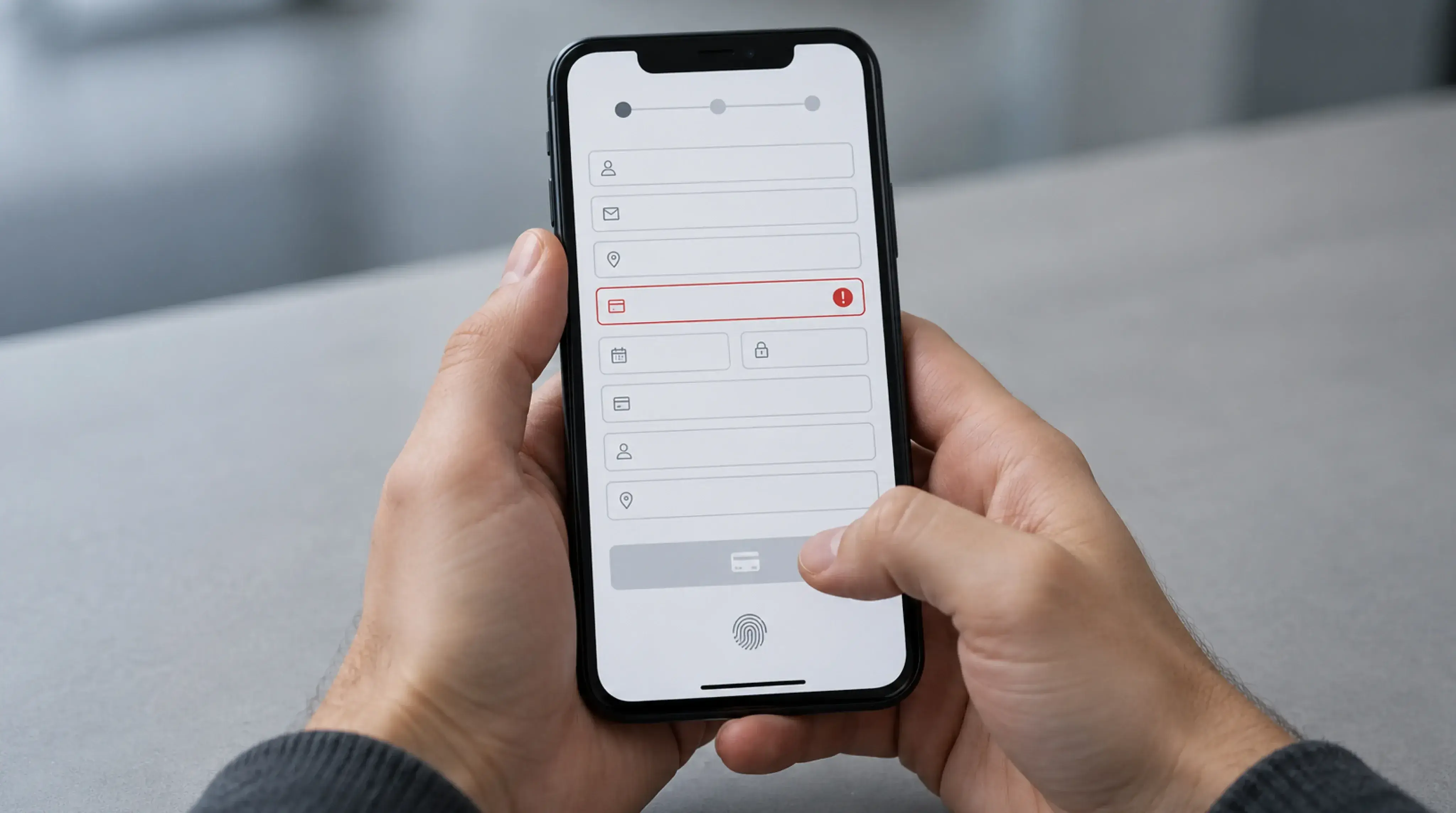
For the last decade, the measure of success of any mobile app has been the way the app is navigated. We have spent millions of dollars on perfecting the hamburger menu and the three-click rule. We have created the digital equivalent of the labyrinth and then hired UX researchers to help users find the exit.
But in 2026, the rules have changed. If your customer has to find the feature in your banking or insurance app, not only have you failed the user experience, you have failed the business model. The era of the Generative Interface has arrived, and it has made navigation redundant.
The Cost of Complexity: Why Your App’s Menu is a Liability
In the BFSI industry, the task is not a browsing task; it is an outcome task. A user is not launching the banking app to browse through the app; the user is launching the app to execute.
The current data indicates that over 60% of users are facing app fatigue due to the necessity of traversing through nested menus to accomplish simple tasks. This is leading to abandonment, reduced feature adoption, and churn. The industry is shifting to Zero-UI, which is a blank canvas with the interface assembling itself according to the user’s specific goal.
The Solution: Transitioning from Menu-First to Intent-First Architecture
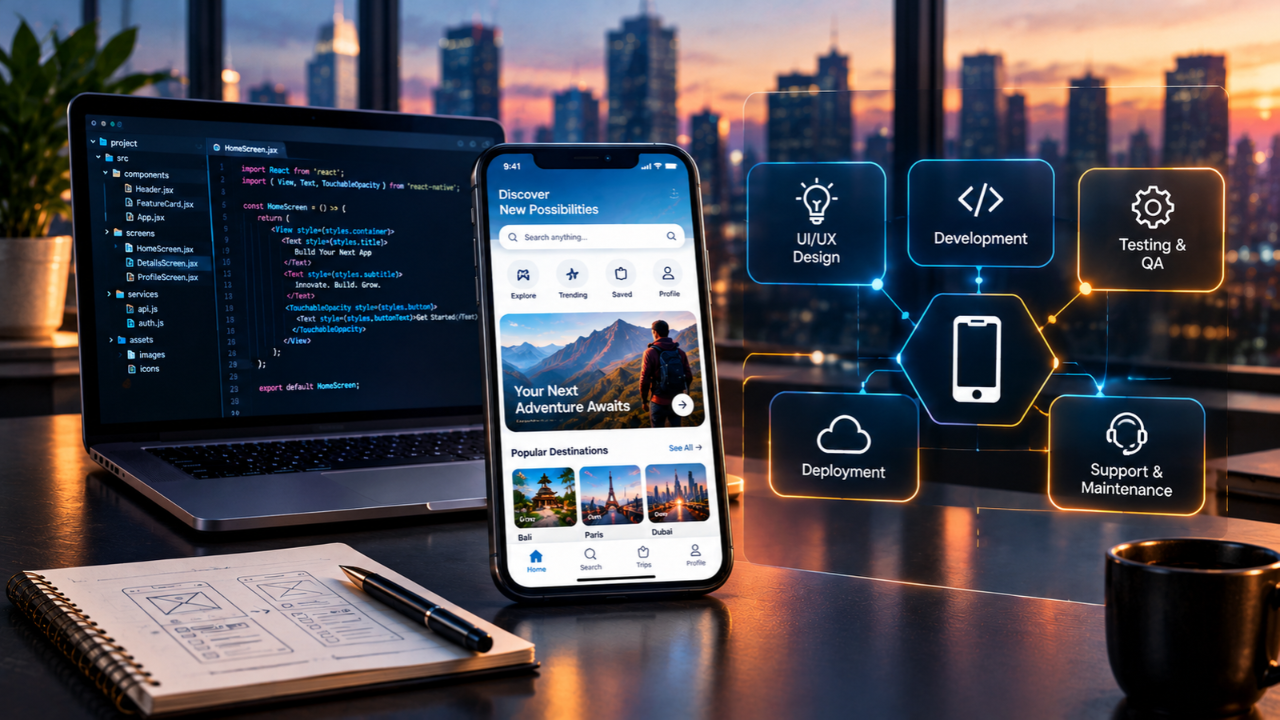
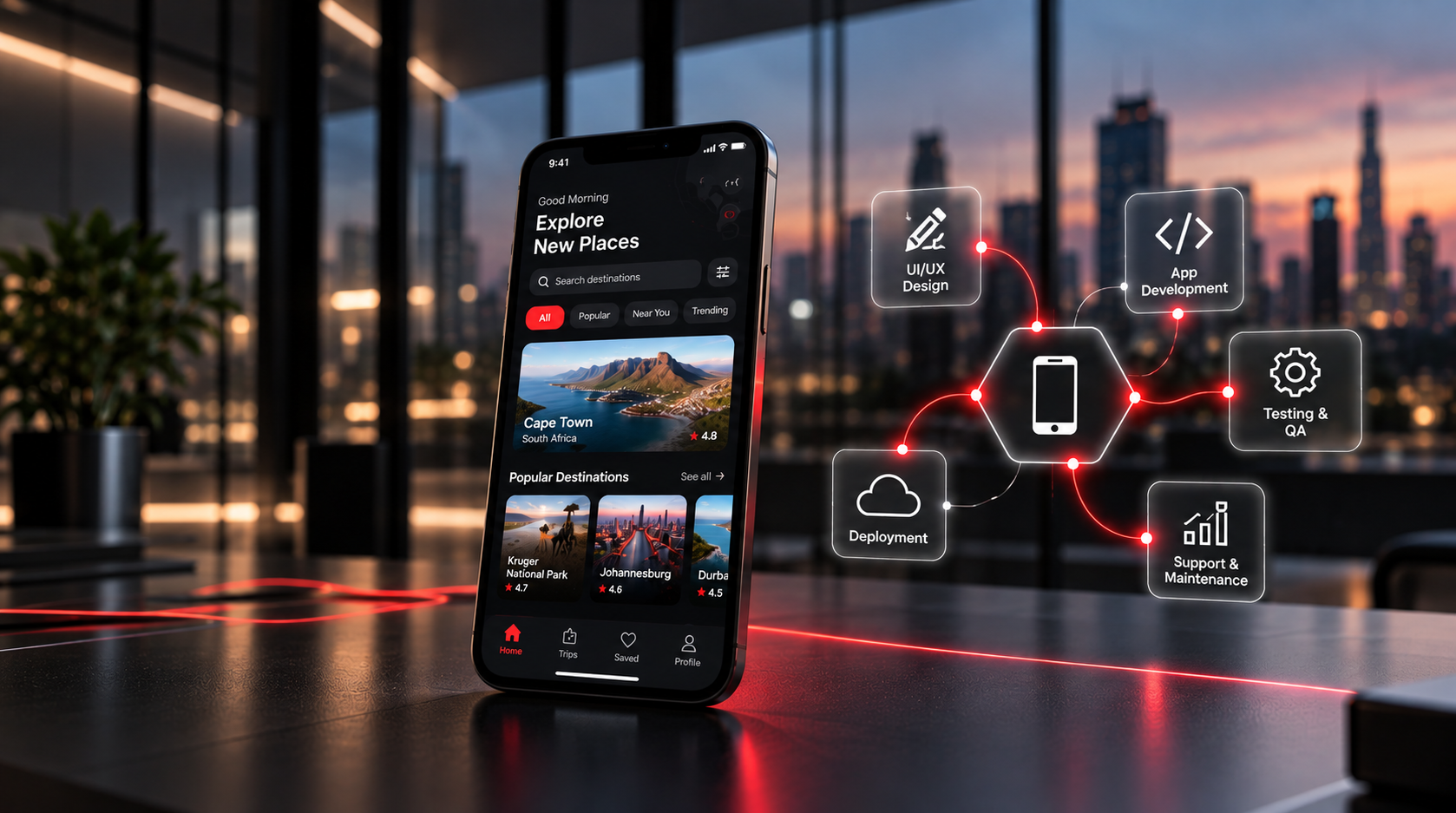
The most significant step in the development of mobile technology today is the shift towards Intent-Based Architecture. It is not merely an upgrade to the interface, but an overhaul of how software interacts with the human experience. With the help of an expert in mobile app development, financial institutions can bridge the gap between complex systems and seamless user intent.
1. Dynamic UI Assembly Over Static Sitemaps
In an intent-based app, there is no fixed home screen. Instead, it is based on real-time behavioral data and provides exactly what is needed.
- The Contextual Home Screen: If a user normally checks their stock portfolio at 9:30 AM, they will see a live trade dashboard and risk exposure information as soon as they open the app.
- Proactive Resolution: Rather than looking for International Wire Transfer, a user will simply state what they want to accomplish. The app will automatically retrieve information and calculate exchange rates to display the “Confirm” button.
2. Mobility in BFSI: The Rise of Agentic AI
Mobility in 2026 isn’t just about being on a phone; it’s about being an active participant in the user’s life. New apps are using Agentic AI autonomous agents that don’t just answer questions but can perform complex operations.
For example, agentic insurance apps don’t wait for the user to find Claims. If the phone detects a high-impact event like a collision, the agentic insurance app automatically switches into Emergency Assistant mode. This mode bypasses all other screens and can provide towing services, share location with authorities, and initiate a claim with one touch.
Hyper-Personalization: The New Economic Moat
The real benefit of removing the navigation is not about looks and feels; it’s about money. When an application is designed to anticipate the needs of its users, it builds a Switching Cost that is virtually impossible for competitors to overcome.
For instance, if an application designed by NeoSOFT understands that the consumer is saving for a home and presents them with a high-yield savings option or pre-approved mortgage rate at the exact moment that their savings account balance reaches a milestone, that consumer is 4 times more likely to convert. This is the difference between serving and making money. By removing the navigation, you eliminate the Choice Paradox, guiding consumers to financial success that is mutually beneficial to them and the institution.
Solving the Technical Hurdles of Navigation-Less Apps
In order to remove the navigation, the tech stack must change. You are no longer building a series of pages; you are building a central nervous system. This is a deep dive into digital transformation strategies that must include speed and intelligence.
Hyper-Personalization via Edge Intelligence
The processing of intent must happen instantly. Edge AI enables the device to understand natural language and forecast what the user needs without going back to a server in a distant location. This way, the Navigation-less experience is as fast as thought while still maintaining the high standards of data privacy that exist in the financial industry.
Behavioral Biometrics: The New Access Key
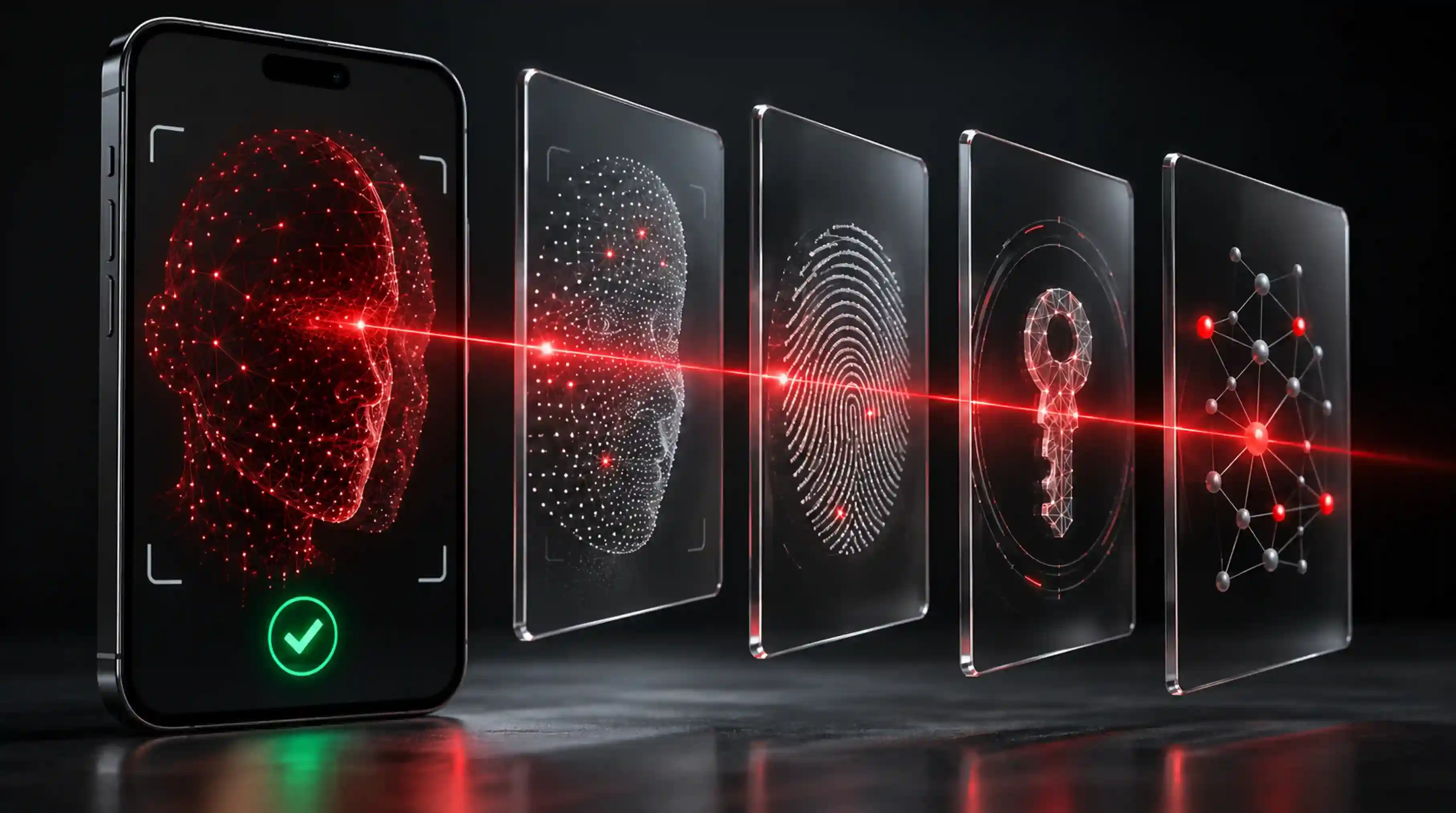
The biggest challenge for a seamless UI was traditionally security asking to authenticate with a password. In 2026, Continuous Authentication has replaced the login screen. By analyzing the rhythm of typing, angle of the device, and interactions, the AI authenticates the user in the background. This way, the UI can be open and responsive to the legitimate user, yet be more secure than a menu locked with a PIN.
Conclusion: Partnering for an Invisible App Future
The competitive advantage for BFSI market leaders is no longer their list of features, but how fast they can access them. If you find yourself continuing to ask your customers to learn your navigation paradigm, you’re essentially asking them to do your job.
We at NeoSOFT specialize in turning these complex digital friction points into seamless, intent-driven experiences. We help global financial institutions go beyond better menus and into true Intelligent Mobility. With our integration of cutting-edge AI agents and predictive UI, you can rest assured that your app is not only a tool, but an indispensable assistant. The world is moving towards the Invisible App, and NeoSOFT is the engine behind this movement.
Enjoyed this read? Explore more insights on AI-driven digital transformation, BFSI innovation, and intelligent mobility Browse Blogs →
Frequently Asked Questions (FAQs)
1. Does removing navigation make the app more difficult for older users?
No, it actually improves the accessibility. Intent-based design, such as voice or simple text command, is much more intuitive for people who are not tech-savvy, as it eliminates the need to remember icon locations.
2. How does an intent-based app handle security for large transactions?
The security becomes step-up based, which means that the app remains fluid for low-risk activities, but the AI system detects high-risk intents (such as large amount transfers to new recipients), prompting the user for a face scan or other biometric check as required.
3. Is this technology compatible with existing legacy banking systems?
Yes. This is accomplished through the use of Large Action Models (LAMs) and strong API layers to allow an intent-based UI to be used as a smart skin that can interact with legacy backends, translating simple user intent into complex system commands.
4. How does Zero-UI affect feature discovery?
Feature discovery is even better. With a menu-driven app, features can often be hidden away. With an AI-powered app, the system actively surfaces features such as a new savings tool at the exact time they are needed by the consumer.
5. How do we eliminate navigation without confusing users?
We replace menus with Intelligence Layers. By auditing your users’ top friction points, NeoSOFT builds a Zero-UI foundation that surfaces the right tools exactly when needed. This removes the learning curve, turning a complex app into an intuitive, invisible assistant that anticipates every move.