


Real-Time Payment Fraud Detection: 5 Engineering Fixes Banks Need in 2027
November 12, 2026
Instant payments have made money transfers faster than ever. Unfortunately, fraudsters are taking advantage of that speed.
A suspicious transaction can move through a banking network in seconds, often before traditional fraud systems identify the warning signs. For banks, the challenge is no longer just detecting fraudulent activity but stopping it before funds move.
According to the UK Payment Systems Regulator, £316 million, representing 88% of losses from eligible authorised push payment (APP) scams, was reimbursed over the 18 months ending March 2026. While reimbursement helps victims recover losses, preventing fraud requires faster risk decisions.
As banks prepare for 2027, real-time payment fraud detection must become part of payment infrastructure rather than a separate monitoring process.
Here are five engineering improvements banks should prioritize.
1. Move from Delayed Monitoring to Real-Time Data Streaming
Traditional fraud systems often process transaction data in batches, creating delays between payment activity and risk analysis.
For instant payments, even a short delay can reduce the opportunity to prevent fraud.
Banks need event-driven architectures that continuously process transaction activity, account behavior, device information, and authentication signals.
Technologies such as Apache Kafka and Apache Flink can support this through real-time data streaming and processing.
For example, when an account initiates several high-value transfers to unfamiliar beneficiaries, streaming systems can identify unusual activity before subsequent payments are executed.
Engineering priority: Build low-latency data pipelines that deliver fraud signals directly to payment decisioning systems.
2. Replace Rigid Rules with Context-Aware AI Risk Scoring
A high-value transaction is not necessarily fraudulent. What matters is whether it matches the customer’s normal behavior.
Traditional rule-based systems may flag every payment above a fixed threshold, creating false positives while missing sophisticated fraud patterns.
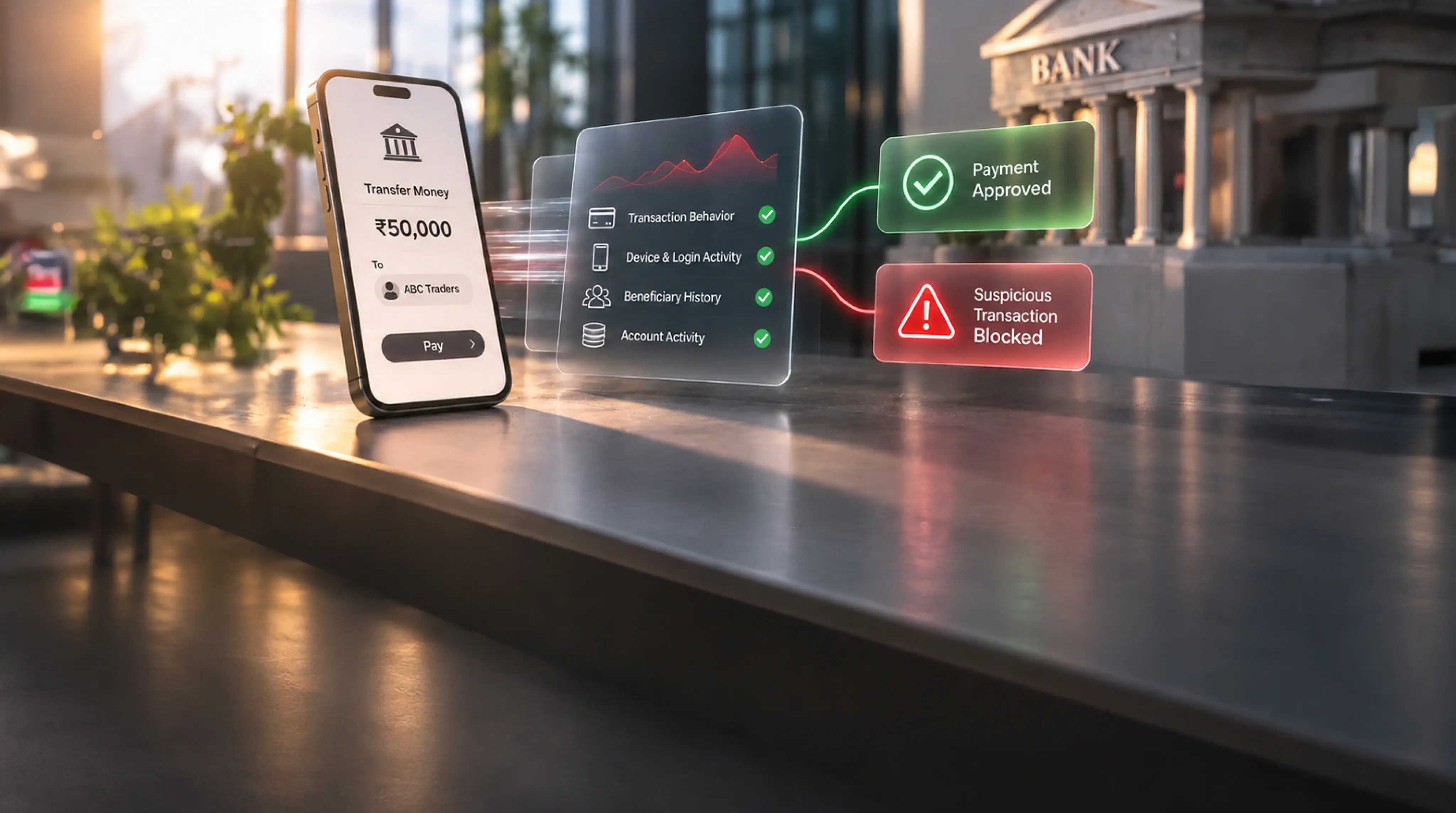
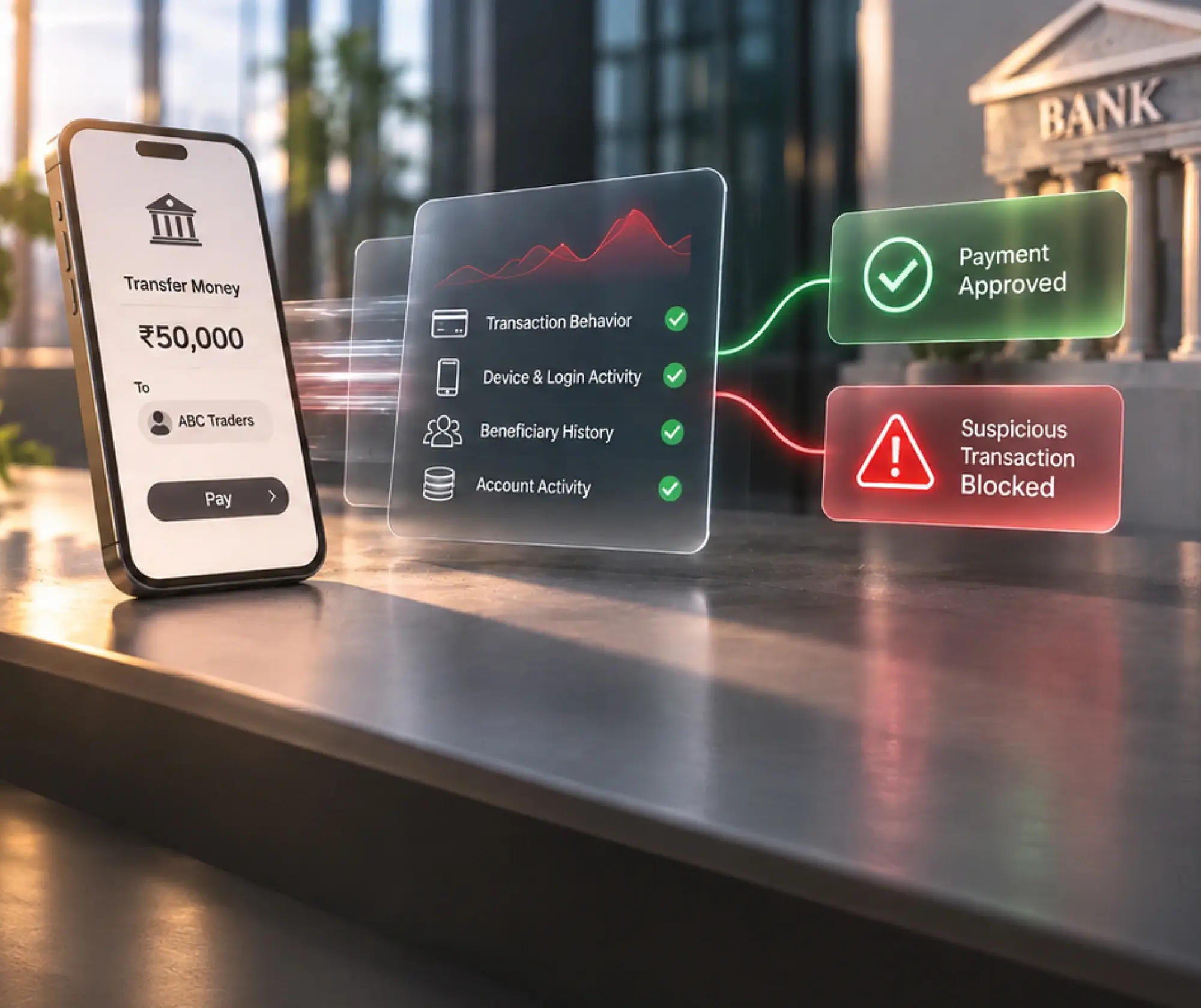
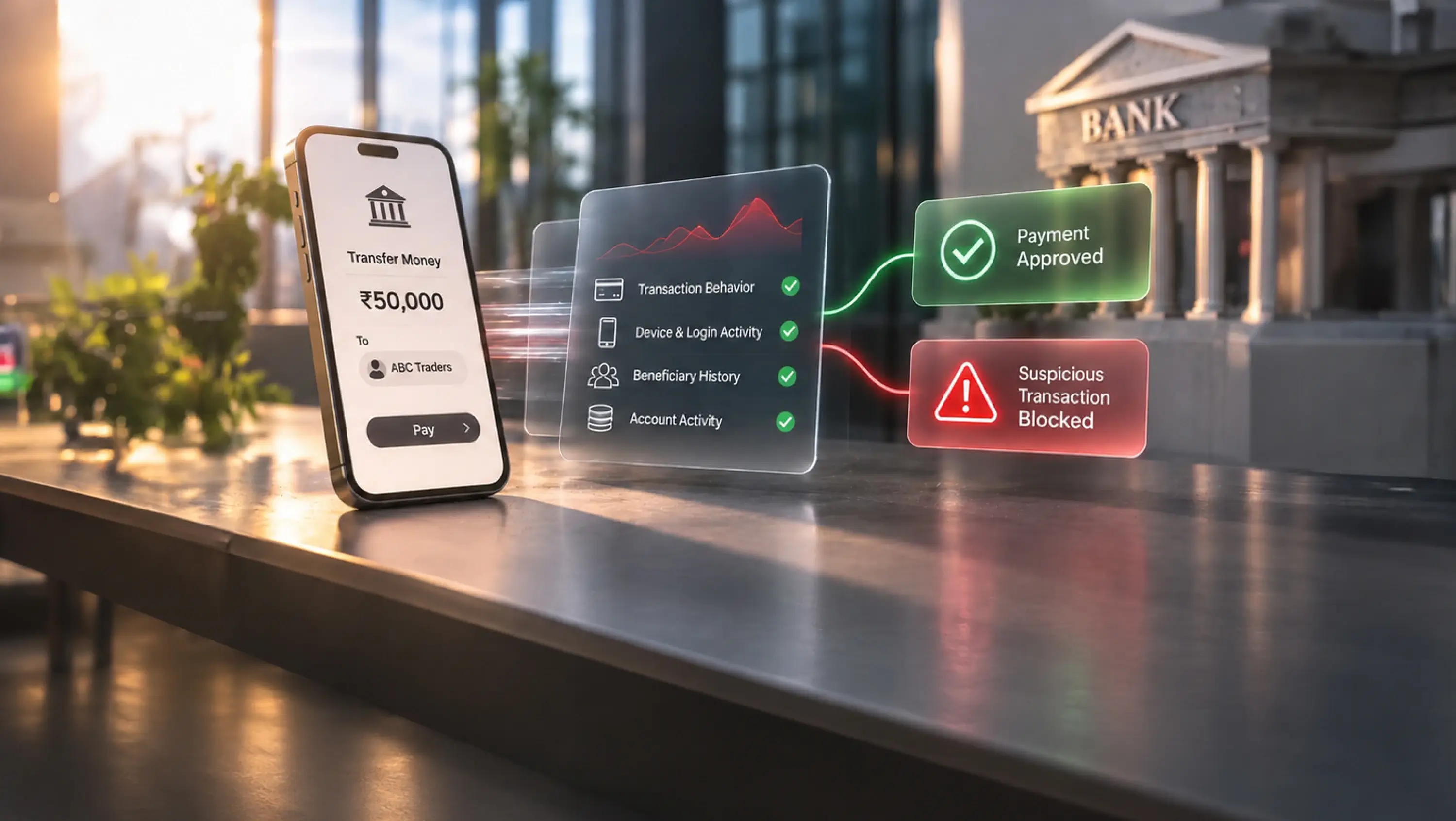
AI-powered fraud detection evaluates multiple risk indicators together:
- Transaction amount and frequency.
- Device and login behavior.
- Beneficiary history.
- Unusual account activity.
- Previous fraud indicators.
For example, a large payment from an unfamiliar device immediately after a password reset may indicate greater risk than the same payment from a recognized device.
Machine learning helps identify these relationships and supports more accurate risk decisions.
As financial institutions adopt AI-powered financial services and fraud analytics, combining intelligent models with existing security controls becomes increasingly important.
Engineering priority: Combine AI/ML models with established rules to improve fraud detection accuracy while minimizing unnecessary payment declines.
3. Connect Disconnected Banking Systems for Better Fraud Intelligence
Banks often manage customer information, transaction records, authentication, and fraud monitoring across separate platforms.
When these systems cannot exchange information quickly, fraud detection becomes less effective.
A fraud engine might recognize an unusual transfer but remain unaware that the customer recently changed devices or added a new beneficiary.
Secure APIs, data engineering, and centralized intelligence services can connect these signals without requiring banks to replace their entire infrastructure.
A unified data layer enables fraud models to access relevant transaction histories, account activity, and behavioral indicators.
Engineering priority: Establish secure, governed data integration that makes reliable fraud signals available in real time.
4. Integrate Fraud Detection Directly into Payment Workflows
Fraud alerts generated after payment execution may arrive too late to prevent financial losses.
Banks must integrate fraud assessment directly into payment processing.
An effective workflow follows:
Payment Initiation → Data Analysis → AI Risk Scoring → Risk Decision → Payment Execution or Intervention
Depending on the risk assessment, banks can:
- Approve low-risk transactions.
- Request additional verification for suspicious payments.
- Reject or temporarily hold high-risk payments where permitted.
The Federal Reserve’s FedNow network intelligence API, launched in April 2026, illustrates how additional receiver-account intelligence can support payment risk assessment.
Such controls must operate within strict processing requirements while maintaining system reliability.
Banks should also combine fraud monitoring with robust application security and cybersecurity practices to protect payment APIs and sensitive financial data.
Engineering priority: Embed low-latency fraud decisioning into payment workflows without compromising performance or availability.
5. Continuously Monitor Fraud Models and Reduce False Positives
Fraud patterns constantly evolve. A detection model trained on historical transactions may become less effective as new threats emerge.
Banks must continuously evaluate fraud detection performance using measurable indicators.
Key metrics include:
- Fraud detection rate: Percentage of confirmed fraudulent transactions identified.
- False positive rate: Legitimate payments incorrectly flagged as suspicious.
- Decision latency: Time required to assess transaction risk.
- Fraud loss rate: Financial impact of undetected fraud.
- Model drift: Changes affecting AI model reliability.
Regular model evaluations, updated fraud data, and controlled retraining help maintain effectiveness.
Engineering priority: Establish continuous monitoring, explainable risk decisions, and governed model updates.
How NeoSOFT Supports Financial Fraud Prevention
Effective fraud prevention requires AI expertise, reliable data infrastructure, secure integrations, and scalable financial technology.
NeoSOFT combines AI/ML, data engineering, digital banking, cloud modernization, and cybersecurity to help financial institutions strengthen their technology foundations.
Its experience includes developing an AI-powered insurance fraud detection solution that uses machine learning and natural language processing to identify suspicious claims and prioritize investigations.
NeoSOFT has also engineered intelligent financial information systems and automated document processing solutions that improve data accessibility and reduce manual effort.
Its FinTech fraud detection and digital onboarding case study further demonstrates expertise in AI-based identity verification, fraud prevention, and secure financial workflows.
These capabilities support banks and FinTech companies seeking to modernize fraud intelligence and strengthen digital financial systems.
Conclusion: Faster Payments Need Faster Fraud Decisions
As instant payments become standard, banks cannot depend solely on traditional fraud monitoring.
Real-time data streaming, AI risk scoring, connected banking systems, payment-level controls, and continuous model monitoring can strengthen fraud prevention.
The objective is clear: identify suspicious transactions before funds move without slowing legitimate payments.
Meet NeoSOFT’s experts at Singapore FinTech Festival 2026, Booth 4D32, Singapore EXPO, from 18–20 November 2026, to discuss AI, digital banking, and cybersecurity solutions. Connect with our experts at info@neosofttech.com.
Frequently Asked Questions
1. What is real-time payment fraud detection?
It uses transaction data, behavioral analytics, and AI/ML models to identify suspicious payments quickly enough to support intervention before execution.
2. How does AI improve payment fraud detection?
AI analyzes transaction patterns, customer behavior, and risk indicators to detect suspicious activity that traditional rules may miss.
3. Why do instant payments increase fraud risks?
Instant payments leave limited time to identify suspicious activity and intervene before funds are transferred.
4. How can banks reduce false positives?
Banks can combine behavioral analytics, AI risk scoring, contextual transaction data, and continuous model monitoring to improve accuracy.
5. What technologies support real-time fraud detection?
Common technologies include Apache Kafka, Apache Flink, machine learning, secure APIs, and low-latency fraud decisioning systems.










Recommended