

Why Businesses Fail when it comes to Cybersecurity
April 14, 2026
Startups often prioritize fundraising, customer acquisition, and rapid product launches, resulting in delayed cybersecurity planning. Established organizations may assume existing IT systems can adequately address cyber threats. However, this misalignment with the attacker’s perspective leaves both vulnerable.
Let’s see data from different sources. According to Forbes, about 60% of startups close within six months of a cyber-attack. SQ Magazine also found that 43% of small and medium-sized businesses have been targeted.
Observing such incidents, many organizations are moving toward smarter protection models such as zero-trust network access, Zero-trust security, and AI in cybersecurity. Applying these approaches, businesses are preventing attacks before they cause major damage.
Cyber Risks Are Closer Than Most Businesses Think
Many cybersecurity professionals have stated that many breaches happen because of small mistakes that go unnoticed, like weak passwords, employees accessing systems from unsecured personal devices, and networks that permit users to move between systems without restriction. The surprising thing is that attackers often rely on exactly these weaknesses.
Cybersecurity is not only about technology, but it’s also about how people access systems and how organizations control that access.
Why Traditional Security Models Are Struggling, Today!
In the past, organizations used to assume that if any individual was in the company, they could be trusted. To outer threats, firewalls and VPN solutions were designed primarily.
As the technology is growing, cyber attackers have also become wise. As many employees frequently access the company from different locations, such as home, airports, and personal devices, to improve productivity, malicious actors have also introduced additional potential entry points.
With just one compromised account in a traditional network, hackers can sometimes move through multiple systems without being noticed. And this is why zero-trust security was designed.
Understanding the Idea Behind Zero Trust
We need to understand the philosophy behind zero-trust security, which is to not automatically trust any user or device, whether it is already inside the network. Verification of any request to access the data should be necessary.
It is as simple as entering a restricted office building while having a pass for the front door; you still need to authorize the access for certain floors or rooms.
However, the same concept applies in the digital environment.
When organizations implement zero-trust security, several things happen:
- Access to sensitive data becomes tightly controlled
- Attackers cannot easily move across systems
- Employees only see the information required for their roles
Layer up your organization with zero-trust access so that users can connect only to specific applications.
Why AI in Cybersecurity Is Becoming Essential
Modern cyber attacks are growing fast and are very hard to stop. Human teams cannot watch every part of a large digital network today. Companies must use smart AI tools to fight these many digital threats.
New AI tools can find bad logins and dangerous software very quickly. These systems also spot fake emails that try to steal your data. AI in cybersecurity works well with zero trust security rules to keep your private files safe. This smart technology helps people find and stop bad activity very early.
Getting Started With Zero Trust
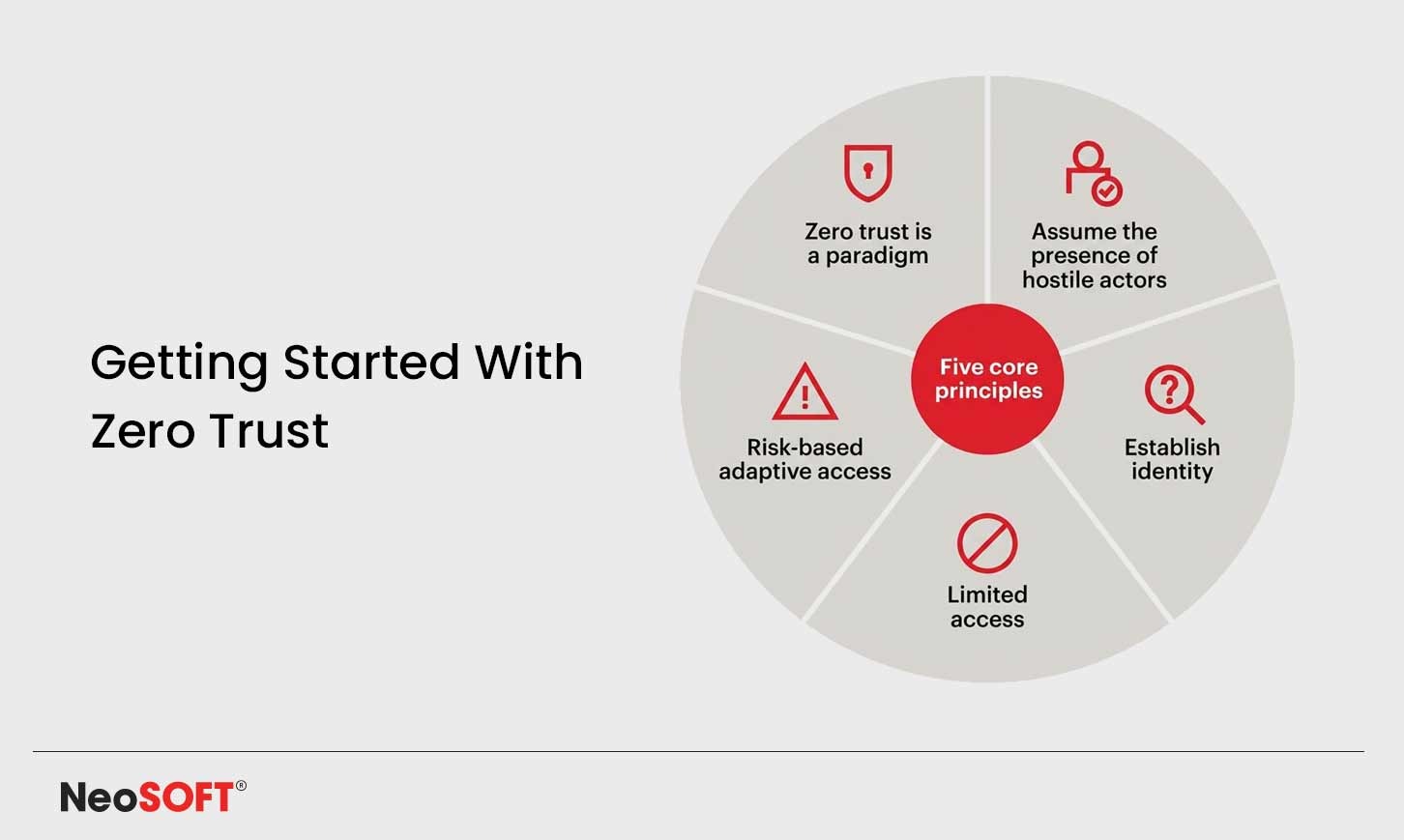
Some businesses believe zero trust requires a massive infrastructure overhaul. In reality, many organizations begin with small but meaningful steps.
A practical approach may include:
- Introducing multi-factor authentication for all users
- Verifying devices before allowing them to access company systems
- Using zero-trust network access to limit application access
- Encrypting sensitive company data
- Implementing AI monitoring tools that detect suspicious activity
These steps help businesses strengthen security without disrupting everyday operations.
Waiting for a Breach Is a Costly Strategy
Many businesses are compromising on cybersecurity and avoiding the fact that cybersecurity is more prone to damage.
Adopting zero-trust security, integrating zero-trust network access, and using AI in cybersecurity allows organizations to build a stronger defense system.
Investing in these technologies lets your company give a smooth experience without any disruption, which results in stronger trust from customers and partners.
Final Thoughts
Modern companies need more than just simple tools to stay very safe. They must use smart and flexible plans to fight new digital risks. Old security systems cannot stop the clever attacks that we see today. Smart AI in cybersecurity and zero trust security framework build a very strong safety base. These two technologies work together to keep your business data very secure. Using these modern tools helps your company stay safe from every hacker.
You can talk to NeoSOFT to make your digital walls much stronger. They help you use smart AI and zero trust for better safety. Look at NeoSOFT cybersecurity services to build a safe and growing digital space.