Trading 2.0: Unleashing Machine Learning for Smarter Market Predictions

Introduction

Artificial intelligence (AI) has transformed financial markets by enabling traders and institutions to automate trade tactics, increase precision in forecasting, and analyze complicated data. Large quantities of structured and unstructured data including stock prices, financial reports, economic indicators, and social media sentiments, are examined using machine learning (ML) models, to determine trends and take real-time decisions more efficiently.

These trading networks respond dynamically to ever-changing market scenarios, unlike traditional trading methods that rely on past price patterns, indicators of volatility, and human intuition. They identify intricate sequencing, learn from new data, and then adopt trading tactics that maximize returns while reducing risk. This blog equips a deep understanding of how AI-driven trading is rising to prominence, making financial markets data-driven, efficient, and sensitive to outside influences.

The Shift Towards AI-Driven Trading

In the past, financial trading counted on technical chart patterns, fundamental studies, and human aptitude, having restricted adaptability to unexpected market fluctuations and unanticipated disruptions.

Today, AI-powered trading seamlessly integrates real-time analytics, predictive modeling, and automated execution overcoming the above constraints, while offering traders a competitive advantage with improved speed and efficiency.

How AI is Transforming Financial Market Predictions

AI-powered trading holds the capability to outshine conventional methods because they can process large-scale financial data with unmatched precision and speed. In contrast to static algorithms, machine learning models have evolved over time improving their forecast efficiency, by offering:

  • Real-time decision-implementation: Discovers profitable trades and takes them into consideration within a few milliseconds.
  • Risk assessment and management: Detects possible recessions and modifies strategies accordingly.
  • Elimination of human bias: Decreases the possibility of decisions being made emotionally, resulting in objective focused trading outcomes.
  • Enhanced fraud detection: Explores unusual trade developments that might signal fraud.

The Role of Machine Learning in Trading

Machine Learning monitors news sentiment, macroeconomic variables, and historical price modifications to produce data-driven insights. This technology enables high-frequency trading (HFT), which materializes on tiny market movements by allowing powered by AI algorithms to carry out thousands of trades per second.

In addition, monetary institutions, wealthy people, and individual traders can all make superior investment choices by integrating artificial intelligence into trading platforms. This reduces risks and optimizes profits. AI-powered trading systems are increasingly using machine vision to better read complex chart patterns, identify market deviations, and to further analyze graphical data related to finance.

Key Machine Learning Techniques Used in Trading

Supervised Learning

In order to generate accurate asset price forecasts, algorithms that use supervised learning rely on labeled training data, including historical stock prices, trading volumes, and financial indicators. Common supervised learning techniques used in trading include artificial neural networks, regression models, and decision trees.

Unsupervised Learning

Market information contains hidden connections and trends that can be identified through unsupervised learning. These models can help traders identify correlations, manage risks more effectively, and construct varied portfolios to reduce possible risk by evaluating groups of commodities that show price movements and trends alike. Traders can therefore find fresh investing opportunities with the aid of clustering techniques and principal component analysis (PCA).

Semi-Supervised Learning

A strategy that combines aspects of both supervised and unsupervised learning is called semi-supervised learning. To enhance model training, it integrates a lot of unidentified information with a little bit of labeled data. This approach works best when there is a lot of raw data and classification is expensive or time consuming.This minimizes the need for intensive manual labeling while promoting accuracy and generalization through employing attributes in the unlabeled data. It is used in applications such as fraud detection, image recognition, and speech processing.

Reinforcement Learning

Through continuous problem-solving adjustments based on market conditions, reinforcement learning maximizes automated trading strategies. These models promote long-term profitability by improving their tactics based on historical trades. Therefore, reinforcement learning is especially helpful when creating portfolio management setups driven by AI.

Natural Language Processing (NLP)

NLP techniques analyze financial news, earnings reports, analyst opinions, and social media trends to assess market sentiment. They can predict stock price movements influenced by news events and investor sentiments by processing unstructured textual data.

Benefits of AI-Powered Trading

Faster and More Accurate Problem-solving

AI-powered trading algorithms evaluate enormous data sets in real-time, anticipating the best times to buy and sell in milliseconds. This speed is essential in automated investment methods and HFT, where snap decisions can mean the difference between earnings and heavy losses. Furthermore, AI models continuously improve their accuracy by taking in fresh data and making the necessary adjustments to trade strategies.

Reduced Human Bias and Emotional Trading

AI eliminates irrational thinking brought on by human emotions such as fear, greed, and overconfidence. ML-driven strategies rely on data and statistical models to ensure objective trading solutions, which assure objective trading decisions. Artificial intelligence promotes trading discipline and consistency through the elimination of emotional biases ultimately leading to more predictable and steady investment outcomes. This helps investors to stay true to their goals by decreasing impulsive reactions to market changes.

Improved Risk Management

In order to anticipate downturns and mitigate risks, AI models assess both historical and current market data. They encourage traders to take timely measures by detecting indicators of market instability early on through the analysis of enormous datasets. By shielding investors from sudden shifts in prices, predictive analytics minimize overall risk exposure.

Fraud Detection and Regulatory Compliance

Machine learning models detect unusual trends that could point to insider trading, counterfeiting, or market manipulation by examining enormous quantities of transaction data. Compared to conventional monitoring techniques, these automated networks provide faster and more precise means of detecting fraudulent activity.

It further limits the possibility of charges and harm to financial organizations’ reputations by minimizing human mistake, enhancing transparency, and assisting them in preserving compliance with the ever-changing regulatory system.

How AI-Powered Trading is Impacting Retail Investors

Virtual assistants driven by AI are also becoming more prevalent in the financial sector, helping traders to handle their portfolios, track real-time markets, and to execute strategy-based trade. These AI-driven tools, once limited to institutions, are now available to retail investors, identifying real-time opportunities and risks.

Automated trading bots enhance efficiency and eliminate emotional bias by executing transactions according to algorithms. Leveraging AI to evaluate data and carry out plans may support retail investors in growing more competitive and making informed decisions.

Challenges and Risks


Despite its transformative capabilities, trading driven by AI still has an array of limitations. Machine learning models can at times fail to consider previously unexpected market circumstances, such as downturn or unexpected geopolitical advancements, due to their high reliance on historical data. Likewise, if several algorithms respond to the same inputs at the same time, AI-driven systems could spike market volatility.

The Role of AI in Risk Management

AI reduces trading risks through the detection of market irregularities and early warning indicators of possible losses. Advanced risk models evaluate data in real time, enabling traders to modify asset allocations and reduce volatility exposure. Using automated risk assessment, AI-driven fraud detection has enhanced security by discovering suspicious transactions and reducing financial fraud, thereby reinforcing investor protection.

Ethical and Regulatory Concerns

AI-driven trading raises queries regarding market manipulation and the business advantage of high-frequency traders. Regulators have reinforced regulations to maintain market fairness because, despite the rapid pace of AI-powered trades, such trades may create unjust advantages. In the wake of artificial intelligence, governing bodies such as the European Union have introduced stricter rules to promote fairness and transparency in financial markets.

Algorithmic transparency and compliance to data confidentiality rules are becoming more important as AI is developing. To make sure AI-driven trading remains fair and doesn’t cause market instability, regulatory bodies are attempting to achieve stability between innovation and accountability.

Over-Reliance on AI and Black Box Systems

The lack of disclosure in resolving issues is one of the main hazards associated with AI-powered trading. A lot of models for machine learning function as “black box” systems, which makes it challenging to understand their internal reasoning. Traders and businesses that only use AI could find it difficult to comprehend the reasoning behind some trades. Excessive reliance on transparent AI-models could lead to severe losses if they fail in reacting to abrupt changes in the economy.

Example: The 2010 Flash Crash

The 2010 Flash Crash, where trading performed using algorithmic approaches resulted in an abrupt and catastrophic market crash, is a noteworthy example of market failure powered by AI . The Dow Jones Industrial Average fell nearly one thousand points in just a couple of minutes on the fatal day of May 6, 2010, leading billions to be lost, but the market rebounded promptly.

This was actually raised by AI-driven high-frequency trade (HFT) algorithms that detected anomalous market activity and reacted by placing huge sell orders. These algorithms exacerbated the crisis before human intervention could stabilize the market. This incident emphasizes the need for human control in AI-driven trading in addition to the risks associated with black-box AI algorithms.

How AI is Redefining Trading Psychology

The judgements made by the investors are changing as a result of AI-powered trading. Conventional traders frequently go through emotional highs and lows, which causes them to make rash decisions and use inconsistent methods which may lead to undesired monetary choices. Thus, machine learning systems eliminate this emotional bias, providing data-driven, rational approaches that improve efficiency and consistency.

  • AI-driven sentiment analysis: Permits traders to accurately forecast investor behavior by evaluating market psychology through the examination of financial news, earnings estimates, and social media trends.
  • Algorithmic discipline: Reduces premature choices and improves long-term profitability by guaranteeing that the trades are executed out carefully employing reasoning and past data.
  • Risk mitigation: Real-time market conditions are tracked through AI models, which dynamically alter portfolios to reduce exposure to unexpected shifts in the economy. This improves stability and reduces the emotional toll that volatile markets take.

Future Trends in AI and Financial Market Predictions

Deep Learning for Enhanced Forecasting

Complicated market predictions are made feasible by deep learning models, which are made of multiple layers, that gradually extract higher-level financial information. These forecasts are more precise, especially the deep neural networks, which examine large financial datasets in a variety of ways. Also, by continually acquiring knowledge from new information, these models improve their predictions and assist traders in successfully predicting market movements.

AI and Blockchain Integration

Blockchain’s immutable record can be used by artificial intelligence models to securely hold and validate trading data, increasing accountability and reducing the possibility of fraud. AI-powered smart contracts additionally allow trades to be carried out automatically according to predetermined guidelines, decreasing the need for human intervention thereby boosting the performance of financial transactions.

Quantum Computing in Financial Predictions

Financial trading may undergo an evolution thanks to quantum computing’s capability to solve complex optimization issues at previously unheard-of rates. Quantum algorithms have an opportunity to improve risk assessment and portfolio management, giving traders more resources for making decisions.

Quantum systems use parallel processing to investigate multiple market scenarios at once, in contrast to traditional computing, that analyzes data sequentially. More accurate risk modeling may result from this capability, enabling traders to foresee and avert financial slumps before they materialize.

Conclusion

AI-powered trading has positively altered financial markets by improving on risk management, increasing prediction accuracy, and simplifying approaches to trading.

The manner in which businessmen evaluate the market trends, carry out trades, and control their portfolios is evolving as an outcome of machine learning techniques like supervised learning, reinforcement learning, and natural language processing.

Even while AI-driven trading has several advantages, problems involving erroneous data, unstable markets, rules and regulations still need to be fixed.

As AI technology expands, financial markets’ automation, security, and forecasting abilities will all likely improve as it will be necessary to find an equilibrium between innovation and regulatory oversight in order to preserve market stability and ethical business practices.

Get in touch with us at info@neosofttech.com to maximize your financial plans, take advantage of AI-driven trading solutions, and maintain your competitive edge in the quickly changing market.

Transforming Software Delivery with AI-Driven DevOps

Introduction: AI/ML and DevOps Synergy

DevOps, as the name implies, promotes collaboration among software development and operations teams. Its major purpose is to accelerate the deployment processes and improve software delivery, through workflow optimization and shorter development workflows. Important DevOps practices include:

  • Continuous Integration (CI): frequent integration of code changes into a centralized repository of automated builds and tests.
  • Continuous Delivery (CD): the process of automatically preparing code updates for production release.
  • Infrastructure as Code (IaC): machine-readable scripts to manage infrastructure.
  • Monitoring and logging: continuous tracking of systems in order to enhance performance and reliability.

Incorporating AI and ML into the DevOps team and workflow, in a practice known as AIOps, delivers considerable improvements across all elements of the software delivery process, increasing product quality and cost efficiency, and connecting the software development lifecycle with operational goals.
 
An AI/ML integration with DevOps professionals and processes enhances automated deployment methods, predictive analytics, continuous monitoring, intelligent resource management, and privacy and security policies, contributing to a more efficient and dependable software development and delivery process. As artificial intelligence and machine learning technologies keep advancing, their impact on a DevOps operation, and software development team will grow.

The Role of AI in DevOps Processes

Automated Code Reviews

Automating code reviews use machine learning algorithms to scan code for defects, security vulnerabilities, and operational concerns. These artificial intelligence algorithms can detect coding patterns that may lead to errors, identify security issues by identifying vulnerable code constructions, analyze network traffic and recommend ways to boost the efficiency of a DevOps team.
 
By automating the code review process, ML is capable of not only saving time and effort on the manual processes of reviews and repetitive tasks, but also improving code quality and enhancing security monitoring. AI-powered code review tools include the following:

  • DeepCode uses ML to give real-time code evaluation and recommend enhancements based on industry best practices and known bug patterns.
  • Codacy examines code for potential errors and offers code suggestions to improve code quality, security, and maintainability.
  • Snyk focuses on detecting security flaws, containers, dependencies, and Kubernetes applications.
  • SonarQube uses ML to better precisely discover bugs and vulnerabilities.

Predictive Analytics for Continuous Integration/Continuous Deployment

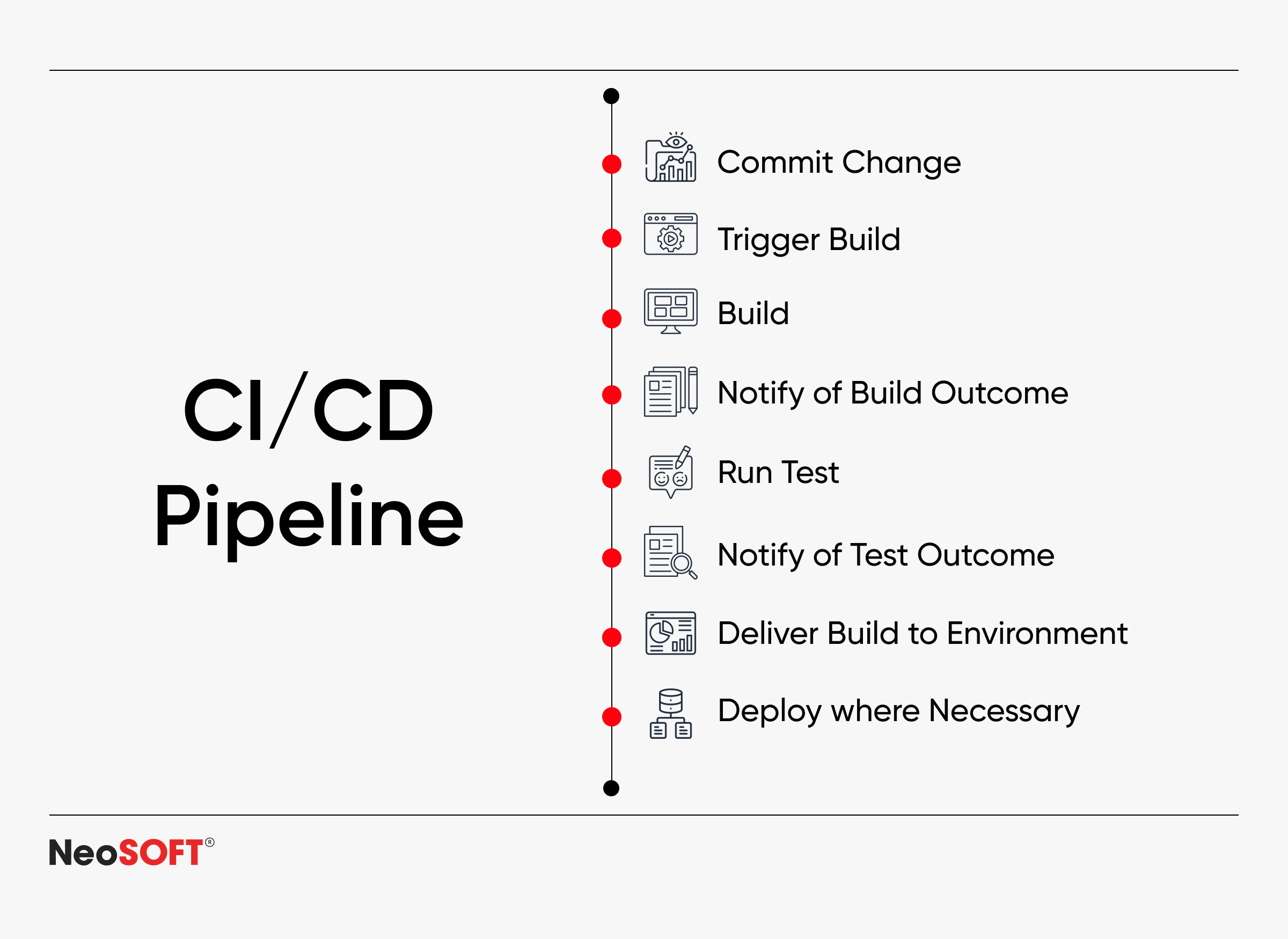
Machine learning improves CI/CD processes by forecasting build failures and delivery issues. ML algorithms can detect anomalies, patterns and trends that indicate possible issues.
 
ML models can use code quality, changes, dependencies, test results, user feedback and system performance statistics to predict the likelihood of build failure in the software development process. If the model projects a high chance of failure, it can set off alarms or even pause the build process, allowing developers to examine and fix the issues.
 
ML may also detect potential problems in the deployment phase, including mistakes in configuration, environmental inconsistencies, or resource allocation bottlenecks. This provides actionable insights that enable the development and operations teams to take proactive steps.
 
This predictive strategy reduces downtime in the software delivery process and increases the CI/CD pipeline’s reliability, in addition to improving overall software quality by guaranteeing that only well-tested and stable code reaches production. As a result, businesses can achieve quicker release cycles, improve customer satisfaction, and optimize resource allocation.
Enhancing Software Testing with AI

Automated testing

Machine learning models can assess the source code using sophisticated algorithms to understand its performance metrics, structure and logic, as well as produce extensive test cases which cover multiple code paths and scenarios. In addition, AI tools and ML systems can evolve and improve with time, learning from the results of previous tests to fine-tune new test generation.
 
Several applications facilitate test generation via AI-powered automation, some of which include:

  • Test.ai leverages AI/ML to automate tasks, like the creation and execution of functional and regression tests, replicating user interactions and finding application faults.
  • Functionize utilizes ML to develop, maintain, and run automated tests, which eliminates the need for manual test script writing.
  • Applitools employs visual AI tools to automatically build and perform tests based on the application’s visual appearance, ensuring a consistent user interface and better detection of visual issues.
  • Mabl integrates AI to generate and conduct tests automatically, delivering insights and finding errors with minimal human oversight.

Improving Test Coverage

Artificial intelligence technologies can improve test coverage significantly by finding sections of the codebase that are under-tested. AI systems can find gaps in the existing automated testing suite and can identify untested code pathways, functions, and classes, giving software testers and developers relevant insights. This evaluation ensures that all components of the program are thoroughly tested, reducing the possibility of undiscovered defects and vulnerabilities.
 
Enhanced test coverage has various benefits, including:

  • Improved software quality: Comprehensive test coverage guarantees that more potential issues are found and addressed prior to release, resulting in higher-quality software.
  • Reduced bug risk: Thoroughly testing every area of the software reduces the likelihood of encountering problems in production.
  • Rapid issue resolution: With detailed insights into untested sections, developers can more effectively focus their efforts, leading to quicker detection and resolution of issues.
  • Increased confidence: Knowing that the good or service has undergone extensive testing provides developers and stakeholders more confidence in its stability and dependability.
  • Cost savings: Identifying and resolving issues fairly early in the development process is frequently more affordable versus addressing them after deployment.
  • Continuous Improvement: AI-driven insights into test coverage holes allow for continual testing process improvement, adjusting to changes in the codebase and evolving testing requirements.

AI in Monitoring and Incident Management

Anomaly Detection

Machine Learning improves monitoring, security practices and incident management by detecting anomalous patterns in application performance or user behavior that indicate possible problems such as system failures, security breaches, or performance bottlenecks.
 
ML algorithms evaluate data quality to determine normal behavior patterns and performance indicators, so establishing a baseline. They then examine real-time data for anomalies, such as spikes in response times, unusual error rates, unexpected user activity, or abnormal resource utilization.
 
For example, ML may detect rapid increases in CPU consumption, memory leaks or slower response times in application performance, as well as unusual login attempts or unexpected transactions in user behavior, all of which indicate possible security issues.
 
Advanced machine learning algorithms, including those for clustering and classification, distinguish between benign abnormalities and actual threats, minimizing false positives and increasing threat detection accuracy.

Root Cause Analysis

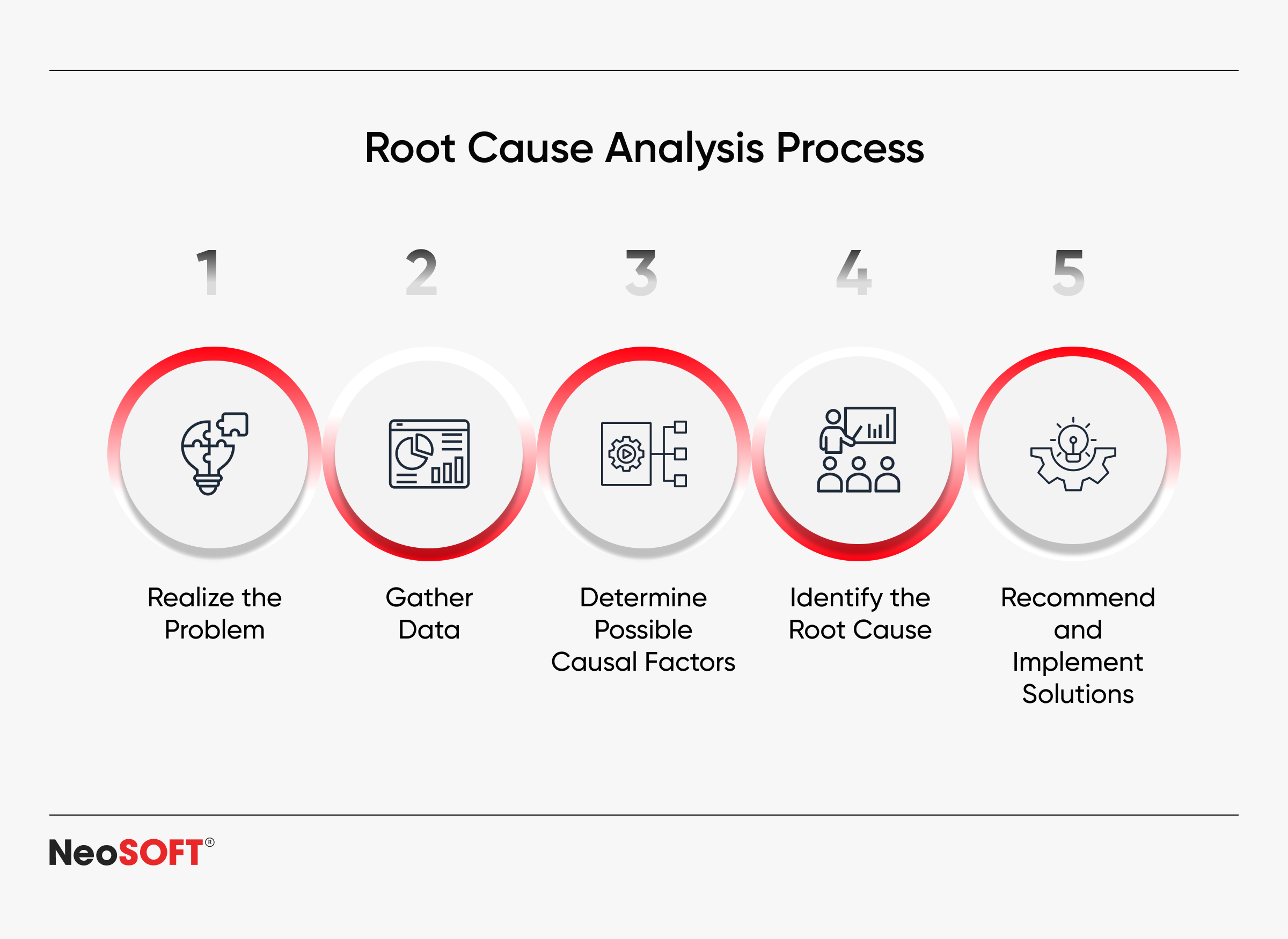
AI models improve root cause analysis (RCA) by rapidly identifying the underlying causes of incidents. Traditional RCA approaches are time-consuming and need substantial manual input, but an AI tool can quickly examine vast volumes of data, identify trends and patterns, and spot weaknesses with high accuracy.
 
By analyzing data points that include logs, metrics, and user interactions, AI tools discover abnormalities and track them back to their source, speeding up problem resolution and improving code quality.
 
Several tools use AI models to perform faster and more accurate root cause analysis. Some of them are:

  • Moogsoft uses AI and ML to examine alerts and events, comparing them to discover the main causes of incidents and decrease noise, allowing for faster resolution.
  • Splunk employs AI-driven analytics to monitor and evaluate machine data, assisting in identifying and addressing the causes of performance issues and security breaches.
  • Dynatrace applies AI-driven automation in the discovery and resolution of problems with performance by delivering precise RCA, saving time and effort on manual troubleshooting.
  • BigPanda leverages AI tools to accumulate IT alerts from multiple sources, correlate them to find fundamental causes, and streamline issue response processes.
Optimizing Resource Management

Predictive Scaling

Predictive scaling applies AI and ML models for forecasting demand and dynamically scaling resources accordingly. By evaluating past data and identifying patterns of use, ML can anticipate future resource requirements with high precision. This adjustment guarantees that apps function effectively during peak traffic, lowering latency and mitigating bottlenecks, hence improving user experience.
 
Predictive scaling also enhances cost savings by allocating resources based on actual demand, minimizing overprovisioning and underutilization, resulting in significant savings. Furthermore, it lowers the risk of downtime by scaling resources proactively to match demand spikes, ensuring high availability and dependability.
 
Improved resource use using ML-driven insights enhances infrastructure and prevents waste. Overall, predictive scaling promotes seamless scalability, enabling organizations to easily optimize resource utilization and allocation to manage growth and shifting demands without requiring manual intervention.

Capacity Planning

Implementing AI tools helps with long-term capacity planning by studying past data and consumption patterns to estimate future resource requirements. AI-powered solutions can estimate demand by analyzing historical data patterns, allowing for more effective infrastructure planning and resource allocation. This proactive method ensures adequate capacity for future demands, avoiding both over- and under-provisioning.
 
Using AI for capacity planning helps organizations save money on maintaining surplus resources and reduces risks associated with shortages, such as slowdowns or failures during peak times. AI-driven capacity planning provides strategic software and hardware investment decisions, ensuring resources are scaled in accordance with actual demand.
 
Continuous learning from new data enables AI algorithms to fine-tune predictions, keeping companies agile and responsive to evolving usage patterns and new trends. This intelligent automation guarantees consistent performance, cost effectiveness, and scalability while matching resources with business requirements.

Security Enhancements with AI

Threat Detection

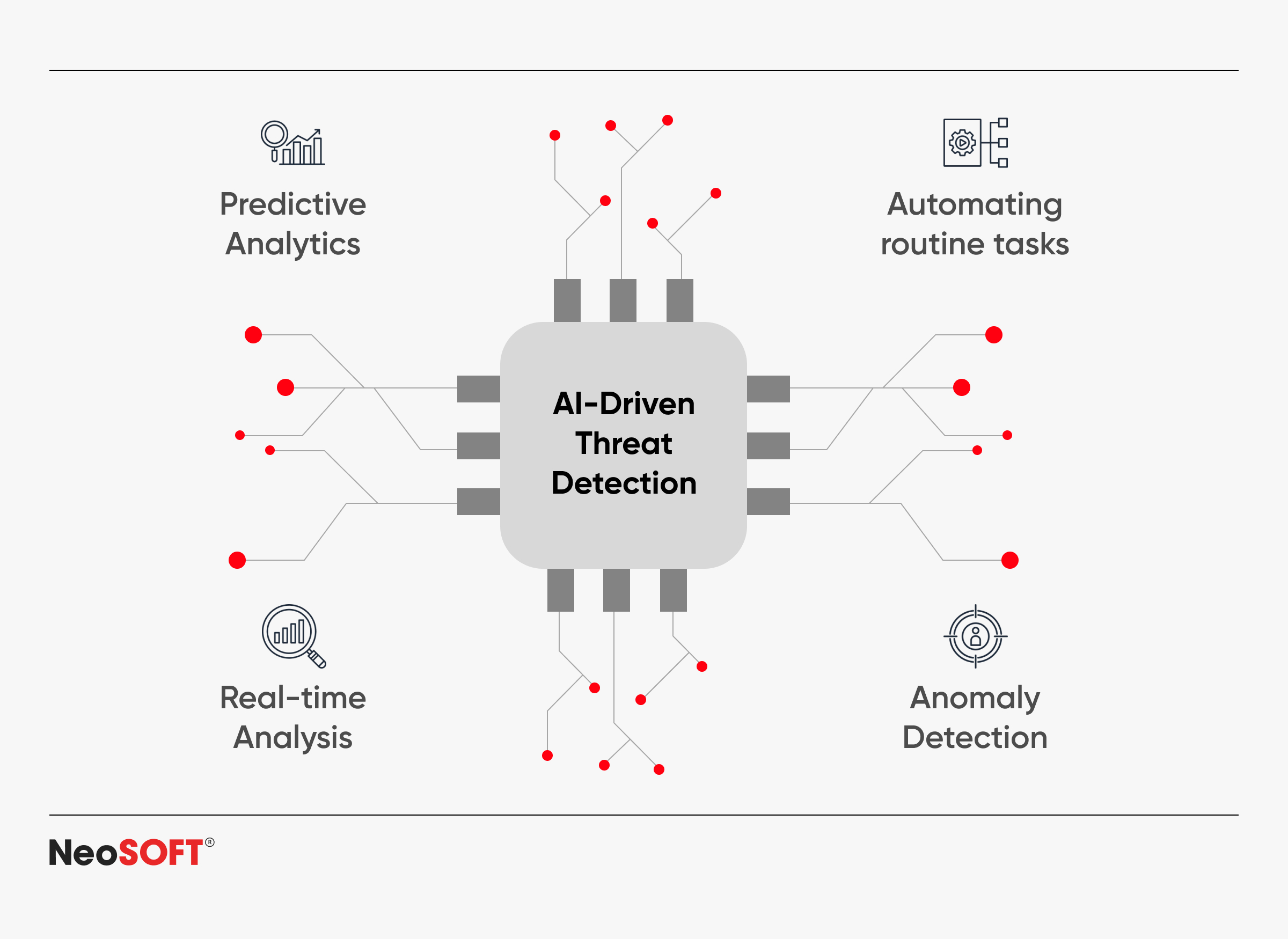
Machine learning models may dramatically improve threat detection by detecting potential security risks and vulnerabilities. ML algorithms sift through large volumes of data, such as network traffic, user behavior, and system logs, to identify unexpected patterns that may suggest malicious activity. By learning what constitutes typical behavior, these systems can swiftly detect variations that indicate possible hazards.
 
AI and ML-based threat detection can detect previously undiscovered risks by recognizing new patterns of attack, allowing for proactive defense against developing threats. Furthermore, ML minimizes the time required to discover and respond to security incidents, hence limiting potential damage. Continuous learning from fresh data improves the accuracy and efficiency of threat detection over time, ensuring effective protection against changing security issues.

Automated Responses

Implementing AI empowers DevOps teams to automate responses for recognized security incidents, improving an organization’s ability to quickly remediate attacks. AI-driven solutions use algorithms to detect anomalies or breaches and take specified steps, such as isolating affected systems, blocking malicious IP addresses, or launching data backups, all without the need for human participation.
 
Automated responses shorten the period between threat discovery and repair, lowering possible damage. They also lower the workload of IT security personnel, freeing them to concentrate less on repetitive tasks and more on strategic assignments and data driven decision making.
 
Several tools enable automated security responses. Some of these include:

  • Cortex XSOAR (previously Demisto) is a comprehensive security orchestration, automation, and response (SOAR) platform that integrates with a wide variety of tools to automate incident response.
  • Splunk Phantom also provides SOAR technologies for automating repetitive processes and speeding up threat responses.
  • MS Azure Sentinel, a cloud-native SIEM platform, automates threat detection and mitigation with AI usage.
  • IBM QRadar uses artificial intelligence to automate security data analysis and trigger reactions to suspected threats, decreasing the workload of security teams.
Future Trends for AI in DevOps

AI-driven DevOps pipelines

DevOps is moving towards fully automated pipelines managed by AI. These pipelines can manage the whole software development lifecycle, with little human intervention. Advanced machine learning techniques will also streamline workflows, eliminate errors, and accelerate software releases, leading to efficient high-quality software delivery.

Continuous improvement with AI

ML models can constantly learn and evolve, boosting DevOps teams’ operations. These models produce accurate forecasts and make recommendations based on past data. This frees up developers to work on more pressing aspects of the development process as they implement AI to adapt to changing surroundings, optimize resource allocation, foresee obstacles, and automate routine processes.

Conclusion

AI-driven DevOps approaches improve efficiency, reduce errors, and accelerate software delivery. Embracing these technologies results in more resilient and flexible development processes. Explore the AI/ML and DevOps workflow solutions we provide. Reach out to us at info@neosofttech.com today!