Earlier, every customer was the same – sharing the same message, strategies, and offers. However, today, customers expect more. They want the banks and insurers to understand them by sending relevant offers and messages, providing timely communication, and delivering personalized experiences.
When that does not happen, engagement drops, messages go unread, and opportunities for any connection slip away. If engagement feels low, it is often because the experience feels impersonal.
You Already Have the Answers. They Are in Your Data
Here is the interesting part. Most BFSI organizations already have everything they need.
Customer transactions, browsing behavior, service interactions, preferences, and history. It is all there. But in many cases, this data sits in silos, disconnected and underused.
So the problem is not data scarcity. It is data activation.
Turning Data into Conversations, Not Campaigns
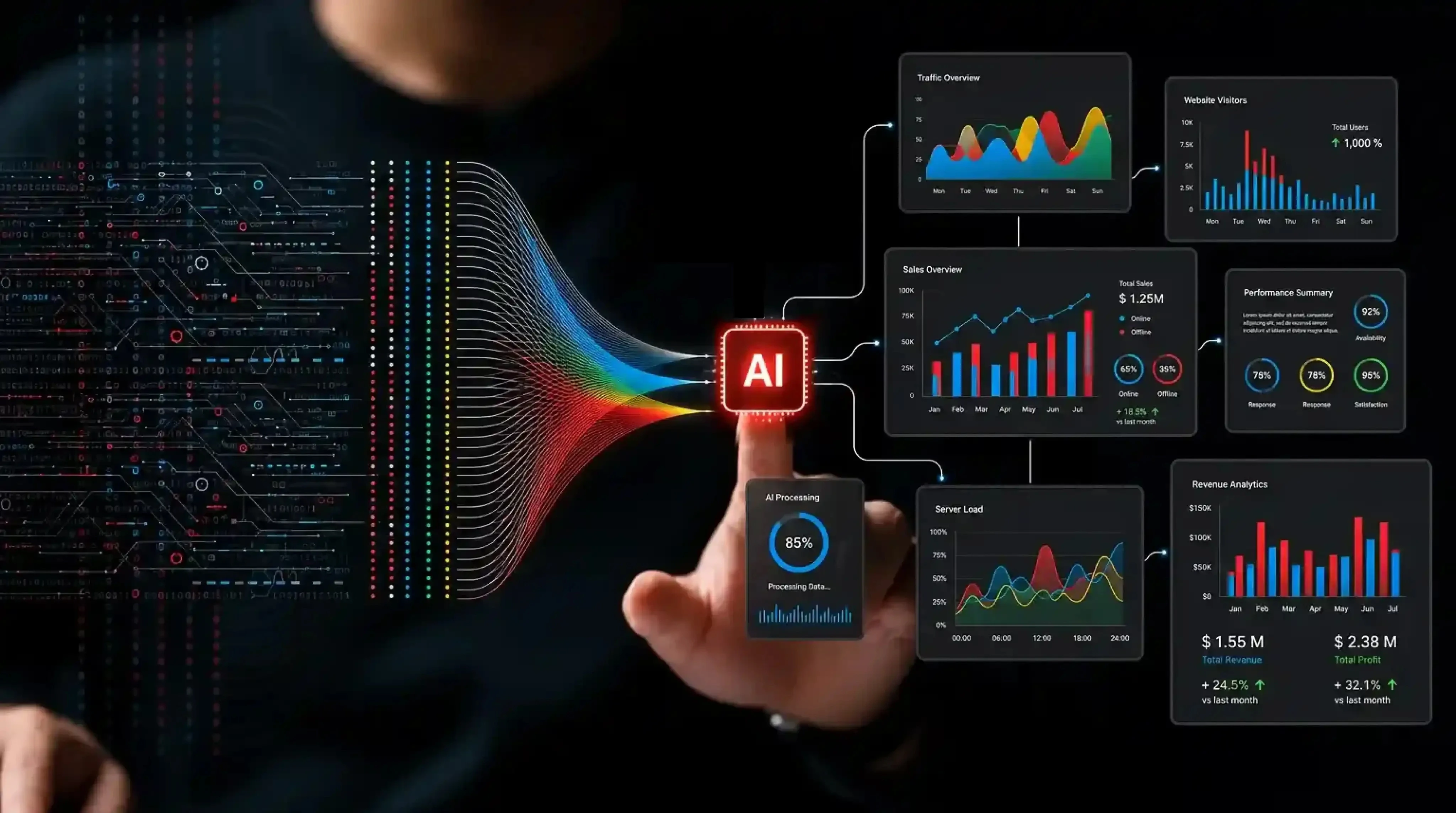
Instead of creating general marketing campaigns, AI enables you to have meaningful one-on-one conversations. It analyses patterns, infers needs, and aligns your responses to the customer’s time. This is the point where AI starts to change the situation.
Imagine this: A customer begins looking at different home loan options. Rather than waiting for the customer to come back, your system shares useful, insightful content, eligibility criteria, or even a customized deal with the customer. In another case, a customer who travels a lot is given insurance suggestions that really fit their lifestyle.
These are examples of marketing done smartly. In fact, it is an upgraded experience for the customer.
Personalization Needs a Strong Backbone
To really personalize at a large scale, you have to have a solid digital base. AI by itself cannot make changes. Your systems should be communicating with one another. Your data must be transferred without interruption. And your infrastructure has to be capable of real-time decision-making.
Without these, even the finest plans fail to provide the expected outcomes.
Making It Work with the Right Partner
NeoSOFT is the right partner that turns scattered data into meaningful action. Our AI and Machine Learning Services help you understand customer behavior and anticipate what comes next. From predicting churn to building recommendation engines, AI becomes practical and measurable.
At the same time, our Data Engineering Services bring your data together. No more silos. Just a clear, unified view that supports better decisions.
And with our Cloud Services, you gain the scalability to deliver these personalized experiences in real time, without delays or disruptions.
What Changes When You Get It Right
When personalization starts working, you see the difference almost immediately.
Customers engage more. They respond better. They stay longer. And they are more open to exploring additional products and services.
But beyond metrics, something more important happens. Trust begins to build. And in BFSI, trust is everything.
Conclusion
Low engagement is not only a lack of communication. It also means that customers are not feeling understood. Luckily, the answer is closer than you think. Data is available. Technology is up to speed.
It is time to combine both to create experiences that are less like marketing and more like engaging conversations. NeoSOFT is equipped to help the BFSI sector personalize with AI-powered products and Machine Learning. Besides that, it ensures data integration runs smoothly with Data Engineering and Cloud Services, helping to establish a scalable project environment.
Frequently Asked Questions (FAQs)
Why is customer engagement low in BFSI?
Customer engagement is low because the communications feel irrelevant and generic. Organizations can choose to personalize interactions for a better service. It can also improve business when customers feel they are understood.
How does AI improve customer personalization?
AI analyzes customer data to identify patterns, preferences, and behaviors. This allows organizations to deliver timely and relevant recommendations, and interactions meaningful and engaging.
Do BFSI organizations already have enough data for personalization?
Yes, BFSI organizations handle large volumes of data, and the challenge is not collecting it but using it effectively to generate insights.
What role does cloud play in personalization?
Cloud processes large amounts of data and scales it. It allows organizations to deliver personalized experiences quickly and efficiently.
As part of the digital product world in 2026, the Standard User Interface has officially become a technical debt. For many years, software has been designed with a philosophy that follows the approach of the “Greatest Common Denominator,” where designers create only one static journey that will satisfy all users. Today, that is the fastest way to drive users away from your product.
When your high-frequency power user in London opens up your app and sees the same prompts as your first-time visitor in Singapore, your product is not simply “simplistic” – it is irrelevant. The death of the monolithic UI and the rise of the Hyper-Personalization Engines is now here.
1. The Death of the “Average User”
The underlying problem in conventional mobile app development is that it is based on the concept of an “Average User” persona. The fact is, there is no Average User. There are only users defined by changing intentions, contexts, and signals.
Pain Point: The conventional approach to segmentation is too broad. Age, Location, and Gender are not effective at understanding Latent Intent, i.e., the underlying motivation for opening an app at 8:00 AM vs. 11:00 PM.
Advanced AI Solution: The only way to overcome this limitation is for enterprises to adopt Vector Embeddings and Graph Neural Networks (GNNs). This allows users to be modeled in a Multi-Dimensional “Interest Space” rather than being forced into conventional categories. This means that if a person is interested in “Vegan Recipes” and also in “Eco-Friendly Packaging,” it is not that he or she is simply a Foodie. The entire interface will be reconfigured to display sustainability metrics and vegan alternatives.
2. From Reactive UX to Predictive “Liquid UIs”
The most significant change in 2026 is the transition from Reactive Personalization (“Because you did X, here is more of X”) to Predictive Orchestration (“We predict you will want Y, so here is Y now”).
The Architecture of a Liquid UI
A “Liquid UI” is a user interface that does not have a static state. It is dynamically constructed through Contextual Bandits, a highly advanced form of Reinforcement Learning (RL).
How it works:
Every element of the user interface, such as buttons, banners, and navigation tabs, is considered an “Arm” of a multi-armed bandit.
The Goal: Maximize the reward, i.e., the Click-through rate, session time, or conversion rate.
The Result:
If the AI detects that a user is in “Discovery Mode,” the user interface maximizes search and recommendation tiles. If the user is in “Transaction Mode,” the user interface minimizes all distracting elements and displays a one-tap checkout button.
By incorporating NeoSOFT’s AI-driven FE, companies can automate this orchestration, ensuring that Time-to-Value (TTV) is minimized to near zero..
3. The Technical Pillars: Edge AI vs. Cloud Latency
One of the key hurdles in implementing real-time personalization has always been the problem of latency. The round trip of data to a central cloud server in order to determine what color button to render is too slow, breaking the “Flow State” of the user.
The Rise of On-Device Inference
The top applications in 2026 are embracing “Zero Latency Personalization” by moving their inference capabilities to the Edge. This is done through frameworks such as TensorFlow Lite, Core ML, and PyTorch Mobile. These personalization models are run directly on the user’s smartphone.
Privacy by Design: In this scenario, personal behavioral data is never transmitted off the user’s device. This is no longer a “desirable feature” but a “mandated compliance” in an increasingly changing world of data sovereignty regulations.
Offline Intelligence: In an environment without 5G connectivity, the application is “intelligent” and can adapt to user behavior offline. Only then is it synced back to the cloud with “learned weights” once a secure connection is re-established.
At NeoSOFT, we are experts in MLOps for Mobile, ensuring these models are “lightweight” yet “effective” in generating significant ROI..
4. Solving the “Cold Start” Problem with Generative AI
The biggest challenge in personalization is the “Cold Start” problem: how do we personalize the experience for a user we know nothing about?
The solution in 2026 is Generative Synthetic Personas, where the initial referral source, device metadata, and first three interactions are analyzed to create a “User Narrative.” This is done using an LLM (Large Language Model) until enough real-world data is available to switch to high-precision Reinforcement Learning models.
5. The Business Case: ROI of Hyper-Personalization
Why should a CTO invest in this level of architectural complexity? In 2026, the value of “thinking” apps over “doing” apps is measured by the total elimination of friction. By removing the manual navigation layer, enterprises achieve three critical business outcomes:
Accelerated Retention: When an app anticipates a user’s needs, it creates a “Switching Cost.” Users are far less likely to churn when their current provider has already automated their routine workflows and personalized their interface.
Seamless Conversion: Intent-based surfacing drives higher cross-sell revenue by eliminating the “search” phase of the buyer journey. If the app predicts the next logical financial product a user needs, the path to purchase becomes a single tap rather than a multi-screen search.
Predictive Support Efficiency: By deploying anticipatory UX such as surfacing a “How-to” guide or a contextual tip before a user hits a known friction point organizations can significantly lower their support ticket volume and improve overall customer satisfaction scores.
Ultimately, companies that fail to evolve beyond basic, static interfaces will be out-competed by AI-native firms that treat the UI as a living, breathing entity. The shift from a “tool” to an “assistant” is no longer a luxury; it is the new baseline for digital survival.
6. The Roadmap: How to Dismantle “One App for All”
The transition to an AI-First approach in the mobile strategy is not an overnight process. It needs to be done in tiers:
Data Harmonization: Break the silos. The data in your mobile application needs to talk to the data in your CRM and your offline POS systems to build a Customer Data Platform.
Modular UI Design: Redesign your user interface with the principles of “Atomic Design” in place. Every element in your user interface needs to be modular enough for the AI to move it, hide it, or highlight it.
A/B Testing vs. Continuous Learning : Transition away from Static A/B Testing that finds the winner for all users and towards Continuous Evaluation that finds the winner for this user.
Conclusion: Personalization is the New UX
The “Ease of Use” era is over. In 2026, the gold standard is Anticipation of Need. The “One App for All” model was built for a static user who no longer exists. Today’s user is dynamic and time-poor; your product must evolve to match that reality.
By leveraging advanced AI frameworks, Edge computing, and predictive modeling, you can transform a mobile app from a mere tool into an indispensable personal companion. This shift doesn’t just improve the interface; it redefines your brand relationship.
NeoSOFT acts as the architect of this evolution. Our digital transformation services go beyond surface-level automation. We specialize in building Agentic Ecosystems and Intent-Based UIs that process complex data in real-time. Whether it’s integrating Large Action Models (LAMs) or deploying secure, on-device intelligence, we provide the technical backbone for “Invisible UX.”
Is your digital product evolving fast enough? Don’t just pave the cow path reimagine the journey. Partner with NeoSOFT to engineer the next generation of AI-driven mobile experiences.
Want to see Hyper-Personalization in action? Explore how NeoSOFT is helping global leaders eliminate digital friction from intent-driven banking journeys to autonomous logistics orchestration. Browse our latest blogs.
Frequently Asked Questions (FAQs)
1. What is the difference between customization and AI personalization?
Customization is user-led, such as in the selection of a “Dark Mode” option. AI Personalization is system-led, such as in an automatic selection of Dark Mode because it recognizes the user is in a low-light environment and has a history of preferring it.
2. Does AI personalization slow down app performance?
If traditional cloud requests are used, yes. However, if Edge AI (On-device inference) is used, then the latency is virtually zero. Sophisticated models are designed to operate in the background without draining battery or CPU resources.
3. Is hyper-personalization compliant with GDPR and CCPA?
Yes, as long as you make use of techniques like Privacy Preserving AI. This is because Edge AI (processing data directly on devices) and Federated Learning (training models on decentralized data) enable personalization without ever actually viewing the personal information.
4. How much data do I need to start using Predictive AI?
You don’t need to have millions of users. With Transfer Learning, we can use pre-trained models and fine-tune them on your specific niche. With a lower number of users, Reinforcement Learning can start to detect “Quick Win” UI improvements in a matter of days.
5. Can “Liquid UIs” be built on Cross-Platform frameworks like Flutter or React Native?
Absolutely. While the underlying AI logic might be implemented with native modules such as TensorFlow Lite for Android/iOS, the “Liquid” frontend itself can be controlled via dynamic component rendering in any modern framework, including Flutter and React Native.
A sneak peek into the future with minimal risks, forecasting the results, and enhancing innovation – A digital twin prototype represents a real-world object, system, or process. Before introducing your products, a digital twin is a physical object updating in real-time with operational data and historical data, allowing a business to predict product performance.
This blog is written for business leaders driving digital transformation, CTOs, CIOs, and IT decision-makers exploring digital twin technology, as well as manufacturing, automotive, and infrastructure professionals. It’s also for organizations that are already developing digital twins as part of their innovation journey.
What Does Digital Twin Mean in Practice?
The term ‘digital twin’ describes more than just a copy of a digital model. It refers to changes and growth with its real-life counterpart. Information constantly transfers from the real world to the digital one, thus forming a loop which is sometimes called a digital thread. This thread seamlessly links design, production, operation, and performance data into one unified picture.
A digital twin prototype of a physical product can evaluate performance and test the usage pattern even before the manufacturing phase. After the product is released, that digital replica is used to gather and analyze product performance metrics, enabling predictive maintenance, remote monitoring, and performance optimization.
Simply put, digital twins operate by:
Gaining sensor data through a physical system
Utilizing digital technology to manage and relate data
Using a VR tool to visualize a virtual environment in a digital space
Types of Digital Twins You Should Know
As digital twin applications grow, several types of digital twins have emerged, each serving a specific purpose:
Product Digital Twins (Unit Twins)
These represent individual physical products or components. Common in the automotive industry and advanced manufacturing, they help improve product quality and design decisions.
Asset Twins
Asset twins are a complete physical asset, such as a machine or a data center. They help with performance enhancements, fault detection, and lifecycle management.
Process Twins
Process twins focus on manufacturing processes, workflows, and supply chain operations. They optimize operations, reduce bottlenecks, and enhance operational efficiency.
System Twins
System twins have two or more components with complex systems such as factories, smart cities, and entire value chains.
Organizations manage multiple digital twins to understand deeper across products, assets, and processes.
Digital Twins in Action Across Industries
Digital twin solutions are transforming industries by enabling smarter decisions and new business models.
Manufacturing Digital Twins: Manufacturers use digital twin technology on their production lines to perform virtual trials and obtain more productive outcomes. Digital twin technology can also merge CAD models by reducing downtime and increasing production.
Smart Cities and Infrastructure: Digital twins work similarly to real-world systems such as networks, utilities, and buildings. Through them, planners can understand growth, energy consumption, and responses prior to introduction.
Supply Chain and Logistics: Companies using digital twins in the supply chain can locate their assets, foresee the occurrence of disruptions, and manage inventories by integrating the data throughout the ecosystem.
Data Centers and IT Operations: Digital twins can also be used to observe energy consumption, cooling performance, and understand the overall state of a certain IT system, helping to make informed decisions.
How Digital Twins Rely on Data
At the heart of every digital twin project is data. To build digital twins, businesses must take care of:
Collecting real-time data from sensors and IoT devices.
Use operational and historical data
Check data collection and data quality
Ensure analytics, AI, and machine learning for insights
Businesses must evaluate the virtual twins mirror physical twins flawlessly, creating simulations that reflect real-world behavior.
Conclusion
Digital twins are not only about making a digital copy of a physical product. They actually signify a major transformation in the way organizations relate to the physical world.
Integrating data, systems, and intelligence with digital twins allows businesses to experiment and help envision the future without waiting for it. With VR, AI, and digital technologies changing consistently, digital twins are still a crucial foundation for businesses, turning knowledge into reality.
At NeoSOFT, we help organizations transform these possibilities into a reality. Using AI Analytics and digital systems, we can help scale faster and better. Contact our experts at info@neosofttech.com to discover the right approach tailored to your business goals.
Frequently Asked Questions (FAQs)
What is a digital twin in technology?
A digital twin is a virtual model of a physical object. It updates itself in real time, based on sensor data, to simulate behavior and monitor operations.
What are the four types of digital twins?
Four types of digital twins are:
Component twins that mirror single parts
Asset twins that mirror complete units
System twins that simulate interconnected environments
Process twins that model entire operations with multiple systems
Is AI used in digital twins?
Yes, AI is part of the digital twin that portrays the physical system. It will help assess predictive tasks and forecast using real-time data.
What are the benefits of Digital Twins?
It can solve issues faster, expose them faster, and guide managers to make data-driven decisions
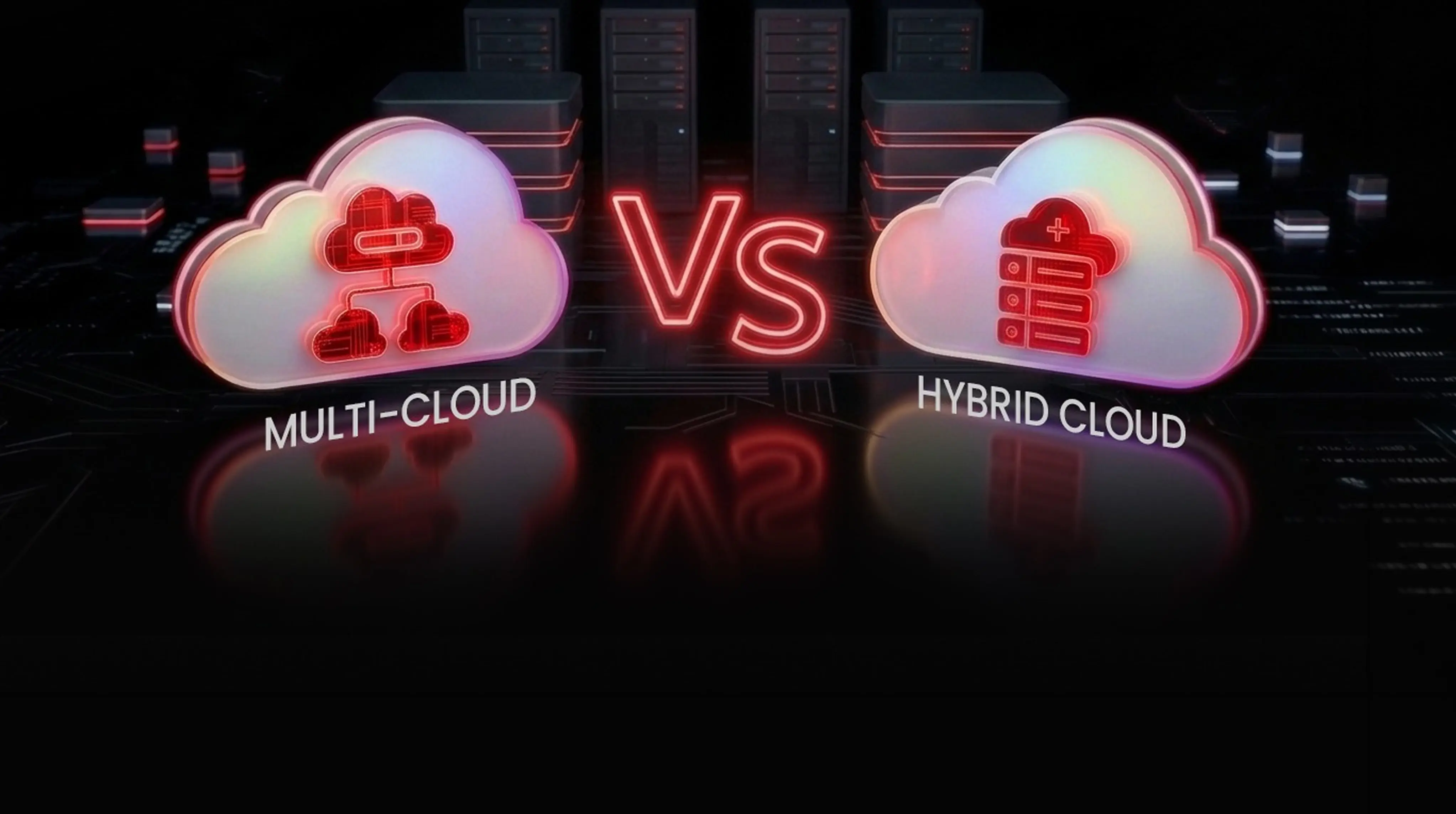
Security is the primary foundation for every bank in the modern world. A strong Cloud Strategy protects your important financial data from many risks. The best choice depends on your need for control or uptime. You must decide if you want to protect a specific location. You must also decide if you want to ensure constant service. Both strategies offer high levels of Cyber Security for your institution.
Cloud adoption is no longer a luxury for the banking sector. It is now a mechanical necessity to stay competitive and fast. As digital transactions grow, the surface for potential threats also expands. This is why choosing the right architecture is a defining moment. You are not just picking a technology provider for your team. You are picking the shield that protects your customer trust daily.
The Security Profile of the Hybrid Cloud
Hybrid Cloud is often the best choice for total Data Privacy. You have physical control over where all your data is stored. You keep your most sensitive data on your own private servers. This makes it easier to follow all local Data Sovereignty laws. You reduce risks by keeping core banking functions behind your firewall.
Many banks prefer this model because it feels very familiar. It allows you to keep your legacy systems running smoothly today. You do not have to move everything to the web instantly. Instead, you can pick which parts of your bank are ready. Your customer records stay in a vault that you own physically. This helps you pass strict audits from local financial authorities easily.
However, a hybrid setup does come with its own set of tasks. Your internal team must manage the security of your own hardware. This means you are responsible for physical guards and server maintenance. You must also ensure that the connection to the cloud is safe. If the link between your office and the cloud is weak, security fails.
The Security Profile of the Multi-Cloud
Multi-Cloud is often the best choice for keeping systems online. It protects your bank from the risk of a single failure. If one provider fails, your bank can switch to another quickly. This model focuses on building strong Operational Resilience for your bank. This strategy prevents one single event from crashing your entire bank.
In a multi-provider world, you have more options for your data. You can use the best security tools from many different vendors. One provider might be great at stopping large digital attacks. Another might have the best tools for checking user identities. By using both, you create a very strong defense system. You are never locked into the rules of just one company.
The main challenge here is managing a much wider digital area. Your team must watch over several different cloud environments at once. This requires a very high level of skill and modern tools. You must ensure that security rules are the same everywhere. If one cloud is weak, the whole system could be at risk. Consistency is the key to making this model work for you.
The Final Verdict on Your Cloud Security
The most secure choice is the one that fits your risk. Hybrid Cloud is better if your biggest threat is data theft. It acts like a private vault that you own and guard. Multi-Cloud is better if your biggest threat is system downtime. It acts like a network that cannot be taken down easily.
Many banks now use a single security standard for all systems. This means using the same strong rules across every cloud environment. You should use Zero Trust checks for every person who logs in. This rule means that the system trusts no one by default. Every request for data must be verified with a fresh check.
You should also use strong Encryption to keep all your data safe. This ensures your bank stays secure no matter which cloud wins. Even if a hacker gets into the system, the data remains unreadable. This is how modern banks protect themselves from evolving digital threats.
Strategic Growth and Future Planning
Modern banking is moving toward a state of constant change. You cannot afford to stay still while your competitors move forward. Your cloud choice will dictate how fast you can launch new apps. It also decides how well you can handle a sudden crisis.
A well-planned roadmap allows you to scale without any extra fear. You can start with a hybrid model to keep things stable. As you grow, you can add more cloud providers for resilience. This journey is what we call a path to true digital maturity. It is about being ready for whatever the financial market does next.
Secure Your Banking Infrastructure with NeoSOFT
At NeoSOFT, we help banks build very safe and strong systems. We ensure your Digital Banking setup provides privacy and constant uptime. Our experts help you follow every BFSI rule in your region. We understand the complex laws that govern money and data today.
We make sure your bank is ready for Intelligence Transformation now. This means using data and AI to make better business decisions. We help you build a strategy that ensures Regulatory Compliance always. Our goal is to protect your reputation and your loyal customers.
Build a cloud strategy that lasts for many years to come. Let NeoSOFT help you navigate the complex world of modern technology. Together, we can make your bank faster, safer, and more reliable.
Frequently Asked Questions
1. Is Hybrid Cloud safer for private bank data?
Yes, it keeps sensitive data on your own private servers. This provides total physical control over your most important records. NeoSOFT helps you build a secure vault for your files. This model makes following local privacy laws much easier today.
2. How does Multi-Cloud prevent total system crashes?
Multi-Cloud uses several providers to keep your systems online now. If one cloud fails, your bank switches to another instantly. This strategy ensures your digital services stay active for customers. NeoSOFT manages these clouds so your bank never stops working.
3. Can I use both models for my banking strategy?
Yes, combining both gives you the best digital protection today. You can keep data private while using clouds for apps. This plan helps you grow fast without losing any security. NeoSOFT creates one strong rule to protect every system together.
For the last decade, the measure of success of any mobile app has been the way the app is navigated. We have spent millions of dollars on perfecting the hamburger menu and the three-click rule. We have created the digital equivalent of the labyrinth and then hired UX researchers to help users find the exit.
But in 2026, the rules have changed. If your customer has to find the feature in your banking or insurance app, not only have you failed the user experience, you have failed the business model. The era of the Generative Interface has arrived, and it has made navigation redundant.
The Cost of Complexity: Why Your App’s Menu is a Liability
In the BFSI industry, the task is not a browsing task; it is an outcome task. A user is not launching the banking app to browse through the app; the user is launching the app to execute.
The current data indicates that over 60% of users are facing app fatigue due to the necessity of traversing through nested menus to accomplish simple tasks. This is leading to abandonment, reduced feature adoption, and churn. The industry is shifting to Zero-UI, which is a blank canvas with the interface assembling itself according to the user’s specific goal.
The Solution: Transitioning from Menu-First to Intent-First Architecture
The most significant step in the development of mobile technology today is the shift towards Intent-Based Architecture. It is not merely an upgrade to the interface, but an overhaul of how software interacts with the human experience. With the help of an expert in mobile app development, financial institutions can bridge the gap between complex systems and seamless user intent.
1. Dynamic UI Assembly Over Static Sitemaps
In an intent-based app, there is no fixed home screen. Instead, it is based on real-time behavioral data and provides exactly what is needed.
The Contextual Home Screen: If a user normally checks their stock portfolio at 9:30 AM, they will see a live trade dashboard and risk exposure information as soon as they open the app.
Proactive Resolution: Rather than looking for International Wire Transfer, a user will simply state what they want to accomplish. The app will automatically retrieve information and calculate exchange rates to display the “Confirm” button.
2. Mobility in BFSI: The Rise of Agentic AI
Mobility in 2026 isn’t just about being on a phone; it’s about being an active participant in the user’s life. New apps are using Agentic AI autonomous agents that don’t just answer questions but can perform complex operations.
For example, agentic insurance apps don’t wait for the user to find Claims. If the phone detects a high-impact event like a collision, the agentic insurance app automatically switches into Emergency Assistant mode. This mode bypasses all other screens and can provide towing services, share location with authorities, and initiate a claim with one touch.
Hyper-Personalization: The New Economic Moat
The real benefit of removing the navigation is not about looks and feels; it’s about money. When an application is designed to anticipate the needs of its users, it builds a Switching Cost that is virtually impossible for competitors to overcome.
For instance, if an application designed by NeoSOFT understands that the consumer is saving for a home and presents them with a high-yield savings option or pre-approved mortgage rate at the exact moment that their savings account balance reaches a milestone, that consumer is 4 times more likely to convert. This is the difference between serving and making money. By removing the navigation, you eliminate the Choice Paradox, guiding consumers to financial success that is mutually beneficial to them and the institution.
Solving the Technical Hurdles of Navigation-Less Apps
In order to remove the navigation, the tech stack must change. You are no longer building a series of pages; you are building a central nervous system. This is a deep dive into digital transformation strategies that must include speed and intelligence.
Hyper-Personalization via Edge Intelligence
The processing of intent must happen instantly. Edge AI enables the device to understand natural language and forecast what the user needs without going back to a server in a distant location. This way, the Navigation-less experience is as fast as thought while still maintaining the high standards of data privacy that exist in the financial industry.
Behavioral Biometrics: The New Access Key
The biggest challenge for a seamless UI was traditionally security asking to authenticate with a password. In 2026, Continuous Authentication has replaced the login screen. By analyzing the rhythm of typing, angle of the device, and interactions, the AI authenticates the user in the background. This way, the UI can be open and responsive to the legitimate user, yet be more secure than a menu locked with a PIN.
Conclusion: Partnering for an Invisible App Future
The competitive advantage for BFSI market leaders is no longer their list of features, but how fast they can access them. If you find yourself continuing to ask your customers to learn your navigation paradigm, you’re essentially asking them to do your job.
We at NeoSOFT specialize in turning these complex digital friction points into seamless, intent-driven experiences. We help global financial institutions go beyond better menus and into true Intelligent Mobility. With our integration of cutting-edge AI agents and predictive UI, you can rest assured that your app is not only a tool, but an indispensable assistant. The world is moving towards the Invisible App, and NeoSOFT is the engine behind this movement.
Enjoyed this read? Explore more insights on AI-driven digital transformation, BFSI innovation, and intelligent mobility Browse Blogs →
Frequently Asked Questions (FAQs)
1. Does removing navigation make the app more difficult for older users?
No, it actually improves the accessibility. Intent-based design, such as voice or simple text command, is much more intuitive for people who are not tech-savvy, as it eliminates the need to remember icon locations.
2. How does an intent-based app handle security for large transactions?
The security becomes step-up based, which means that the app remains fluid for low-risk activities, but the AI system detects high-risk intents (such as large amount transfers to new recipients), prompting the user for a face scan or other biometric check as required.
3. Is this technology compatible with existing legacy banking systems?
Yes. This is accomplished through the use of Large Action Models (LAMs) and strong API layers to allow an intent-based UI to be used as a smart skin that can interact with legacy backends, translating simple user intent into complex system commands.
4. How does Zero-UI affect feature discovery?
Feature discovery is even better. With a menu-driven app, features can often be hidden away. With an AI-powered app, the system actively surfaces features such as a new savings tool at the exact time they are needed by the consumer.
5. How do we eliminate navigation without confusing users?
We replace menus with Intelligence Layers. By auditing your users’ top friction points, NeoSOFT builds a Zero-UI foundation that surfaces the right tools exactly when needed. This removes the learning curve, turning a complex app into an intuitive, invisible assistant that anticipates every move.
We use cookies on our website to give you the most relevant experience by remembering your preferences and repeat visits. By clicking “Accept All”, you consent to the use of ALL the cookies. However, you may visit "Cookie Settings" to provide a controlled consent.
This website uses cookies to improve your experience while you navigate through the website. Out of these, the cookies that are categorized as necessary are stored on your browser as they are essential for the working of basic functionalities of the website. We also use third-party cookies that help us analyze and understand how you use this website. These cookies will be stored in your browser only with your consent. You also have the option to opt-out of these cookies. But opting out of some of these cookies may affect your browsing experience.
Necessary cookies are absolutely essential for the website to function properly. These cookies ensure basic functionalities and security features of the website, anonymously.
Cookie
Duration
Description
cookielawinfo-checkbox-analytics
11 months
This cookie is set by GDPR Cookie Consent plugin. The cookie is used to store the user consent for the cookies in the category "Analytics".
cookielawinfo-checkbox-functional
11 months
The cookie is set by GDPR cookie consent to record the user consent for the cookies in the category "Functional".
cookielawinfo-checkbox-necessary
11 months
This cookie is set by GDPR Cookie Consent plugin. The cookies is used to store the user consent for the cookies in the category "Necessary".
cookielawinfo-checkbox-others
11 months
This cookie is set by GDPR Cookie Consent plugin. The cookie is used to store the user consent for the cookies in the category "Other.
cookielawinfo-checkbox-performance
11 months
This cookie is set by GDPR Cookie Consent plugin. The cookie is used to store the user consent for the cookies in the category "Performance".
viewed_cookie_policy
11 months
The cookie is set by the GDPR Cookie Consent plugin and is used to store whether or not user has consented to the use of cookies. It does not store any personal data.
Functional cookies help to perform certain functionalities like sharing the content of the website on social media platforms, collect feedbacks, and other third-party features.
Performance cookies are used to understand and analyze the key performance indexes of the website which helps in delivering a better user experience for the visitors.
Analytical cookies are used to understand how visitors interact with the website. These cookies help provide information on metrics the number of visitors, bounce rate, traffic source, etc.
Advertisement cookies are used to provide visitors with relevant ads and marketing campaigns. These cookies track visitors across websites and collect information to provide customized ads.