The future of mobile app development is here. As technology continues to evolve, they are critical and closely tied to a business’s innovative process, its customer experience, and the company’s unique attributes.
App strategy must be sustainable. To achieve this, new technologies and architectures must be adaptable, scalable, and ready for the future.
However, as it changes, challenges multiply as innovation cycles are shorter, user behaviour is dynamic, and competition is global. Businesses need to ensure stable performance and user experience. This is possible with the help of machine learning and predictive analysis.
So what does future-proofing mean? It means the ability to support multiple mobile platforms, minimize maintenance overhead, and deliver enhanced security across multiple services.
Mobile apps have to change quickly, be able to work smoothly with different platforms (iOS, Android devices, Web, and Desktop), and use new tech in mobile apps, but still be of high quality and have technically superior app security and data protection.
The blog will explore the future of mobile apps through the lens of Flutter, Kotlin Multiplatform (KMP), and artificial intelligence (AI), building ecosystems that drive sustainable business growth. We’ll also understand how app developers create apps for mobile devices, wearable devices, and smart devices.
The Market Outlook
According to Statista, the number of smartphone users will be 7.49 billion by the end of 2025. Therefore, a digital strategy is still the main lever for any business success. To be successful, businesses need to spend on cross-platform app development, cloud computing, and intelligent automation.
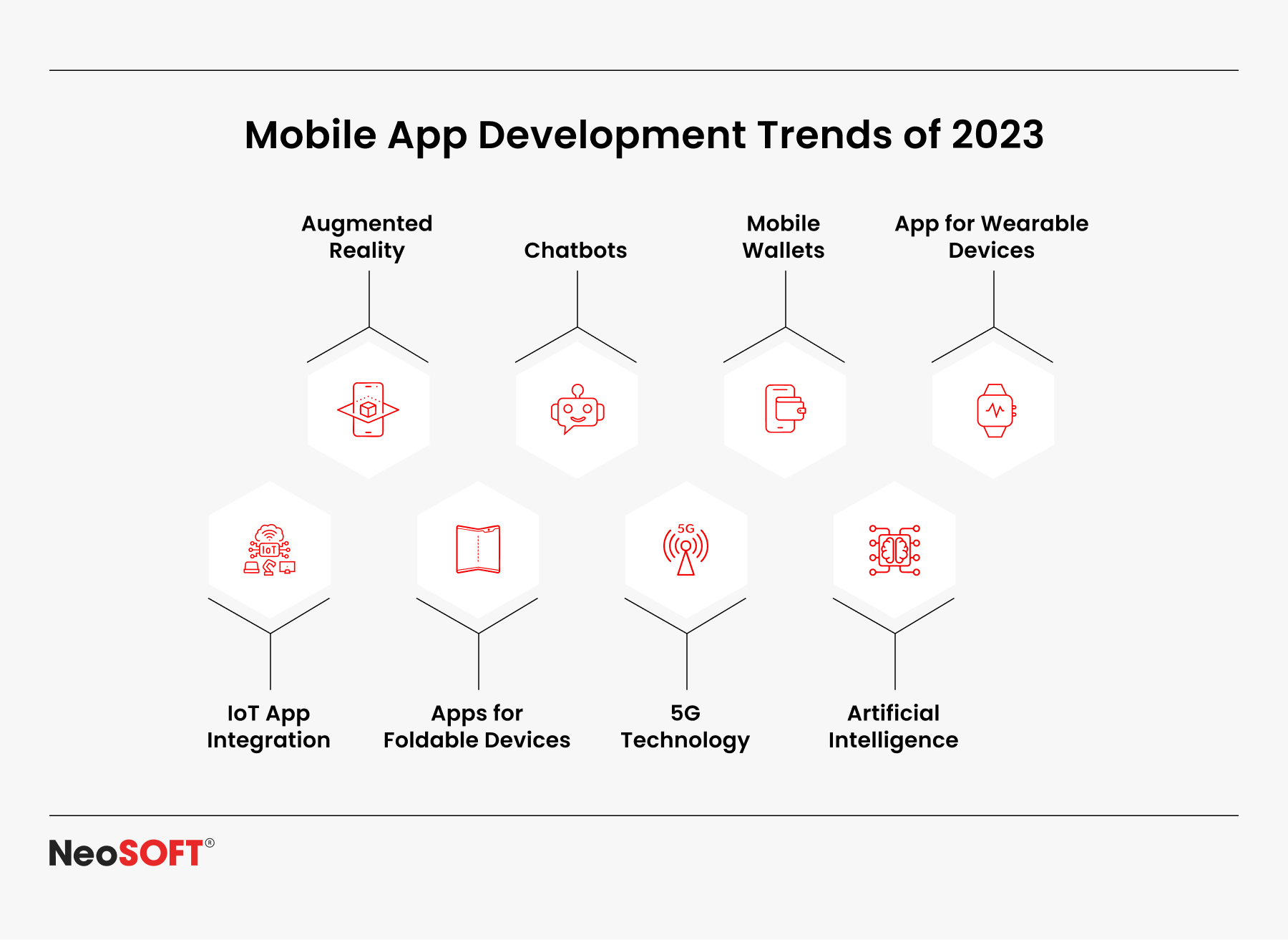
Here are the key trends:
Features and Benefits
Before delving into each technology, it’s important to recognise the shared characteristics and business advantages they possess — all vital in influencing the future of mobile development and trends in mobile app development
Key Features to Demand
A single codebase or maximum reuse is essential to minimize duplication and costs.
Quick iteration cycles with little downtime are crucial in the development phase.
Comprehensive UI/UX features promote brand uniqueness and have engaging user interactions.
Quality, security, and compliance are embedded from the start, supported by security protocols.
Vast structures that evolve in harmony with your user community.
Mobile apps have been reshaped by technologies such as beacon technology, AR/VR reality, IoT devices, and AI.
Key Business Advantages
Time-to-market and costs are reduced by being efficient through cross-platform development.
Improved ROI due to reusable code and shared logic
Improved user interaction through a continuous UI, easy-to-use design, and custom experiences for users.
Flexibility is essential to avoid dependence on outdated structures.
A smooth UI experience for users.
Being prepared for innovation, such as introducing new features or AR/VR into app development.
Uniformity across platforms — ensuring smooth user experiences across interconnected devices and channels.
Together, these characteristics and benefits define the future of mobile applications, where flexibility, smart technology, and growth potential are crucial in mobile app development.
How Flutter, KMP & AI Help in App Development
Flutter in App Development
Google’s open-source toolkit Flutter has helped developers to create mobile apps that are usable across devices from a single codebase. The features of the framework are high performance, fast development cycles, interactive UI, and best practices in mobile app development.
Key Features and Benefits
Cross-platform efficiency – One codebase for Android, iOS, and beyond.
Hot reload – Real-time UI and logic updates during the development process.
Rich widget library – Material Design and Cupertino widgets for native-like experiences.
Near-native performance – Compiles directly to machine code for optimized apps.
Cost-effective scalability – Reduced development time and overhead.
Backed by Google – Strong community, Google Pay integration, and ongoing updates to meet the latest trends.
Flutter is ideal when:
Speed-to-market is critical.
The same mobile app must perform equally across iOS and Android devices.
UI/UX consistency and animation-rich designs are priorities.
There’s a roadmap for web or desktop expansion to reach other smart devices like the Apple Watch and wearable devices.
Although Flutter helps cross-platform development, some may require extensive native integrations or intricate tasks. In such cases, they might find Kotlin Multiplatform (KMP) advantageous.
However, Flutter continues to be preferred as an economical and high-performance mobile application that adheres to developing mobile app trends.
Kotlin Multiplatform (KMP) in Application Development
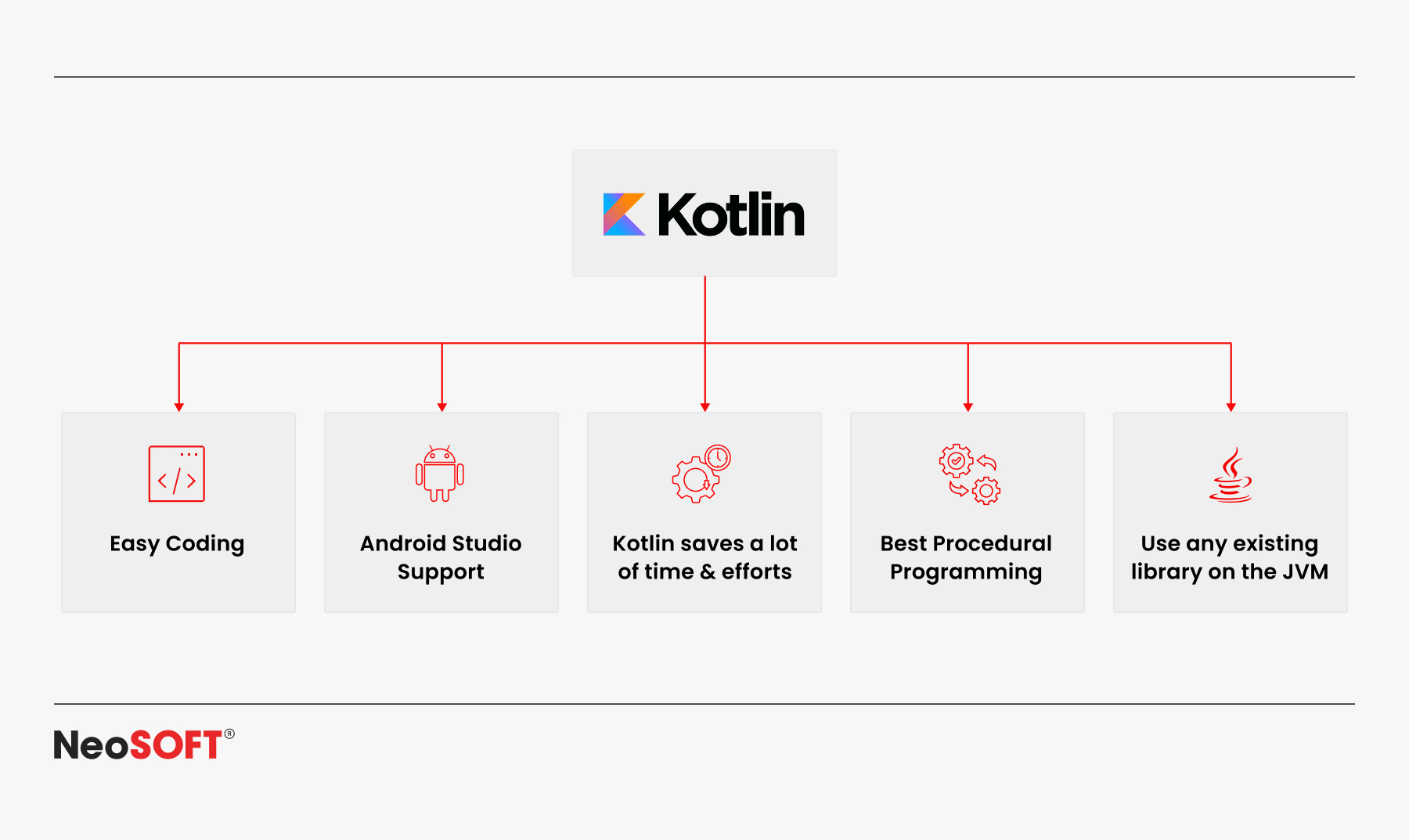
Kotlin Multiplatform (KMP) is a JetBrains’ open-source creation that enables app developers to share business logic across different mobile platforms.
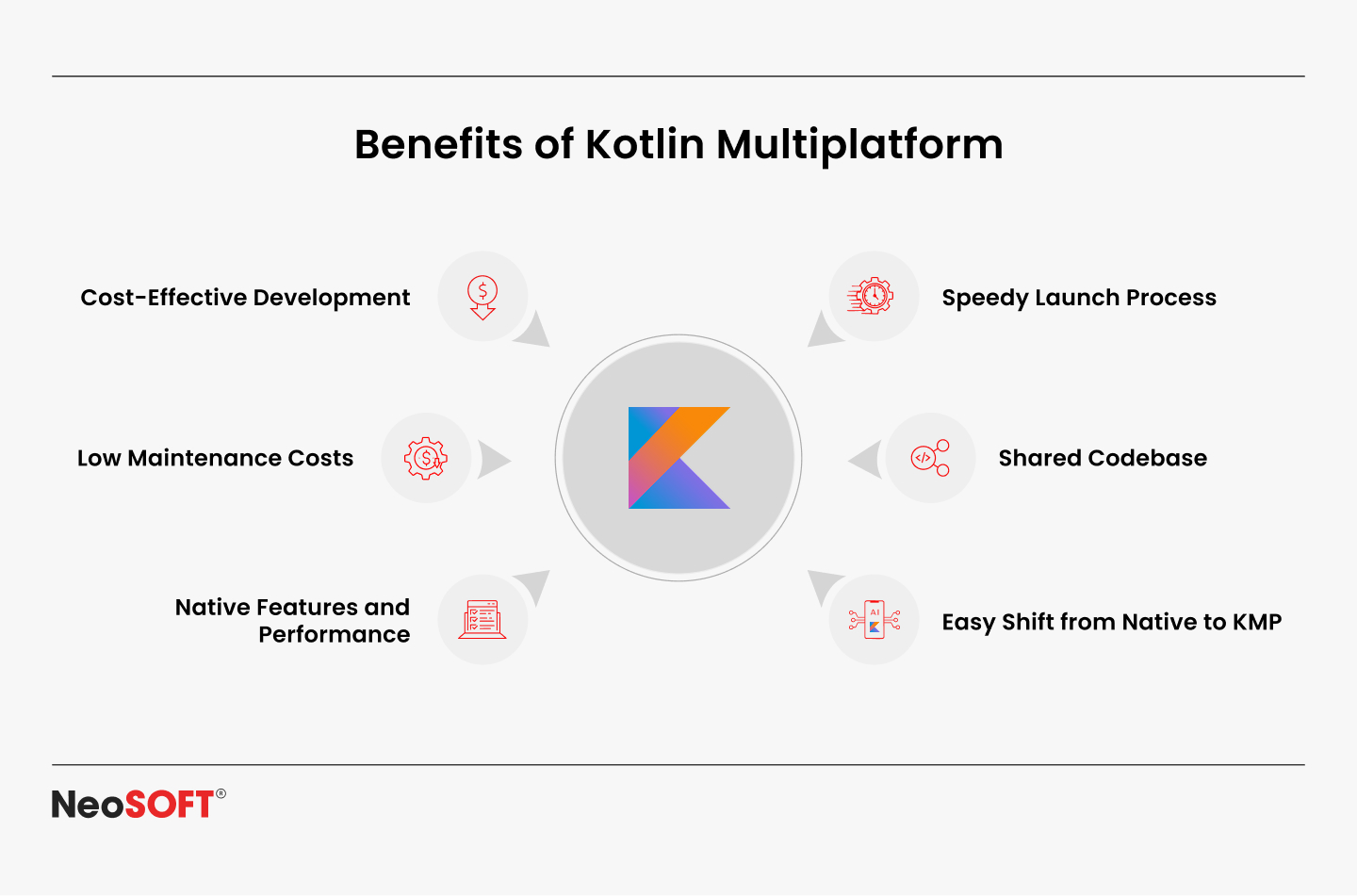
Key Features and Benefits
Shared business logic across Android, iOS, web, and desktop.
Native UI and performance, ensuring platform-specific polish.
Incremental adoption – KMP can integrate with existing native projects.
Reduced maintenance through unified testing and logic sharing.
Strong ecosystem – Backed by JetBrains and Google, ensuring long-term stability in the mobile app industry.
KMP requires a stronger technical foundation compared to Flutter. But in return, it delivers scalability, longevity, and maintainability — qualities essential for enterprises shaping their mobile app development future.
Comparative Analysis: Flutter vs. KMP
Both Flutter and KMP address different requirements in mobile app development. Flutter rapidly prototypes, while KMP ensures performance, scalability, and maintainability.
Artificial Intelligence (AI) in App Development
Artificial intelligence (AI) has transformed the interaction of mobile apps and their users. As a result, there are applications with the functionalities of voice recognition, automation, and analysis.
Key Features and Benefits
Personalisation: Personalize user behavior prediction and user analysis through the integration of AI in applications.
Automation: AI makes the whole app development process highly productive — this can be done by testing data analytics and customer support.
Security and fraud detection: By using data protection and regulatory compliance, AI technology gives applications improved security features.
Enhanced capabilities: With AI, mobile apps can develop to incorporate features like image recognition, augmented reality/virtual reality, wearables, IoT, and spoken interaction leading to possibilities and functionalities.
Analytics-based insights: Insights through cloud technology and predictive analytics.
AI integration empowers businesses to optimize apps, personalize experiences, and improve checkout processes, mobile payments, and virtual assistants like Siri, Google Assistant, and Bixby — a defining force in mobile app development trends and mobile application development worldwide.
The Role of Cloud Computing in the Future of Mobile Development
Cloud computing continues to gain momentum as a significant factor of innovation, scalability, and flexibility in the transition towards the future of mobile development by businesses.
Developers can create and launch apps considerably more quickly thanks to the cloud-based architecture, which guarantees that the platforms and devices are perfectly synchronized.
When developers incorporate AI into mobile apps using the cloud environment, they can instantly handle massive amounts of data, which significantly improves security, personalization, and even performance.
The adoption of mobile development trends such as edge computing, serverless architectures, and microservices has the local mobile team structure as the most significant beneficiary of the optimization of resources, agility, and even flexibility.
The cloud-driven mobile ecosystems have the ability to support continuous delivery pipelines, remote testing, and automated scalability; therefore, the time-to-market for new features is shortened considerably.
The future of app development, according to enterprises, is a fusion of cloud capabilities with new technologies such as AI, IoT, and blockchain. Such a combination is the basis for data protection, cost efficiency, and innovation readiness – the main pillars of mobile application development in the future.
Companies that are increasingly moving towards cloud-native solutions will be the ones to enjoy long-term success in the highly interconnected digital world, as their ability to adapt, analyze, and evolve in real time will be their differentiator.
Future Trends in Mobile Development
As mobile app development trends change, the future will too, bringing uniformity between apps, devices, and user preferences.
Convergence of Platforms & Devices: Apps will combine across platforms and devices, from foldable devices to other desktop-mobile hybrids. Flutter’s unified codebase and KMP’s shared logic make this achievable for mobile app developers.
Smart Experiences & Generative AI: Gen AI works differently for UI/UX, app development tools, and new programming languages. If businesses want to stay ahead of the competition, they must integrate Gen AI.
Embedded Intelligence & Edge Computing: Mobile apps that have to complete complex tasks get safe, secure, and faster reaction times when AI is used on the phone.
UX, Performance, and Security Expectations: Users want customised user experiences and flawless performance. To meet user expectations and security concerns, KMP and Flutter are combined.
Sustainability and Maintainability: Companies should focus on long-term efficiency rather than on temporary releases. Durability and adaptability should be at the forefront of minimising technical debt through the right kind of architecture.
Bridging the Gap: Flutter, KMP & AI Together
Future-ready mobile ecosystems won’t rely on a single technology. When Flutter, KMP, and AI coexist, it will emerge to deliver seamless user experiences across mobile phones, smart devices, and wearable technology equipped with the latest technologies in mobile application development.
While Flutter provides front-end speed, design consistency, and easy app integration with mobile wallets and payments, KMP manages shared business logic and platform-level scalability.
AI has integrated into every aspect, such as automation, analytics-based insights, of mobile app development.
A hybrid stack like this helps organisations to innovate quickly while maintaining architectural integrity.
With Flutter, users can develop visually rich interfaces, handle core shared logic with KMP, and enhance experience with AI. The unified strategy reflects the key trends and changing user behavior.
Best Practices for Building Future-Ready Mobile Apps
Adopt a modern architecture: Design your application as individual components, each of which can be leveraged in different parts of a cross-platform app development.
Prioritise maintainability over novelty: Preparation for apps to scale and be stable should be the focus across all mobile platforms.
Integrate AI early: AI should be a priority and integrated early, which influences data model, user behavior analytics, and UX design.
Invest in cross-platform testing: Test across all devices, and invest in testing pipelines for ecosystems, smart devices, and wearable devices.
Leverage analytics: Measure performance often for retention and user preferences, done using cloud technology and AI/ML.
Stay adaptable: Leverage advanced technologies such as edge AI, blockchain, AR/VR, and smart contracts.
Challenges in Future Proofing
Ensuring future readiness comes with its difficulties. Organisations need to reconcile innovation with expenses and adaptability with intricacy, as mobile app development swiftly progresses with emerging trends
Talent gap: Skilled Flutter, KMP, and AI engineers are in high demand across the mobile app development industry.
Integration overhead: Blending multiple frameworks can complicate CI/CD pipelines and app integration.
Security development: Continuous monitoring is necessary; as AI advances, so do the threats. Allocating resources to strong security protocols is essential.
Regulatory compliance: Compliance with global protection laws is necessary. They need to be integrated into mobile strategies and cloud computing architectures.
Companies that recognise and tackle these problems by implementing robust architecture, DevOps culture, and cloud technology will have leverage in the mobile app market.
Conclusion
Make the right choices by investing in the right technologies. The future of mobile apps can determine the success and obsolescence of these choices. Flutter focuses on delivering, and KMP offers scalability.
Combining them with AI, it delivers what it promises – making future-ready ecosystems for mobile app development. Choose what fits your business needs the best.
Together, they help organisations thrive in the mobile app industry, where adaptability and innovation define competitive advantage in technology. Contact us at info@neosofttech.com to understand how our expertise in AI, Flutter, and KMP-driven solutions can help you engineer the app development today — empowering your business to create apps that connect devices, deliver enhanced security, and redefine the future of mobile apps.
In contemporary app development, companies frequently have to choose between native performance and speed. Selecting the incorrect framework puts the mobile app development process at risk for setbacks, exorbitant expenses, or unsatisfactory user experiences.
This is why Flutter and Kotlin Multiplatform have become two of the most widely discussed frameworks today. Both provide robust cross-platform development tools that let programmers collaborate on business logic while making desktop, online, and embedded applications, as well as apps for iOS and Android.
For businesses today, multi-platform support is not optional—it’s a necessity. The correct framework has a direct impact on your development process, code reuse strategy, long-term maintenance efforts, and return on investment, regardless of whether you’re an enterprise concentrating on native development or a start-up seeking rapid development capabilities.
This blog offers valuable insights for product managers, IT decision-makers, Android and iOS developers, as well as business executives. To help you align your tech stack with your business goals, this comparison of Flutter and KMP explores key factors such as platform-dependent APIs, community support, development speed, future scalability, and native UI components.
The strategy that will have the greatest impact ultimately depends on your needs, whether you choose Kotlin Multiplatform Mobile for leveraging native UI elements and platform-specific code, or Flutter for rapidly launching apps with highly customizable widgets.
What is Flutter?
It is one of the most frequently employed cross-platform programming tools due to its near-native speed and faster development capabilities. By using Flutter, developers can employ a single code to make embedded systems along with desktop, web, iOS, and Android apps.
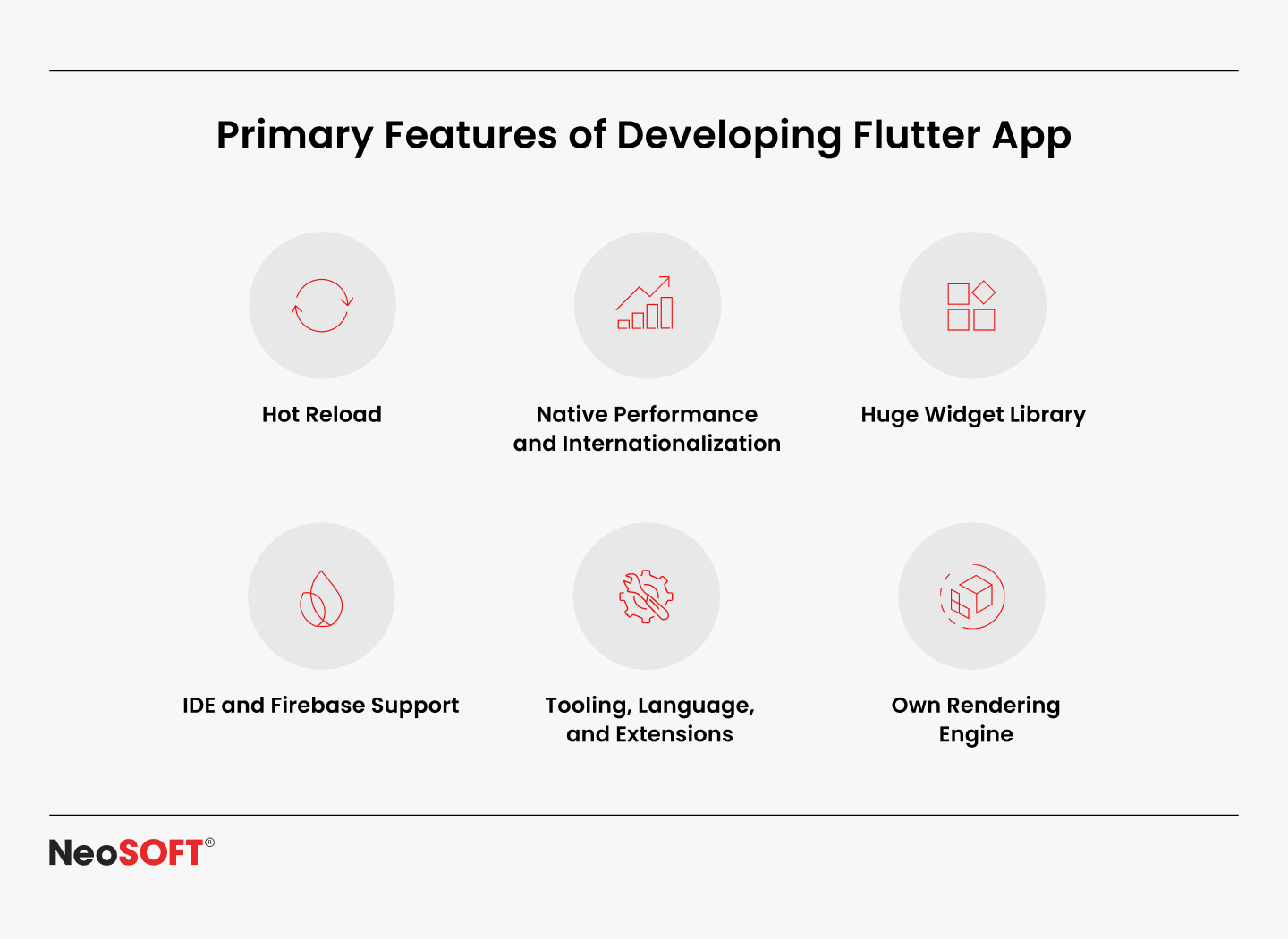
Core Features of Flutter
Hot reload feature: Allows you to modify the code, enhancing productivity and accelerating development.
Dart programming language: They operate identically to locally built apps due to them being directly translated into native machine code using the Dart programming language.
Own rendering engine: Ensures platform-wide client satisfaction while meeting demanding performance standards.
Customizable widgets: These provide both native and pre-made UI components that result in responsive and visually appealing interfaces.
Why Businesses Choose Flutter
Best suited for applications with faster turnaround times, Flutter aids developers in updating, testing, and iterating considerably more quickly. This is especially beneficial in competitive industries, where lowering overall development costs is important.
For companies looking to construct scalable and durable apps, its robust ecosystem, quick development time, and affordable price make it an excellent option. Also, the incorporation of platform-exclusive features like payments and geolocation is encouraged by the platform’s vibrant community and extensive external resource library.
By integrating its own rendering engine and performance, Flutter enables companies to keep their user interfaces consistent across iOS, Android, and desktop platforms. Offering efficient user experiences, it aids sectors like finance and E-commerce in client retention.
What is Kotlin Multiplatform?
A contemporary open-source technology that is widely used by iOS and Android, Kotlin Multiplatform distinctively approaches cross-platform programming. This framework focuses on code sharing for data models, important business logic, and API rather than replacing the complete UI layer. This enables developers to write platform-specific code for UI and device-level tasks. This ensures that applications on embedded devices, PCs, iOS, Android, and the web will continue to function and appear as intended.
Core Features of KMP
Business logic centralization: To reduce maintenance and preserve data consistency, networking, and authentication models are stored in shared modules.
Platform-specific code: Native user interface components and platform-specific APIs are available to developers for tasks including Bluetooth, GPS, and camera control.
Integration with existing tech stack: Integrating with third-party libraries makes it easier to incorporate into current iOS or Android app development procedures.
Native performance: Produces native code to guarantee that apps run as natively intended apps across all host platforms.
Why Businesses Choose KMP
It is an ideal option for businesses in charge of long-term plans and intricate tech stacks. Teams can reuse code across platforms without compromising quality by centralizing business logic while maintaining a native user interface. Businesses may minimize duplication while retaining control over platform-specific elements that provide distinctive user experiences thanks to this balancing.
KMP is particularly appealing to businesses with established iOS and Android development teams since it allows them to exchange business logic while retaining their native development skills. This secures the scalability, dependability, and low maintenance requirements of applications that run on multiple platforms.
Additionally, it is used by sectors where security, performance, and device integration are crucial, such as banking, healthcare, and IoT. This is because it maintains the efficiency of a single codebase while allowing for native user interfaces and platform-specific APIs.
Flutter vs Kotlin Multiplatform: Head-to-Head Comparison
Criteria
Flutter
Kotlin Multiplatform (KMP)
Development Approach
Single codebase for UI + business logic
Share business logic, but write native UI per platform
Performance
High performance, but slightly behind pure native
Near-native performance since UI is platform-native
UI/UX
Own rendering engine + customizable widgets
Leverages native UI components for an authentic look & feel
Learning Curve
Requires learning Dart
Easy for teams already using Kotlin/Java
Ecosystem & Libraries
Large, vibrant community + Google support
Growing ecosystem, backed by JetBrains & Google
Maintenance & Updates
Unified updates across platforms
Separate UI maintenance per platform, but shared logic updates
Best Suited For
Startups, MVPs, fast prototyping, consistent multi-platform UI
Enterprises, apps needing platform-specific UX with shared business logic
Business ROI
Using a single codebase reduces costs and speeds up time to market.
Balanced ROI saves on logic reuse, but UI requires platform-specific investment
Understanding Cross-Platform Development
Cross-platform development is the process of developing software that functions seamlessly on desktop, web, iOS, Android, and even embedded devices without necessitating the upkeep of several codebases. This method is now a mainstay in modern app strategies due to the escalating costs of developing mobile apps.
The compelling advantages are:
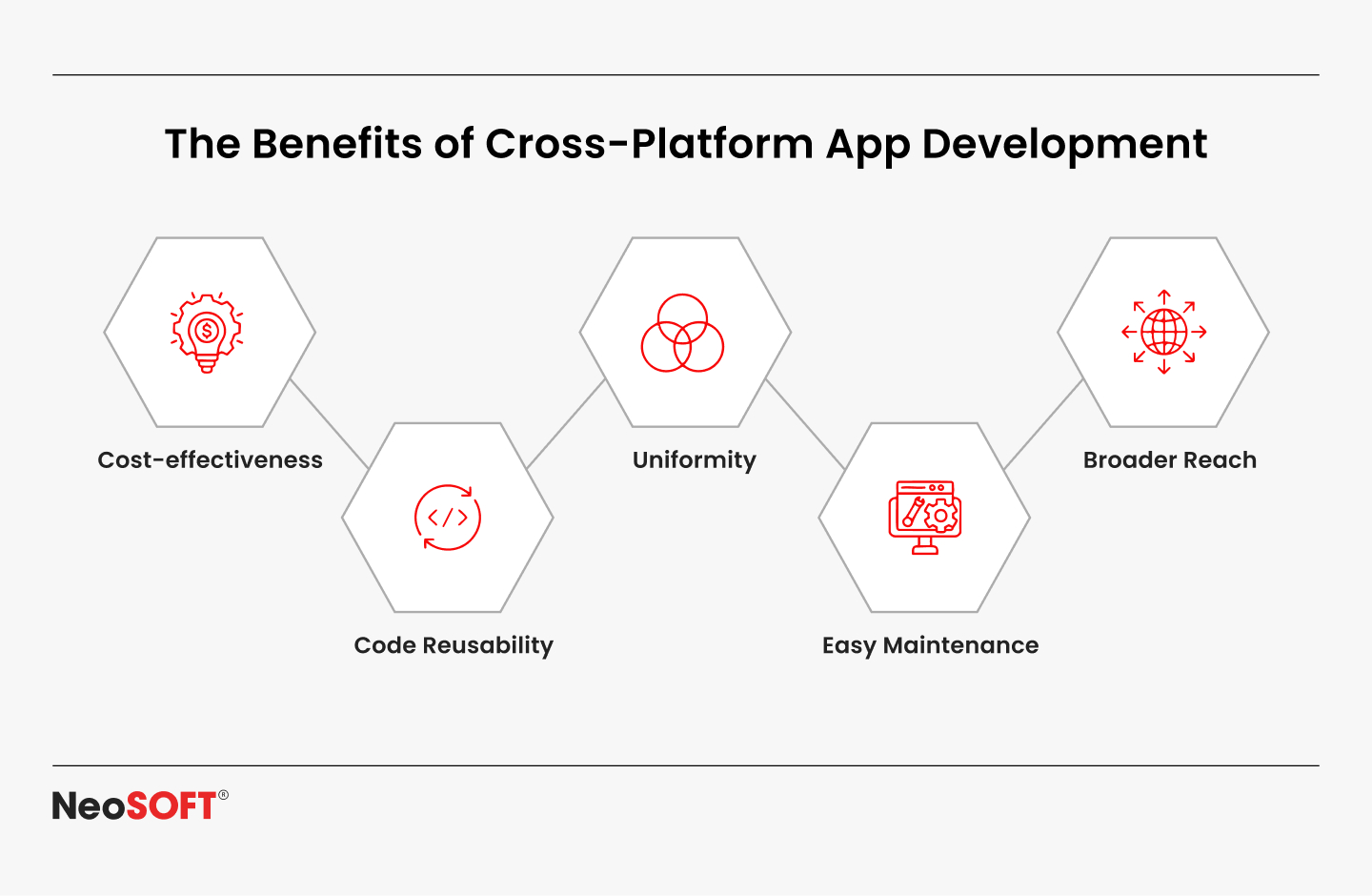
Code reuse and consistency: Platform-to-platform sharing of business logic allows developers to improve data models, cut down on duplication, and speed up development as a whole.
Unified experience: Cross-platform apps produce uniform user experiences even when native UI elements vary, thanks to a shared codebase.
Lower maintenance efforts: Subscribers of iOS and Android simultaneously receive updates, bug fixes, and new features.
Business ROI: Businesses may save money, attract customers, and reduce their time-to-market as development accelerates.
However, there are costs associated with this efficiency. The slow acceptance of new programming languages or frameworks, managing platform-specific APIs, and balancing native performance with quick development capabilities are all common challenges faced by developers. Due to these challenges, selecting the correct cross-platform becomes crucial.
App developers can quickly create cross-platform applications with a single codebase because of the platform’s unique widgets. In contrast to locally produced apps, Kotlin Multiplatform prioritizes sharing code for essential business logic while granting developers flexibility by permitting the use and building of native user interface elements and platform-specific code.
Industry Trends in Adoption
Adoption of cross-platform applications is somewhat limited. Since it allows them to use their current Kotlin expertise to extend functionality and transmit business logic to iOS without sacrificing native speed, Kotlin Multiplatform is frequently selected by businesses that favor Android.
Nonetheless, Flutter is the preferred option for companies that prioritize customers, particularly those who are in a rush to create apps for several platforms. Flutter’s fast iteration features enable constant user experiences across iOS and Android and enable rapid prototyping.
These adoption patterns highlight the fact that business goals like time-to-market, scalability, and platform strategy have a role in the decision, which isn’t only technical.
Challenges and Learning Curve
Despite accelerating cross-platform programming, Flutter and Kotlin Multiplatform (KMP) have several adoption obstacles.
Flutter: Teams must learn the programming syntax of Dart and become acquainted with Flutter’s innovative rendering engine. The majority of the requirements are satisfied by its active community and third-party libraries; nonetheless, complex platform-specific features could call for more native code. In complex use scenarios, app size and performance tweaking might also be problematic.
Kotlin Multiplatform: Although it makes code sharing for business logic easier, developers must still write platform-specific UI code. It is best suited for teams with strong native programming knowledge because it might be difficult to set up shared modules and ensure compatibility with third-party libraries.
Common to Both: Careful preparation is necessary to overcome issues, including handling CI/CD pipelines, managing maintenance across various platforms, and deciding what to share versus retain native.
While KMP works for businesses that value native performance but demand more in-depth knowledge of Android and iOS, Flutter promotes quick development capabilities but necessitates knowing Dart. These obstacles are lessened by well-defined boundaries, tested libraries, and effective teamwork.
Business ROI of Cross-Platform Development
Businesses may receive quantifiable and long-lasting benefits by implementing cross-platform development solutions like Flutter and KMP. Organizations may significantly cut down on duplication in the mobile app development process and guarantee faster delivery across various platforms by allowing teams to exchange business logic through a single codebase.
Reduced Development Costs: Teams save time rewriting features for desktop apps, web clients, and iOS and Android applications when they share code. This optimization reduces long-term maintenance efforts in addition to saving resources.
Faster Go-to-Market: Its streamlined integration with the native code helps companies to expedite development whilst ensuring simultaneous launching on the iOS and Android frameworks.
Improved Productivity: Developers focus on creating programs and enhancing the user interface (UI) rather than copying earlier work. The involvement of external libraries prominently speeds up innovation.
Future-Proofing: Supported by companies such as Google and JetBrains, KMP and Flutter offer community backing, stability, and regular updates.
Which One Should You Choose?
Choosing the right fit between KMP and Flutter depends upon your overall objectives, supported platforms, and development workflow or practices.
Designate Flutter if: Cross-platform applications that are aesthetically pleasing, uniform across platforms, and somewhat easy to develop are typically preferred by organizations. Flutter is a great option for MVPs, start-ups, and apps that require both performance and consistent branding because of its enormous widget flexibility, native compilation, and rendering engine.
Opt for Kotlin Multiplatform if: Kotlin Multiplatform is ideally suited to organizations that have complex ecosystems like IoT, Finance, and Healthcare, that require significant administration of regionally built apps and native development. Building code for Bluetooth, tracking devices, or sensors necessitates native functionality and flexibility. This is because it allows business logic to be shared while utilizing native UI elements and platform-specific APIs.
While KMP gives businesses more control over the tech stack and allows them to scale securely, Flutter allows developers to deliver rapidly and consistently.
Conclusion
The Flutter vs. Kotlin multiplatform debate is a straightforward one; it all depends on your objectives. Flutter-created apps perform well in scenarios that call for affordability, quick development, and reliable cross-platform functionality. For customer-focused apps and start-ups, its rendering engine, hot reloading feature, and configurable widgets make it the best option.
Nonetheless, Kotlin Multiplatform flourishes in circumstances when native development and efficiency are unavoidable. By allowing teams to share business logic while developing platform-specific code, KMP provides the flexibility they need to develop enterprise-grade, mission-critical products.
In order to future-proof enterprises across desktop apps, embedded systems, and the Android and iOS platforms, both offer strong cross-platform solutions backed by active communities.
Not only may cross-platform app development help you save money, but it also enables you to make smarter technological decisions that support your business objectives. Contact us at info@neosofttech.com if you’re prepared to employ Flutter or Kotlin Multiplatform to create scalable, high-performing applications. With the help of our skilled engineers, you will be able to manage complex tech stacks across several platforms and create sector-specific applications.
We use cookies on our website to give you the most relevant experience by remembering your preferences and repeat visits. By clicking “Accept All”, you consent to the use of ALL the cookies. However, you may visit "Cookie Settings" to provide a controlled consent.
This website uses cookies to improve your experience while you navigate through the website. Out of these, the cookies that are categorized as necessary are stored on your browser as they are essential for the working of basic functionalities of the website. We also use third-party cookies that help us analyze and understand how you use this website. These cookies will be stored in your browser only with your consent. You also have the option to opt-out of these cookies. But opting out of some of these cookies may affect your browsing experience.
Necessary cookies are absolutely essential for the website to function properly. These cookies ensure basic functionalities and security features of the website, anonymously.
Cookie
Duration
Description
cookielawinfo-checkbox-analytics
11 months
This cookie is set by GDPR Cookie Consent plugin. The cookie is used to store the user consent for the cookies in the category "Analytics".
cookielawinfo-checkbox-functional
11 months
The cookie is set by GDPR cookie consent to record the user consent for the cookies in the category "Functional".
cookielawinfo-checkbox-necessary
11 months
This cookie is set by GDPR Cookie Consent plugin. The cookies is used to store the user consent for the cookies in the category "Necessary".
cookielawinfo-checkbox-others
11 months
This cookie is set by GDPR Cookie Consent plugin. The cookie is used to store the user consent for the cookies in the category "Other.
cookielawinfo-checkbox-performance
11 months
This cookie is set by GDPR Cookie Consent plugin. The cookie is used to store the user consent for the cookies in the category "Performance".
viewed_cookie_policy
11 months
The cookie is set by the GDPR Cookie Consent plugin and is used to store whether or not user has consented to the use of cookies. It does not store any personal data.
Functional cookies help to perform certain functionalities like sharing the content of the website on social media platforms, collect feedbacks, and other third-party features.
Performance cookies are used to understand and analyze the key performance indexes of the website which helps in delivering a better user experience for the visitors.
Analytical cookies are used to understand how visitors interact with the website. These cookies help provide information on metrics the number of visitors, bounce rate, traffic source, etc.
Advertisement cookies are used to provide visitors with relevant ads and marketing campaigns. These cookies track visitors across websites and collect information to provide customized ads.