Industrial AI can predict equipment failures, detect quality defects, and optimize production schedules. Yet, despite promising pilot results, many manufacturers struggle to extend these capabilities beyond a single production line or facility.
Consider a predictive maintenance pilot that successfully identifies early signs of machine failure. Engineers validate its predictions, downtime risks become more visible, and the business case looks convincing.
Then the manufacturer attempts to deploy the same solution across multiple plants.
Equipment identifiers differ, maintenance records sit in separate applications, and production schedules aren’t consistently synchronized. Suddenly, the model that performed well during testing struggles to deliver reliable recommendations.
The challenge isn’t always the AI model. More often, it’s the fragmented operational data surrounding it.
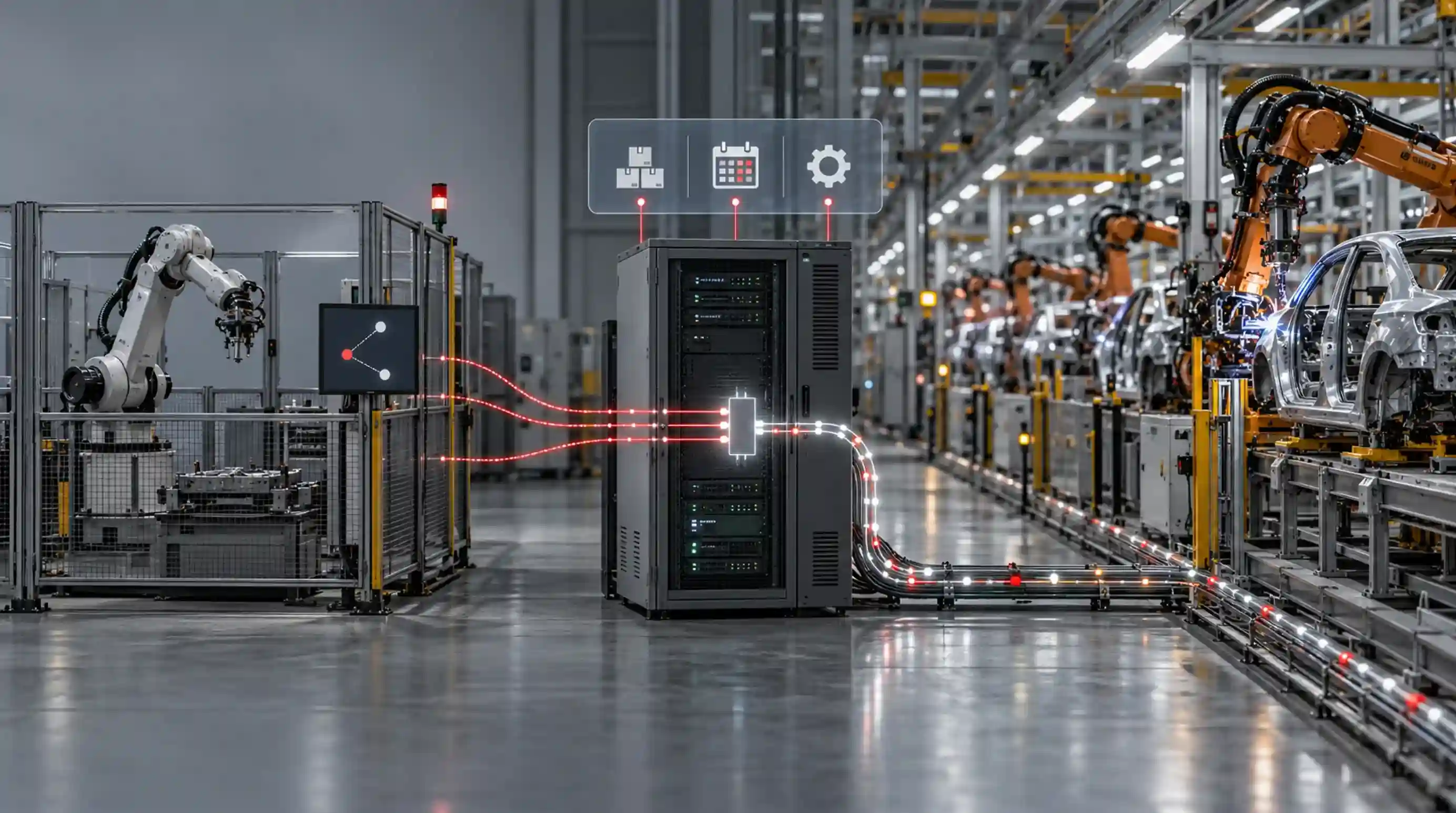
This is where Enterprise Resource Planning (ERP) data integration becomes essential. By connecting business information with shop-floor intelligence, manufacturers can move beyond isolated AI experiments and build scalable, dependable industrial AI applications.
Why Industrial AI Pilots Fail to Scale in Manufacturing
Industrial AI pilots frequently succeed because they operate within carefully controlled conditions.
Data is collected from selected equipment, historical records are cleaned, and engineers manually resolve inconsistencies before models are trained. These activities help demonstrate technical feasibility but rarely represent everyday manufacturing conditions.
Once deployment expands, AI applications must process information from different machines, facilities, software platforms, and operational workflows.
A model trained on one production line may encounter unfamiliar operating conditions elsewhere. Missing maintenance records, inconsistent timestamps, and different equipment configurations can further reduce its reliability.
The National Institute of Standards and Technology (NIST), in its 2026 Roadmap on Artificial Intelligence and Machine Learning for Smart Manufacturing, identifies industrial data complexity, heterogeneous system integration, and trustworthy AI operation as significant manufacturing challenges.
The distinction is important: developing an accurate AI model and deploying a reliable manufacturing AI system are two different achievements.
Successful scaling requires more than predictive accuracy. It demands consistent data availability, operational integration, monitoring, and the ability to turn predictions into decisions.
The Hidden Data Challenges Behind Industrial AI Pilot Failures
Manufacturing environments produce vast quantities of data, but that information is rarely available in a unified, usable format.
ERP platforms manage procurement, inventory, financial transactions, and production orders. Manufacturing Execution Systems (MES) record production activities, while Industrial Internet of Things (IIoT) platforms collect machine-level information.
When these systems operate independently, AI receives only fragments of the complete manufacturing picture.
Inconsistent Manufacturing Master Data
Equipment, materials, and production orders may have different identifiers across systems.
For example, a machine recorded as MCH-102 in an IIoT platform might appear under another asset code in ERP.
Without consistent mapping, AI cannot reliably associate equipment behavior with corresponding maintenance, inventory, or production records.
An unexpected temperature increase might indicate equipment deterioration, but it could also result from a planned production adjustment.
Without production orders, operating parameters, and historical maintenance context, AI may generate misleading alerts.
Delayed Data Exchange Across Factory Systems
Industrial sensors can generate readings continuously, while ERP transactions may update at different intervals.
When operational and business information isn’t synchronized, AI recommendations may rely on outdated schedules or inventory records.
These inconsistencies become particularly difficult to manage across multiple manufacturing facilities.
How ERP Data Integration Helps Industrial AI Scale
Industrial AI becomes more valuable when machine intelligence is connected with enterprise business information.
An IIoT platform can identify unusual equipment behavior. ERP provides the context needed to understand its potential impact on production, maintenance, inventory, and customer commitments.
Consider an AI model predicting that a critical machine may fail within the next 48 hours.
Without ERP integration, maintenance teams receive an alert.
With connected ERP information, the system can also identify replacement-part availability, upcoming production commitments, maintenance requirements, and possible scheduling conflicts.
The prediction becomes part of a coordinated operational decision rather than an isolated technical warning.
This doesn’t require replacing every existing application. Manufacturers can improve their data foundations through targeted ERP integration and modernization, connecting operational systems with the enterprise records that influence manufacturing decisions.
The objective is straightforward: make business and manufacturing information consistent, accessible, and usable across AI applications.
5 ERP Data Fixes for Scaling Industrial AI in Manufacturing
Building a scalable industrial AI environment requires a structured approach to data quality, system connectivity, and operational execution.
1. Standardize Master Data Across Manufacturing Systems
Manufacturers should establish consistent identifiers for equipment, materials, production orders, suppliers, and facilities.
Standardized master data allows AI to connect information from multiple systems without repeated manual reconciliation.
Clear ownership is equally important. Maintenance, operations, and IT teams must establish which applications maintain authoritative records and how updates are shared.
This creates a reusable data foundation when AI expands to additional machines or facilities.
2. Integrate ERP, MES, and IIoT Data
ERP, MES, and IIoT platforms serve different purposes, but industrial AI benefits from their combined information.
Connecting these systems enables manufacturers to relate equipment performance to production schedules, material consumption, and quality outcomes.
Not every sensor reading needs to enter ERP. High-frequency machine data can remain within industrial platforms, while relevant events are connected to enterprise transactions.
APIs, event-driven integration, and standardized data models help establish these connections without unnecessarily increasing system complexity.
3. Improve Manufacturing Data Quality
Industrial AI predictions depend on trustworthy historical and operational information.
Incomplete maintenance histories, duplicate asset records, incorrect timestamps, and inconsistent measurement units can weaken model performance.
Automated validation, data reconciliation, and continuous quality monitoring help identify these issues before they affect production decisions.
Manufacturers should also monitor whether data quality deteriorates as equipment configurations, processes, and operating conditions change.
4. Build a Governed Industrial Data Architecture
Connecting every AI application directly to individual manufacturing systems creates integration complexity.
A governed data architecture provides common definitions and controlled access to ERP transactions, MES events, equipment measurements, and maintenance information.
This approach supports reusable datasets, security controls, traceability, and consistent data interpretation.
It also reduces the effort required to introduce additional AI applications without rebuilding the same integrations.
5. Connect AI Insights to Manufacturing Workflows
An accurate prediction delivers limited value unless someone can act on it.
Maintenance recommendations should support work-order planning. Quality alerts should connect with inspection processes. Production forecasts should influence scheduling and material decisions.
AI outputs can initiate recommendations or approval workflows while operational teams retain appropriate decision-making control.
This helps industrial AI become part of everyday manufacturing operations rather than another disconnected analytics dashboard.
Business Benefits of ERP-Integrated Industrial AI
Reliable ERP data integration expands the practical value of industrial AI across manufacturing functions.
Predictive maintenance: Equipment health predictions can be evaluated alongside maintenance schedules, spare-parts availability, and production commitments.
Quality management: Defect patterns can be associated with material batches, equipment conditions, and production orders, supporting more targeted investigations.
Production optimization: Scheduling recommendations can account for equipment availability, inventory constraints, and order priorities.
Inventory planning: Consumption forecasts can be connected with procurement lead times, demand changes, and manufacturing capacity.
These applications demonstrate why manufacturers need more than accurate predictive models. They need AI systems that understand the operational consequences of their recommendations.
Actual improvements depend on data reliability, system integration, process adoption, and continuous performance measurement.
How to Move Industrial AI From Pilot to Production
Scaling industrial AI doesn’t necessarily require a complete ERP replacement or factory-wide technology overhaul.
A more practical approach starts with one high-value use case and the minimum information needed to support it reliably.
For predictive maintenance, this might include equipment identifiers, maintenance transactions, sensor histories, and production schedules.
Manufacturers can identify missing connections, establish repeatable integration methods, and test the solution across additional production environments.
Performance should be evaluated using operational metrics, including unplanned downtime, maintenance efficiency, defect rates, and production reliability, rather than model accuracy alone.
NeoSOFT’s manufacturing technology solutions support connected manufacturing environments through enterprise integration, automation, IIoT, and intelligent operational systems.
The priority is to build a reliable foundation that can support multiple manufacturing AI applications without recreating the same data preparation challenges.
Building a Scalable Industrial AI Foundation
Industrial AI pilots often expose weaknesses that already exist within manufacturing information systems.
Disconnected equipment records, inconsistent master data, delayed transactions, and fragmented workflows become more visible when AI moves beyond controlled testing.
Improving algorithms alone cannot resolve these structural limitations.
Manufacturers need reliable connections between shop-floor information and the ERP data governing production, maintenance, inventory, and business operations.
Industrial AI creates greater value when it moves beyond identifying potential problems and helps manufacturing teams make informed operational decisions.
That transition begins with connected, trustworthy enterprise data.
Manufacturers are under tremendous pressure to innovate, optimize manufacturing processes, and scale effectively in today’s rapidly changing industrial sector. In the current landscape, businesses require scalable and versatile ERP solutions to maintain a competitive edge even if they work in process or discrete manufacturing.
Conventionally, businesses have used on-premises ERP software to administer their manufacturing, inventory, and supply chains. Although these systems were useful in the past, they had a significant IT overhead, frequently had integration problems, and lacked real-time functionality.
The upcoming software-as-a-service (SaaS) models and cloud-based ERP solutions have significantly brought a change to this ecosystem. Customer relationship management (CRM), product lifecycle management (PLM) and manufacturing execution systems (MES) can all be seamlessly integrated with the cloud-based and responsive software solutions offered by today’s manufacturing ERP systems.
The organizations can improve manufacturing data collection, gain immediate insight into shop floor activities, and arrive at data-driven decisions that increase operational agility, enhance customer satisfaction, and promote innovation throughout the entire company through the use of these leading manufacturing ERP systems.
This blog aims to reach out to individuals working as plant managers, operations directors, CIOs, CTOs, and other decision-makers who are looking to update their outdated on-premise ERP systems and enhance vital manufacturing procedures. You will uncover how fundamental industrial operations like production planning, supply chain management, inventory, and finance management are connected via manufacturing ERP software and cloud-based ERP systems, which form the digital foundation of industry 4.0.
Key Capabilities of Cloud ERP
Production operations are being revolutionized by cloud ERP, which acts as a scalable and adaptable substitute for typical on-premise ERP systems. These platforms, which operate on scalable, software hosted in the cloud, let manufacturers connect to, digitize, and optimize every stage of the manufacturing lifecycle from raw materials to consumer delivery.
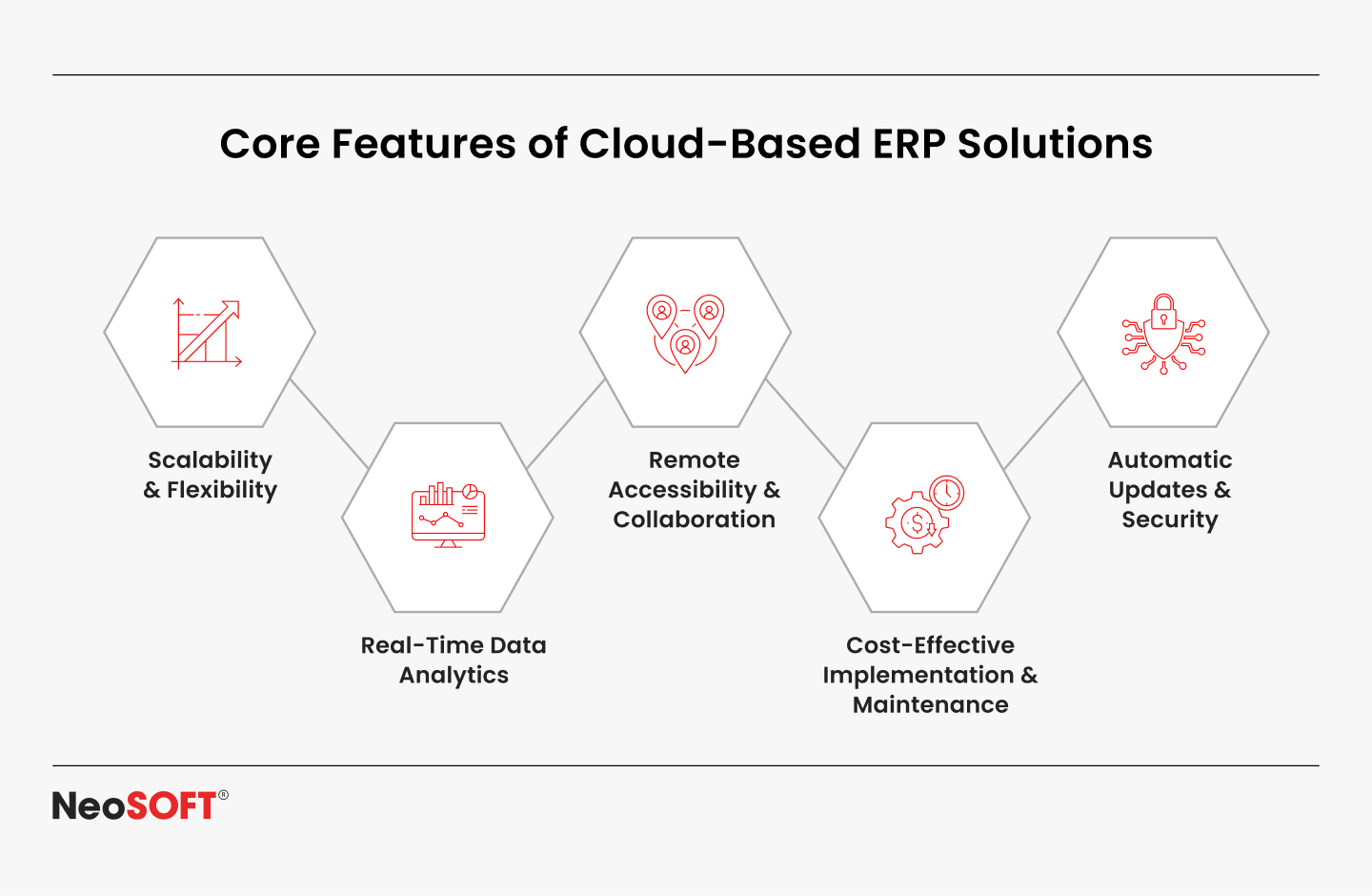
What sets cloud-based ERP apart?
Real-Time Data Access: Supply chain activities, sales pipelines, production schedules, inventory levels, and other aspects of manufacturing processes are all visible in real time with cloud ERP systems. This makes it possible to estimate demand accurately, make decisions more quickly, and improve responsiveness throughout your company.
Scalability & Flexibility: Cloud ERP software conforms to your demands, whether you’re handling massive operations process manufacturing environments or are a small batch maker. These systems expand easily across departments and geographical locations for both standalone and process manufacturing as well as custom manufacturing.
Mobile & Remote Accessibility: Regardless on the production floor, in the storage facility, or at headquarters, users may safely receive dashboards, reports, and real-time data at any time with contemporary manufacturing ERP software. Better control over crucial industrial processes and quicker problem solving are made possible by this mobility.
Powerful Integration Capabilities:Customer relationship management, manufacturing execution systems, project management, product lifecycle management and financial management are just a few of the important enterprise apps that can be connected to a cloud-based ERP system. This breaks down walls and facilitates real-time collaboration by integrating key corporate operations into just one digital thread.
Automated & Continuous Updates: Cloud-based solutions provide regular, automatic upgrades that guarantee access to the newest attributes, regulatory tools, and security fixes without interfering with business operations, in contrast to legacy on-premise ERP systems. Broad, expensive upgrading cycles are over.
Support for End-to-End Operations: These platforms support all key functions inventory management, materials management, warehouse management, accounting processes, quality control, sales management, and even human resources all within one integrated solution.
In light of these features, cloud ERP is one of the best solutions for modernizing manufacturing processes. To remain competitive in a continuously changing industrial manufacturing sector, they help firms manage intricate supply chain networks, streamline production processes, assure compliance, and obtain comprehensive business intelligence.
Manufacturing businesses may increase customer satisfaction, expedite manufacturing data gathering, and build a connected, future-ready corporation by switching from antiquated on-premises ERP to an adaptable, highly intelligent, and cloud-based enterprise resource planning solution.
Key Benefits for Modern Manufacturers
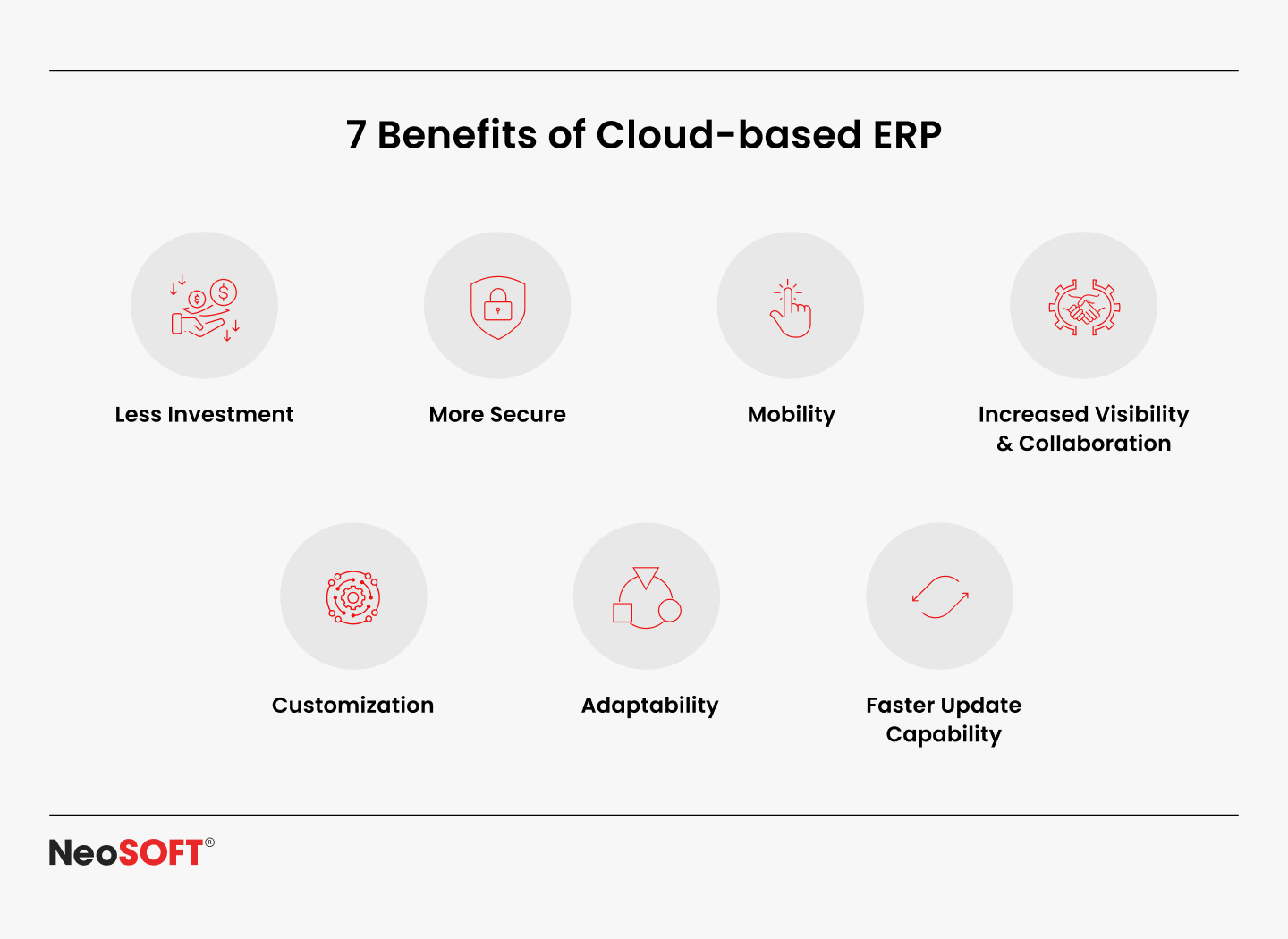
Cloud ERP systems offer more than digital tools; they deliver measurable business outcomes that are vital for modern manufacturers.
Accelerated Time-to-Value
These systems implement quickly in comparison to conventional on-premise ERP, enabling manufacturers to realize ROI sooner. Ready-made manufacturing components reduce setup time, helping organizations optimize production, supply chain, and inventory processes.
This quick implementation minimizes disturbance and speeds up the digital transformation process by enabling quicker optimization spanning fabrication, distribution system, and inventory activities.
Stronger Cross-Department Collaboration
A modernized cloud ERP for manufacturing synchronizes the activities of the departments of sales, finance, production, purchasing products, and human resources while centrally storing business-critical data. By removing data silos and guaranteeing constant real-time information availability, this connection lowers the possibility of misunderstandings and operational delays.
Shop floor systems and inventory control are illustrations of connected modules that teams can utilize to proactively address problems while preserving production schedules. Alongside enhancing company operations, this degree of synergy fortifies the groundwork for scalable expansion.
Strategic Decision-Making with Real-Time Insights
They enable manufacturers to have the advantage of collecting manufacturing data in real-time, which helps them remain ahead of the competition. Live dashboards and extensive business intelligence capabilities offer real-time insight into management of supply chains, demand trends, stock levels, planning, and financial performance.
They also do effective raw material management, good production scheduling, and accurate demand forecasting. Furthermore, real-time analytics improve quality control planning and throughput, enabling administration to make decisions based on data that increase operational efficiency and profitability.
Among the key business functions that can be coordinated with a modern manufacturing ERP system are financial management, inventory control, and manufacturing process strategy. This departmental real-time connectivity improves response, expedites distribution chain management, and increases visibility.
Reduced Total Cost of Ownership (TCO)
Standard on-premises accounting software packages necessitate a substantial upfront investment in equipment, infrastructure, and ongoing IT support. On the other hand, by removing these capital costs using the adoption of Software as a Service (SaaS), cloud-based ERP software offers a more flexible and cost-effective method.
Manufacturers gain from lower costs and easier system maintenance through standardized pricing, ongoing software upgrades, and integrated service management. For tiny and mid-sized manufacturers looking to grow without raising their IT expenses, this approach proves extremely beneficial.
Enhanced Customer Responsiveness
In today’s manufacturing industry, promptness and transparency are critical to customer growth and retention. A cloud ERP system gives businesses rapid access to order history, levels of stock, and delivery schedules, enabling them to precisely fulfill orders and answer consumer inquiries.
ERP software ensures that urgent requests for custom arrangements, and order adjustments are promptly shared across departments, bringing manufacturing operations and marketing management into alignment. This is especially crucial in situations like customized and process manufacturing, where client demands constantly vary.
Using computerized processes and current information from supply chain, inventory management, and factory execution systems, enterprises could boost delivery accuracy, minimize errors, and offer consistent service. This will promote enduring relationships and increase customer loyalty.
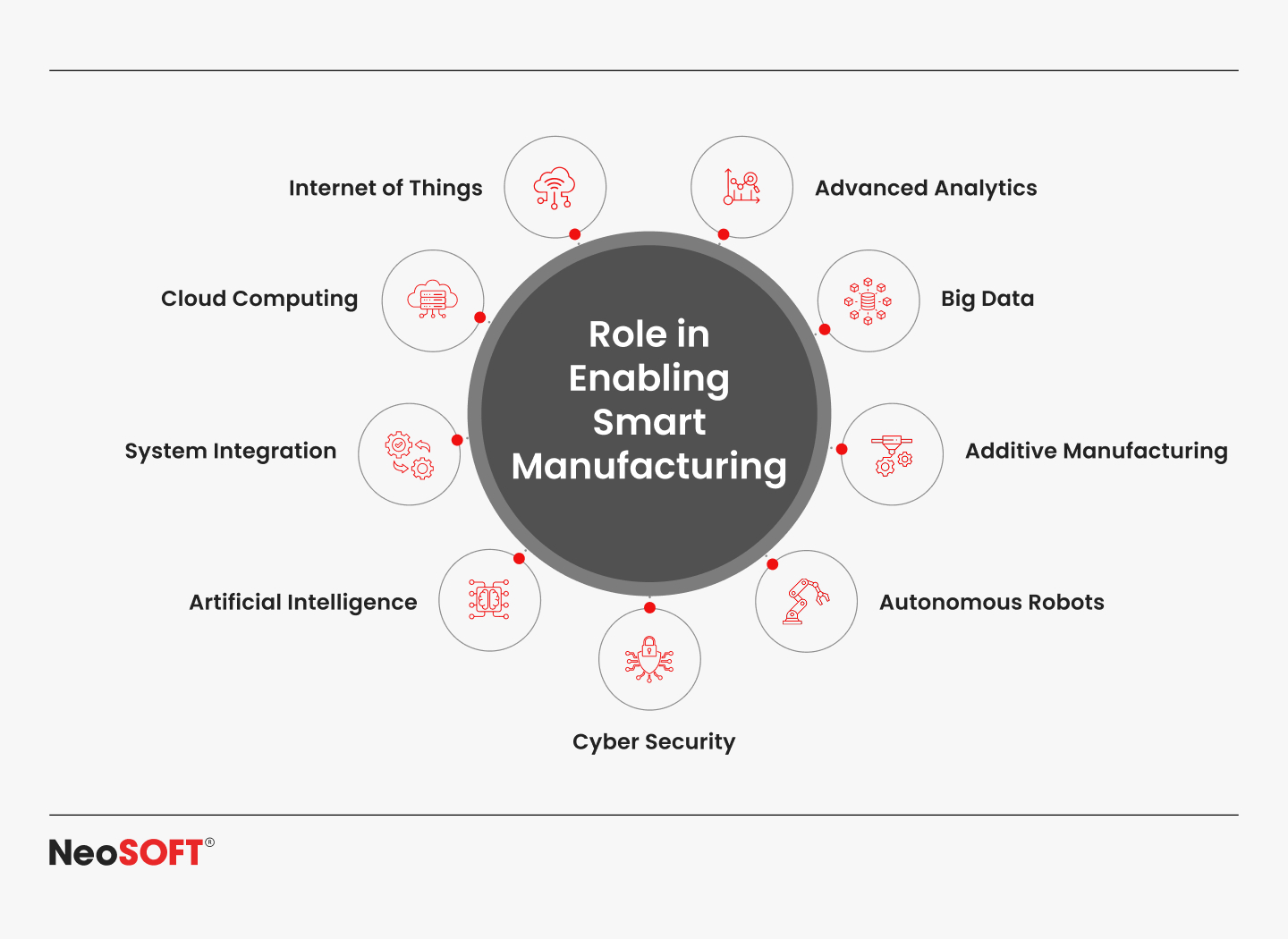
Role in Enabling Smart Manufacturing
Key contributions include:
Enhanced shop floor operations through the use of linked devices to monitor stock, equipment well-being, and production processes in real time.
Predictive maintenance, rendered possible by AI and advanced analytics, reduces downtime and improves the efficiency of machinery.
Visibility is provided by from beginning to end PLM (product lifecycle management) integration, which links design, production, and delivery.
Traceability and quality management, which guarantee visibility and compliance in both continuous and process production environments.
With constant surveillance and predictive analytics, cloud ERP helps companies in today’s interconnected manufacturing sector develop more quickly, adjust to market changes, and ensure long-term operational resilience.
Common Challenges and Solutions
Cloud-based ERP systems have a lot to offer the manufacturing industry, but there could be a lot of challenges to overcome when using them. Early detection helps industrial companies plan for success and avoid disruptions.
1. Data Migration from Legacy Systems
Large volumes of vital operational data, like financial information, production history, and inventory records, must be moved when switching from an outdated, on-site enterprise resource planning system to an updated cloud-based ERP solution. After deployment, operational problems may arise from incomplete data.
Solution:
Engage with seasoned ERP suppliers to clean, map, and authenticate data. A phased migration program ensures company continuity and reduces downtime in critical production and supply chain operations.
2. User Adoption & Change Management
Manufacturing, economics, procurement, and sales teams’ daily activities are impacted when a new industrial ERP system is implemented. ROI might be delayed by a lack of familiarity or resistance to change.
Solution:
Give pilot rollouts, transparent communication, and organized staff training top priority. To facilitate onboarding for manufacturing operations, handling materials, and quality management, select ERP software with an easy-to-use interface and robust support.
3. Customization Constraints
Several SaaS ERP programs might not completely satisfy specialized needs in process or discrete manufacturing. Support for special processes or production-specific requirements may be impeded by a lack of customization.
Solution:
Choose modular ERP solutions tailored to your industry. Popular cloud ERP platforms for manufacturing provide characteristics that may be customized to meet different demands in inventory control, production planning, and project management.
4. Security & Compliance Risks
Concerns about cybersecurity, privacy of information, and regulatory compliance are legitimate when it comes to cloud deployment, particularly for sectors that handle important operations or financial data.
Solution:
Employ ERP suppliers offering enterprise-grade security, encryption, and audit trails. Verify that the solution conforms with local, national, and international manufacturing rules, particularly those pertaining to financial management and the processing of employment data.
However if businesses choose to work with an appropriate partner they can easily switch to a cutting-edge manufacturing ERP system that boosts agility, lowers expenses, and fosters innovation without sacrificing security or productivity.
How to Choose the Right Cloud ERP for Your Manufacturing Needs
Selecting the top stored in the cloud accounting software for manufacturing is crucial if you want to upgrade your business’s procedures and remain competitive. Here is what needs to be assessed:
Deployment Models- Employ a hybrid ERP solution that combines premises and cloud-based programs for a flexible rollout if a full cloud transition is not practical.
Integration Needs- For smooth production processes and data flow, make sure the ERP system connects readily with your current CRM, MES, HR, and product lifecycle management technologies.
Customization & Fit- Choose production-specific ERP platforms that can adapt to your project management, inventory control, and quality control specifications, whether they are discrete or process-driven.
Vendor Reputation- Select dependable ERP suppliers with solid support, scalability, and a track record of success in the manufacturing sector, such as Microsoft Dynamics.
Conclusion
The solution for the next stage of business resource planning lies in intelligent, adaptable, and fully integrated platforms made for modern industrial businesses. The development of ERP Software as a Service (ERPaaS) has made it possible for manufacturers to use flexible pay-as-you-go models that reduce upfront costs while adapting shifting operational requirements.
In addition, the incorporation of AI-powered ERP capabilities enables more intelligent decision-making in areas such as inventory control, accounting, sales forecasting, and materials management, all of which are critical for thriving in the present competitive landscape.
Cloud ERP makes sure manufacturers have plans for future issues by improving outdated tools, improving responsiveness, and making better judgments. Maintaining operational excellence requires a strong ERP solution as customer demands rise and production processes get more intricate.
Cloud ERP is not merely a choice; it is a must if you are prepared to make your operations more future-proof and create an integrated, scalable, and intelligent company. Contact us at info@neosofttech.com to learn more about how our customized ERP solutions can revolutionize your manufacturing operations. Let our expert developers assist you in enhancing procedures, innovate effectively, and scale with consistency.
We use cookies on our website to give you the most relevant experience by remembering your preferences and repeat visits. By clicking “Accept All”, you consent to the use of ALL the cookies. However, you may visit "Cookie Settings" to provide a controlled consent.
This website uses cookies to improve your experience while you navigate through the website. Out of these, the cookies that are categorized as necessary are stored on your browser as they are essential for the working of basic functionalities of the website. We also use third-party cookies that help us analyze and understand how you use this website. These cookies will be stored in your browser only with your consent. You also have the option to opt-out of these cookies. But opting out of some of these cookies may affect your browsing experience.
Necessary cookies are absolutely essential for the website to function properly. These cookies ensure basic functionalities and security features of the website, anonymously.
Cookie
Duration
Description
cookielawinfo-checkbox-analytics
11 months
This cookie is set by GDPR Cookie Consent plugin. The cookie is used to store the user consent for the cookies in the category "Analytics".
cookielawinfo-checkbox-functional
11 months
The cookie is set by GDPR cookie consent to record the user consent for the cookies in the category "Functional".
cookielawinfo-checkbox-necessary
11 months
This cookie is set by GDPR Cookie Consent plugin. The cookies is used to store the user consent for the cookies in the category "Necessary".
cookielawinfo-checkbox-others
11 months
This cookie is set by GDPR Cookie Consent plugin. The cookie is used to store the user consent for the cookies in the category "Other.
cookielawinfo-checkbox-performance
11 months
This cookie is set by GDPR Cookie Consent plugin. The cookie is used to store the user consent for the cookies in the category "Performance".
viewed_cookie_policy
11 months
The cookie is set by the GDPR Cookie Consent plugin and is used to store whether or not user has consented to the use of cookies. It does not store any personal data.
Functional cookies help to perform certain functionalities like sharing the content of the website on social media platforms, collect feedbacks, and other third-party features.
Performance cookies are used to understand and analyze the key performance indexes of the website which helps in delivering a better user experience for the visitors.
Analytical cookies are used to understand how visitors interact with the website. These cookies help provide information on metrics the number of visitors, bounce rate, traffic source, etc.
Advertisement cookies are used to provide visitors with relevant ads and marketing campaigns. These cookies track visitors across websites and collect information to provide customized ads.