Every enterprise wants to become more digital and grow much faster. Knowing where to start and what to prioritize is tough. But, digital transformation is not just about moving to the cloud. Adopting AI or automating processes is not the full solution. Technology creates real value only when it solves business problems.
Here the main motive of Neosoft is to build fastest growing businesses which must serve customers in a better way and make much smarter decisions.
This journey is different from a simple digital vision. Here we are going to discuss a clear roadmap for the success of enterprises.
The Reality We Faced
Most enterprises do not start their transformation journey completely fresh. They already have applications, processes, data platforms, and active teams. The main challenge is that these pieces do not connect. Legacy applications can slow down innovation across your whole team. Disconnected systems keep important data hidden away in isolated silos.
Manual processes waste precious time that teams need for work. Customer expectations keep rising while technology teams must deliver fast. Enterprises face a constant stream of brand new technology tools. Cloud, AI, and analytics options appear in the market daily. The big question is not what technology you should adopt. You must ask which technology solves your most important problem. This shift in thinking makes your digital transformation truly meaningful.
What We Did Differently
1. First, Understand Where You Are
Take an honest look at your current business state today. Assess all your applications, infrastructure, data, and security systems now. This review shows what works and where gaps exist today. You can easily see which critical areas need fast attention. Without a strong baseline, you will waste money on technology.
2. Set KPIs That Actually Matter
Digital transformation requires very clear measures for long term success. Focus on the real business changes that occurred over time.
Did your internal processes become much faster for all workers?
Did customer satisfaction scores improve after making these big changes?
Did your employees spend much less time doing manual work?
The right KPIs connect technology directly to real business outcomes.
3. Focus on Priorities and Quick Wins
Transforming everything at once can cause various complex problems. Try to start with top priorities to create the business value. Target early win areas for fast progress. Business impact and complexity help determine what should happen first. Technology decisions must follow business priorities, not the other way.
4. Make Change Management Part of the Plan
A new tech system adds value only when workers use it. Your team needs proper training to master every new digital tool. Staff must change their daily habits and old manual work methods. Managers need to explain clearly why this project truly matters now. You must start managing team changes on day one of work.
5. Let Data Guide Your Decisions
Data sits at the very heart of modern business operations. Having more data does not automatically lead to better decisions. Organizations need reliable and clean data every single day now. Clear data supports daily tasks as well as long plans. Using data helps teams find patterns and understand customer needs. Data lets enterprises adjust their transformation strategy with high confidence.
6. Keep the Customer at the Centre
Technology must always make life much easier for the customer. Build simpler digital experiences and offer much faster overall service. Reduce the total steps needed to complete a simple task. Customer feedback helps decide which key projects get top priority. Digital transformation should always create outcomes that people truly value.
7. Turn the Strategy Into a Practical Roadmap
A clear strategy shows exactly where you want to go. A detailed roadmap shows you how to get there safely. Follow a simple path: Assess, Prioritize, Execute, Measure, and Scale. Start by understanding your current state before taking any action. Prioritize top tasks based on overall value and easy execution. Execute your plans in small phases to control risk easily. Measure your early results and scale success across the company. Bring business leaders, tech teams, and data experts together now.
How NeoSOFT Can Help
A good transformation strategy is only the very first step. Turning strategy into working solutions is the real main challenge. NeoSOFT helps enterprises move smoothly from vision to real execution. We combine digital engineering, cloud, AI, and automation expert teams. We work closely with you to understand key business priorities. We build flexible solutions that easily evolve with changing needs. NeoSOFT modernizes old legacy systems to build strong digital foundations. We help build smart AI capabilities for practical daily use. Our engineering capabilities support the growth of enterprise systems globally. Start with real business needs and engineer for long value. Focus continuously on creating measurable business impact for your enterprise.
Conclusion
A great strategy map gives your entire company a very clear goal. It shows your team what main job needs to get done every single day. Leaders see how tech budgets turn into real progress over time. Your workers know why tech shifts are happening right now. Tech choices stay tightly bound to big company goals every day. Tech growth is a long continuous process and not a single short effort. Build a strong business that changes quickly and makes wise decisions. Turn smart tool choices into lasting profits for your future success with NeoSOFT.
Frequently Asked Questions
Why is change management important in digital transformation?
New tools cannot help your enterprise without total team adoption. Your staff must understand, accept, and use these tools daily. Proper guidance helps your team adapt to changes smoothly every day.
How can an enterprise measure digital transformation?
Look at total profits instead of counting basic tool usage. Key targets should include daily productivity, happy customers, and saved money.
Is digital transformation a one-time project?
No, tech growth is a long continuous process for every business. Client expectations and smart tools change rapidly in modern markets. Companies must review their digital plans and update old systems often.
How can NeoSOFT support enterprise digital transformation?
NeoSOFT builds strong digital tools that scale up with your business. We focus on turning major priorities into clear and measurable goals.
By introducing cutting-edge automation technologies that streamline repetitive processes, robotic process automation (RPA) is revolutionizing the way businesses operate. It is an essential element for companies trying to boost productivity, reduce costs, and enhance accuracy. Businesses can increase their operational effectiveness while freeing up people for more strategic work by using software robots to automate rule-driven, repetitive operations.
An initial step toward greater automation possibilities with AI and ML is RPA implementation. With this automation software technology, organizations can automate not just easy repetitive data but also complex decision-making processes that focus on cognitive capacities.
This blog examines the typical problems that arise when implementing RPA, offers solutions for these problems, and examines how using an RPA tool can propel digital transformation. Whether you’re unfamiliar with RPA or trying to develop and improve your automation approach, this guide provides insightful viewpoints to help you manage the challenges and reap the rewards of this potent new technology.
The Basics of Robotic Process Automation
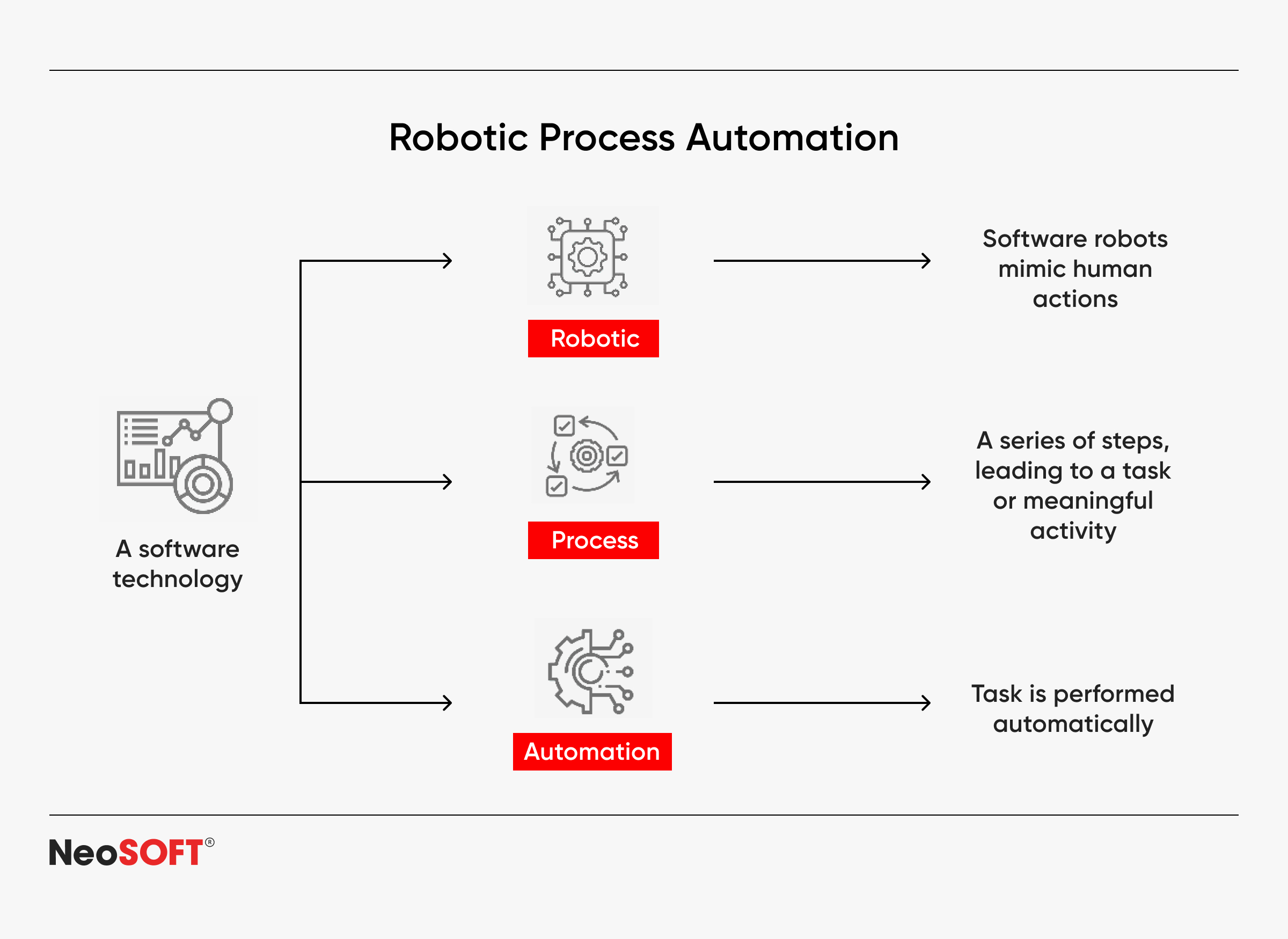
Robotic process automation (RPA) automates repetitive commercial operations that are typically performed by human workers by using software robots. Automated technologies surpass human abilities in terms of speed, accuracy, and consistency of work completion by interacting with digital applications and systems that bear similarities to human behavior.
With RPA’s assistance, organizations may automate tedious, manual, and repetitive tasks. This is a critical part of digital transformation. Through smooth integration with current systems, this automation not only optimizes workflows but also helps support more comprehensive digital efforts.
Routine functions, including data input, billing management, and report preparation, can be handled by RPA, which increases operational effectiveness and decreases error rates. Enhanced throughput, cost savings, and effortless operation scaling are some of RPA’s main advantages. A successful RPA implementation essentially serves as a core technology that can propel organizational transformation, creativity, and productivity.
Understanding the Value of RPA
Benefits of RPA for Optimizing Business Performance
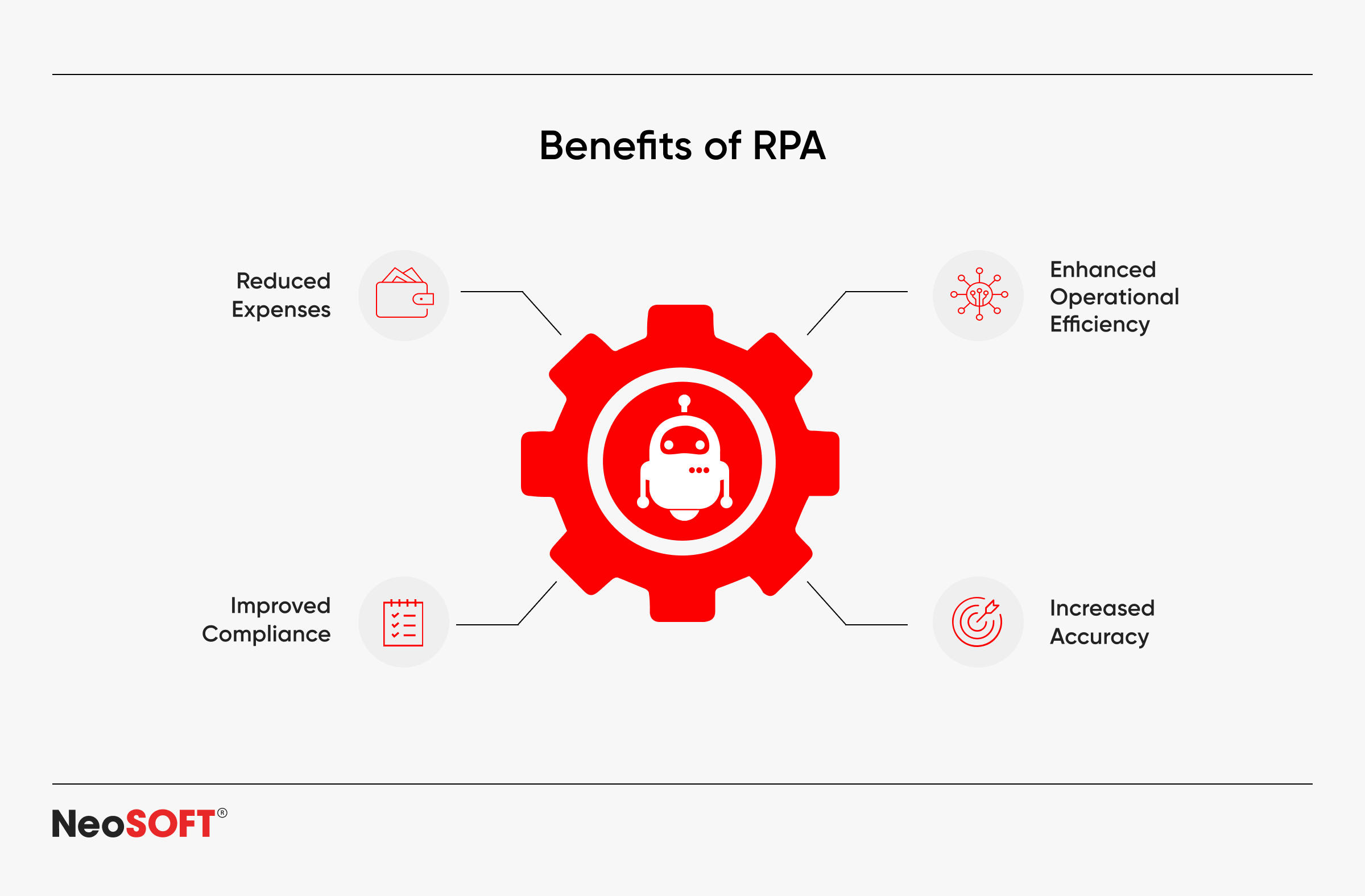
Robotic Process Automation has significant advantages for firms seeking to enhance infrastructure, minimize expenses, and increase precision. These are a few of the principal benefits:
Reduced expenses – RPA is an affordable technology that lowers operating costs by doing away with the requirement for manual labor. Businesses can save both money and time by using fewer personnel in typical functions like data input, payroll processing, and invoicing administration when they automate them. As a result, there are fewer errors, tasks are finished more quickly, and overall costs are significantly decreased.
Enhanced operational efficiency – RPA helps firms run more efficiently by streamlining processes and optimizing resource utilization. Software bots may operate continuously without taking pauses, resulting in speedier task completion as well as more consistent output. This continuous operation enables firms to handle greater amounts of work with lower disruptions, thus boosting total throughput.
Improved Compliance – RPA not only improves accuracy but also assures regulatory compliance. Automated processes follow stringent standards, making them perfect for sectors that must comply with changing legal and industry-specific requirements. RPA technology enables firms to avoid costly compliance violations by ensuring that all projects are completed in accordance with established criteria, protecting against regulatory penalties and reputational damage.
Increased accuracy – By ensuring exceptional task execution precision, RPA bots dramatically lower the rates of human error. In industries with stringent rules like healthcare, financial services, and insurance, precise and legally compliant operations are essential. The implementation of robotic process automation guarantees adherence to industry standards in all processes. This lessens the possibility of sanctions for non-compliance.
The Impact of RPA on Progress and Productivity
RPA software can be said to provide an important contribution towards ensuring the optimal use of time and as well as human effort in organizations by automating repetitive tasks.
Optimizing Resource Allocation: Businesses may improve the way their personnel is deployed by employing RPA to tackle repetitive activities. Workers may be moved to higher-value processes that call for their ability to think creatively, analytically, and solve problems. Employees are better able to contribute to areas that bolster business growth and innovation as a result of this improved resource allocation, which raises production.
Automating Repetitive Tasks: RPA works especially well at handling repetitive, rule-based functions that would be challenging and time-consuming for employees to complete on their own. Not having to cope with tiresome tasks increases employee satisfaction and productivity. Automating routine tasks including invoice processing, data entry, and documentation can free up employees’ time for more strategic work.
24/7 Operation: RPA bots may operate continuously, unlike human laborers, guaranteeing a steady, uninterrupted workflow. Because of its 24/7 capability, work can be done more rapidly, more consistently, and without the need for human interaction. The constant state of readiness offered by RPA is particularly useful for enterprises that handle massive amounts of data or have multi-zone responsibilities.
Enhanced Data Management: RPA improves data management by automating information gathering, analysis, and processing. This improves reporting precision and expedites processes based on data. When executives have access to more relevant and accurate information, they may make better decisions that will improve overall business outcomes. Improved data management leads to improved risk and compliance management processes, which boost output even further.
Common Challenges in RPA Implementation
Selecting the Right Processes for Automation
One of the primary obstacles in an enterprise RPA implementation is determining which functions to automate. RPA is best suited for high-volume, repetitive functions that follow explicit standards. However, finding such duties across divisions can be challenging, particularly in firms with complicated workflows.
Solution: To maximize the advantages of automation, concentrate on time-consuming jobs with low strategic importance.
Not every task is appropriate for RPA. Some processes may require exceptions or sophisticated managerial decisions, rendering automation impossible. Evaluating job complexity is critical to avoiding costly implementation problems.
Solution: Organizations should evaluate each task’s guidelines, variability, and documentation to decide its suitability for RPA automation.
Securing Executive Buy-In
Without leadership support, RPA efforts will struggle to gain traction. Building a strong business case is critical for gaining leadership support. This necessitates presenting the obvious advantages of RPA, including cost savings, higher output, and consistency with the company’s strategic goals.
Solution: A clearly defined business case may emphasize RPA’s return on investment and value over time, making it simpler to get decision-makers’ support.
Managing Workforce Transformation
Employee resistance to RPA adoption is one of the most significant barriers. Many employees may view RPA as a danger to their jobs, resulting in an absence of support, training or cooperation.
Solution: In order to overcome this, organizations need to position RPA as an augmentation tool that increases worker output by automating repetitive and uninteresting jobs, allowing workers to concentrate on more important work. Effective communication and reskilling initiatives can help reduce resistance and build a collaborative atmosphere.
Cybersecurity Threats and Data Security
RPA implementations might pose significant cybersecurity threats, especially when working with sensitive data.
Solution: To address this issue, a company must establish tight security measures including encryption, protected user access, and continuous monitoring. RPA bots must be appropriately guarded against internal and external dangers in order to safeguard data integrity and avert breaches.
Aligning RPA Objectives and Business Goals
As companies evolve, so do their mission and objectives. Keeping RPA initiatives aligned with these aims is an ongoing challenge. This demands regular reviews and changes to RPA processes to ensure they continue delivering value.
Solution: Companies may optimize the effectiveness of their RPA projects by frequently monitoring automated process performance and aligning it with changing business needs.
Ensuring Compliance with Industry Standards
In businesses with strict legal requirements, making sure RPA procedures comply with all applicable regulations can be difficult.
Solution: Regular compliance audits, coupled with the involvement of legal specialists, can help an organization guarantee that the automated process complies with industry-specific standards such as GDPR or HIPAA. This proactive strategy reduces the chance of regulatory infractions while also ensuring the integrity of the RPA adoption process.
RPA Tools for Smart Automation Opportunities
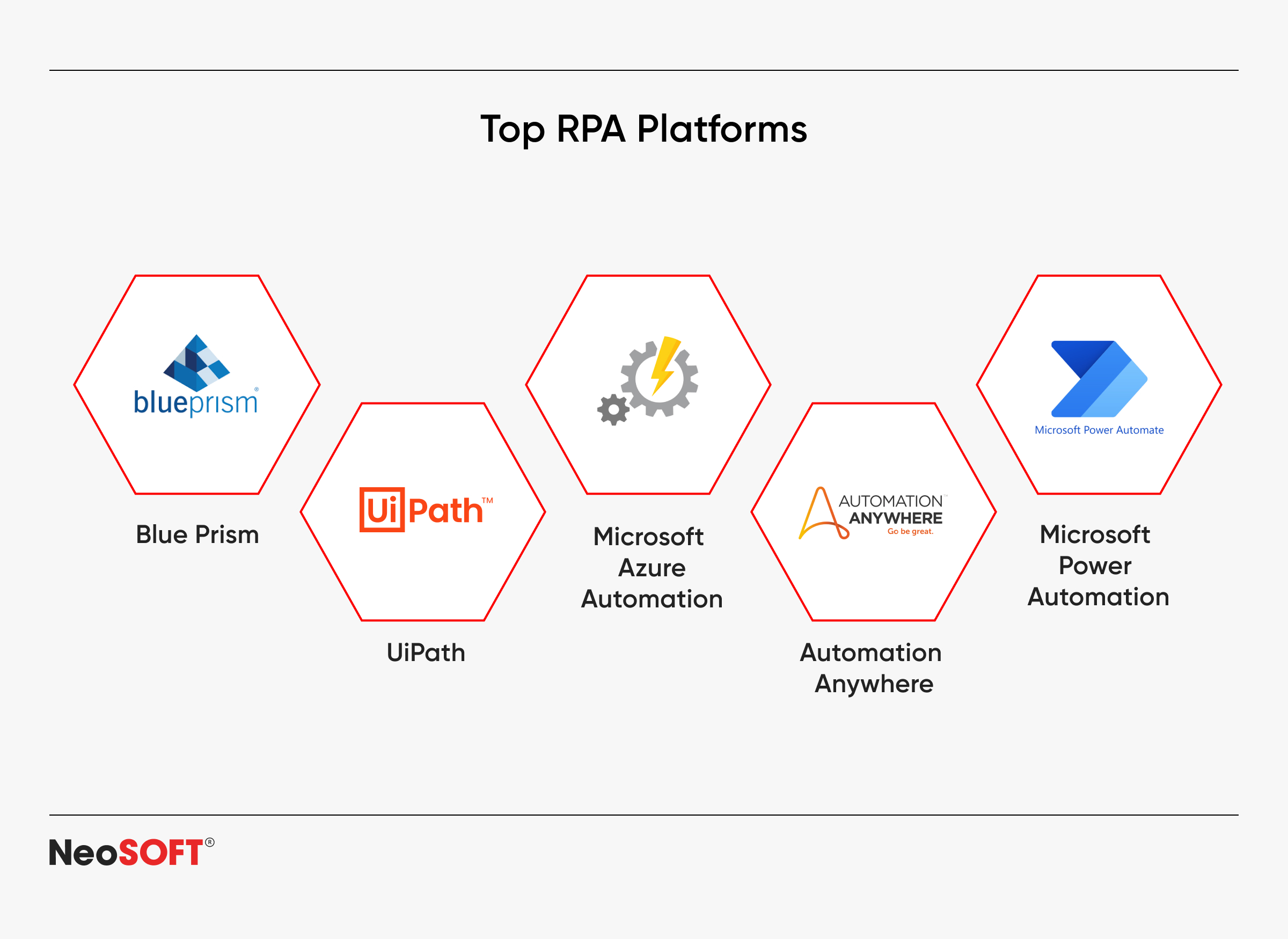
Power Automate: Formerly Microsoft Flow, it is a cloud-based RPA platform that enables users to construct automated workflows between various apps without writing any code. Its goal was to give businesses of all sizes an easy and inexpensive way to use RPA to handle their company operations. It also makes it possible to integrate with the entire Microsoft ecosystem seamlessly.
Automation Anywhere: The complete RPA solution that uses artificial intelligence and machine learning to automate difficult business processes in multiple applications and interfaces. It is perfect for large-scale automation projects since it can manage complex workflows requiring cognitive abilities as well as straightforward, repetitive activities.
Azure Automation: A Microsoft Azure service used for hybrid environment update management, configuration management, and process automation services. Businesses can easily build, automate, and manage procedures across on-premise and cloud platforms thanks to its web-based interface. This makes it a powerful tool for big companies looking to optimize their operations on a wide scale.
Blue Prism: A highly adaptable RPA tool with an emphasis on security and compliance. It offers software robots made to automate commercial processes completely based on specific rules. Businesses in highly regulated sectors can benefit from its focus on integration with current internal systems, security, and management practices.
Ui Path: Bot development is made easier using UiPath, an RPA platform that incorporates AI and computer vision into the back-end process as well as the UI. Enterprises wishing to automate server-side and front-end tasks highly value it for its scalable and adaptable interface.
RPA in the Future: Emerging Trends and Automation Opportunities
Low-code/No-code RPA Systems
Automation is now more accessible to a broader range of users, including non-tech individuals, due to low-code/no-code RPA technology. These platforms enable personnel from different divisions to create and execute automated solutions without needing an advanced level of coding expertise. By democratizing automation, enabling departments to automate tasks, and rapidly expanding their RPA projects, businesses may quicken the pace of digital transformation.
Ethical considerations in RPA implementation
As RPA advances and is progressively incorporated into business operations, it becomes more and more important to take ethical issues into account. To appropriately protect sensitive data and satisfy legal obligations, businesses must prioritize security and adherence to rules and laws.
Augmentation technologies like RPA free up staff members so they can focus on more critical work. It is in no way a replacement for the inventiveness and ingenuity of people. Careful supervision over how the workforce responds to RPA is also necessary. RPA can benefit both employers and employees, but only if it is used in a mindful and ethical manner.
Embracing Intelligent RPA Technology
Robotic process automation will require the use of two advanced automation technologies in the future: artificial intelligence and machine learning. As these technologies advance, RPA must be capable of managing tasks that become more complicated and require advanced decision-making and improved process optimization. This move toward intelligent automation is predicted to transform company procedures and promote increased productivity and creativity.
Conclusion
To summarize, successful robotic process automation adoption requires solving many important difficulties, including selecting the relevant processes for automation, connecting RPA projects with overall project objectives and business goals, and getting stakeholder backing. Overcoming these challenges requires an execution plan that includes comprehensive process evaluation, developing a strong business case, and assuring ongoing alignment with company goals and business needs.
A number of business processes across sectors will soon require RPA implementation since it increases output, reduces expenses, and enhances operational efficiency. Future innovation and sustained corporate success will be significantly aided by RPA as more companies make use of smart automation options.
Contact our team of professionals today for a customized roadmap to leveraging the full potential of RPA technology and transforming your organization through seamless automation! Find out how we can help you increase output, reduce expenses, and expedite your digital transformation. Contact us today at info@neosofttech.com, and let’s start your RPA journey together!
We use cookies on our website to give you the most relevant experience by remembering your preferences and repeat visits. By clicking “Accept All”, you consent to the use of ALL the cookies. However, you may visit "Cookie Settings" to provide a controlled consent.
This website uses cookies to improve your experience while you navigate through the website. Out of these, the cookies that are categorized as necessary are stored on your browser as they are essential for the working of basic functionalities of the website. We also use third-party cookies that help us analyze and understand how you use this website. These cookies will be stored in your browser only with your consent. You also have the option to opt-out of these cookies. But opting out of some of these cookies may affect your browsing experience.
Necessary cookies are absolutely essential for the website to function properly. These cookies ensure basic functionalities and security features of the website, anonymously.
Cookie
Duration
Description
cookielawinfo-checkbox-analytics
11 months
This cookie is set by GDPR Cookie Consent plugin. The cookie is used to store the user consent for the cookies in the category "Analytics".
cookielawinfo-checkbox-functional
11 months
The cookie is set by GDPR cookie consent to record the user consent for the cookies in the category "Functional".
cookielawinfo-checkbox-necessary
11 months
This cookie is set by GDPR Cookie Consent plugin. The cookies is used to store the user consent for the cookies in the category "Necessary".
cookielawinfo-checkbox-others
11 months
This cookie is set by GDPR Cookie Consent plugin. The cookie is used to store the user consent for the cookies in the category "Other.
cookielawinfo-checkbox-performance
11 months
This cookie is set by GDPR Cookie Consent plugin. The cookie is used to store the user consent for the cookies in the category "Performance".
viewed_cookie_policy
11 months
The cookie is set by the GDPR Cookie Consent plugin and is used to store whether or not user has consented to the use of cookies. It does not store any personal data.
Functional cookies help to perform certain functionalities like sharing the content of the website on social media platforms, collect feedbacks, and other third-party features.
Performance cookies are used to understand and analyze the key performance indexes of the website which helps in delivering a better user experience for the visitors.
Analytical cookies are used to understand how visitors interact with the website. These cookies help provide information on metrics the number of visitors, bounce rate, traffic source, etc.
Advertisement cookies are used to provide visitors with relevant ads and marketing campaigns. These cookies track visitors across websites and collect information to provide customized ads.